Mastering Scarcity Marketing: Boost Sales with Limited-Time Offers

Anúncios
Mastering Scarcity Marketing: Boost Sales with Limited-Time Offers
In the dynamic world of marketing, understanding consumer psychology is paramount. One of the most potent psychological triggers that marketers leverage is scarcity. The principle is simple yet profoundly effective: people desire what they perceive as rare or limited. This inherent human tendency makes scarcity marketing strategies an indispensable tool for businesses aiming to boost sales and create a sense of urgency. From limited-time offers to exclusive access, scarcity, when applied correctly, can transform lukewarm interest into immediate action.
This comprehensive guide will delve into the intricacies of scarcity marketing, exploring its psychological underpinnings, various types, best practices, and potential pitfalls. By the end, you’ll have a robust understanding of how to effectively implement scarcity marketing strategies to drive conversions, enhance brand perception, and ultimately, achieve your business objectives.
Anúncios
The Psychology Behind Scarcity: Why We Want What We Can’t Have
At its core, scarcity marketing taps into several fundamental psychological principles. Understanding these principles is crucial for crafting compelling and ethical campaigns. The primary drivers include:
- Loss Aversion: Humans are generally more motivated by the fear of losing something than by the prospect of gaining something of equal value. When an offer is scarce, the potential ‘loss’ of missing out on a good deal or a desired product becomes a powerful motivator. This fear of regret often pushes consumers to act quickly.
- Perceived Value: Rarity often equates to higher perceived value. If something is limited, whether in quantity or time, we tend to assume it’s more desirable, exclusive, or of superior quality. This elevated perception can justify a quicker purchase decision and even a higher price point.
- Social Proof: When an item is scarce or selling out quickly, it signals to others that it’s popular and in high demand. This can trigger a ‘herd mentality,’ where individuals are more likely to purchase simply because others are doing so. The thought that ‘everyone else wants it, so it must be good’ reinforces the desirability.
- Urgency and Instant Gratification: Scarcity creates a sense of urgency, forcing consumers to make a decision sooner rather than later. In an age of instant gratification, the idea of immediately securing a desired item before it’s gone is a powerful draw.
- Autonomy and Freedom: Paradoxically, when something is limited, our freedom to choose it is threatened. This can lead to a psychological reactance, where we desire the item even more intensely to reassert our freedom of choice.
By understanding these psychological levers, marketers can design scarcity marketing strategies that resonate deeply with consumers’ innate biases and motivations, leading to higher engagement and conversion rates.
Anúncios
Types of Scarcity Marketing Strategies
Scarcity can be implemented in various forms, each with its own nuances and effectiveness. Here are the most common types of scarcity marketing strategies:
1. Limited-Time Offers (Temporal Scarcity)
This is perhaps the most common and straightforward application of scarcity. It involves setting a strict deadline for a promotion, discount, or product availability. Examples include:
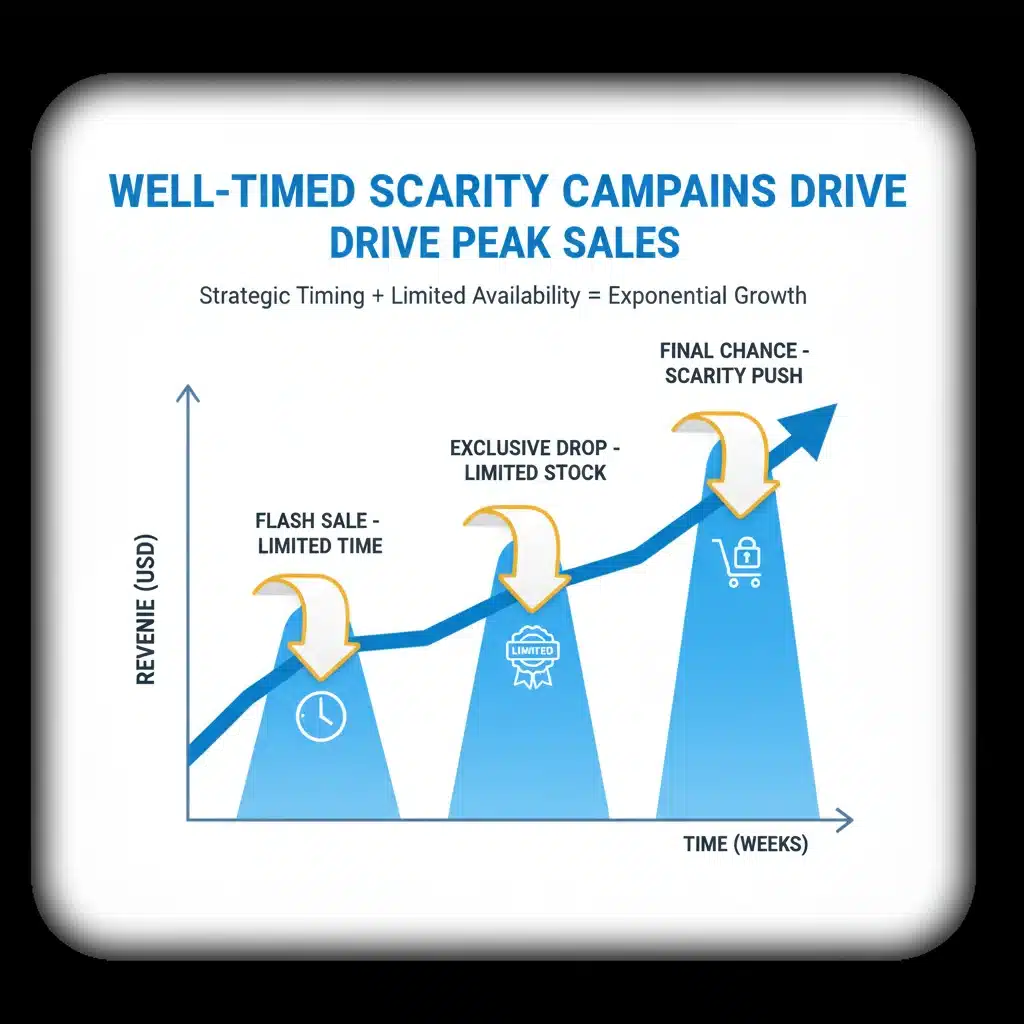
- Flash Sales: Extremely short-duration sales (e.g., 24-hour deals) that create intense urgency.
- Seasonal Sales: Offers tied to specific holidays or seasons that expire once the period ends.
- Early Bird Discounts: Special pricing for customers who purchase within a limited initial window.
- Countdown Timers: Visual cues on websites or emails that explicitly show the remaining time, enhancing the sense of urgency.
The effectiveness of limited-time offers lies in their clear and undeniable expiration, pushing customers to act before it’s too late.
2. Limited-Quantity Offers (Quantity Scarcity)
This strategy involves restricting the number of products available for purchase. When customers know only a certain number of items exist, they are more likely to buy quickly to secure one. This is often seen with:
- Exclusive Editions: Products released in a limited run, often numbered, increasing their collectible value.
- Stock Level Indicators: Displaying messages like ‘Only 3 left in stock!’ or ‘Low stock’ on product pages.
- Pre-Order Caps: Limiting the number of pre-orders for a highly anticipated product.
Quantity scarcity appeals to the desire for exclusivity and the fear of missing out on a unique item.
3. Exclusive Access or Membership (Access Scarcity)
This approach creates scarcity by limiting who can access a product, service, or offer. It often involves:
- Invite-Only Sales: Promotions accessible only to a select group of customers.
- Private Beta Programs: Early access to software or services for a limited number of testers.
- Loyalty Programs with Tiers: Offering special perks or discounts only to higher-tier members.
Access scarcity fosters a sense of belonging and privilege, making the offer even more appealing to those who qualify.
4. Unique Opportunity Scarcity
This type of scarcity focuses on the uniqueness of the situation or the experience, rather than just the product itself. It can involve:
- One-Time Events: Special workshops, webinars, or performances that will not be repeated.
- Bundles or Packages: Special combinations of products or services available only for a short period.
- Limited-Edition Collaborations: Products resulting from partnerships that are inherently unique and time-bound.
This strategy highlights the irreplaceable nature of the opportunity, encouraging immediate participation.
Crafting Effective Scarcity Marketing Campaigns: Best Practices
While scarcity marketing strategies can be incredibly powerful, their effectiveness hinges on careful planning and ethical execution. Here are some best practices to ensure your campaigns are successful and maintain customer trust:
1. Be Authentic and Transparent
The golden rule of scarcity marketing is authenticity. If your scarcity claims are fabricated or misleading, you risk damaging your brand’s reputation. Consumers are savvy and can often detect false urgency. Always ensure that:
- The scarcity is real: If you say ‘only 50 left,’ ensure there are indeed only 50.
- The deadline is genuine: Don’t extend a ‘limited-time offer’ repeatedly, as it diminishes credibility.
- Your messaging is clear: Avoid deceptive language. State the terms of the scarcity clearly.
Building and maintaining trust is far more valuable than a short-term sales boost from a deceptive tactic.
2. Combine Scarcity with Value
Scarcity alone might not be enough to drive conversions if the product or offer lacks inherent value. For scarcity marketing strategies to truly shine, they must be paired with a compelling value proposition. Consumers need to feel that what they are potentially missing out on is genuinely desirable and beneficial. Highlight:
- Product benefits: What problems does it solve? How does it improve their lives?
- Exclusive features: What makes this particular offer or product special?
- Savings: Clearly articulate the financial advantage of acting now.
When value is high and availability is low, the desire to purchase becomes almost irresistible.
3. Use Clear and Prominent Calls to Action (CTAs)
Once you’ve created a sense of urgency, guide your customers directly to the next step. Your CTAs should be:
- Action-oriented: Use verbs like ‘Buy Now,’ ‘Shop the Sale,’ ‘Claim Your Offer.’
- Urgency-driven: Incorporate phrases like ‘Don’t Miss Out,’ ‘Ends Soon,’ ‘While Supplies Last.’
- Visually prominent: Make sure your CTAs stand out on your website, emails, and ads.
A strong CTA capitalizes on the urgency created by scarcity, directing customers toward conversion.
4. Segment Your Audience and Personalize Offers
Not all scarcity tactics work for all customers. Segmenting your audience allows you to tailor your scarcity marketing strategies for maximum impact. For example:
- New customers: Might respond well to introductory limited-time discounts.
- Loyal customers: Could be offered exclusive early access or limited-edition products as a reward.
- Cart abandoners: A ‘your cart expires in X hours’ reminder can be very effective.
Personalization makes the scarcity feel more relevant and targeted, increasing its perceived value.
5. Leverage Multiple Channels
To maximize the reach and impact of your scarcity campaigns, promote them across various marketing channels:
- Email Marketing: Send out countdown emails and ‘last chance’ reminders.
- Social Media: Create buzz with posts highlighting limited stock or expiring deals.
- Website Banners & Pop-ups: Use prominent displays to announce urgent offers.
- Push Notifications: For mobile apps, send timely alerts about expiring deals.
Consistent messaging across channels reinforces the urgency and ensures your audience is aware of the limited opportunity.
6. Test and Optimize Your Campaigns
The effectiveness of scarcity marketing strategies can vary based on your audience, product, and industry. Continuously test different approaches to find what resonates best:
- A/B test different deadlines: Is 24 hours more effective than 48 hours for a flash sale?
- Experiment with messaging: Does ‘Limited Stock’ work better than ‘Only 10 Left’?
- Analyze conversion rates: Track which scarcity tactics lead to the highest conversion rates.
Data-driven optimization ensures your scarcity campaigns become more effective over time.
Potential Pitfalls and How to Avoid Them
While powerful, scarcity marketing strategies are not without their risks. Misuse can lead to customer frustration, distrust, and a negative brand image. Here’s how to navigate common pitfalls:
1. Overuse and ‘Cry Wolf’ Syndrome
If every offer is a ‘limited-time’ or ‘last chance’ deal, consumers will eventually stop believing you. Constant urgency can lead to:
- Customer fatigue: People become desensitized to your urgency claims.
- Loss of credibility: If deadlines are consistently extended or ‘limited stock’ magically reappears, trust erodes.
Solution: Use scarcity judiciously. Reserve it for genuinely special offers or products. Vary your marketing tactics to avoid predictability.
2. Creating Unnecessary Pressure or Anxiety
While urgency is the goal, you don’t want to create undue stress or anxiety for your customers. Overly aggressive or manipulative tactics can backfire, making customers feel pressured rather than excited.
Solution: Focus on the positive aspects of the offer (value, benefits, exclusivity) rather than solely on the negative consequence of missing out. Maintain a helpful and customer-centric tone.
3. Poor Inventory Management
If you’re using quantity scarcity, ensure your inventory management is robust. Selling out too quickly (and not being able to fulfill orders) or having a ‘limited’ item remain in stock for an extended period can both be problematic.
Solution: Accurately track inventory. If an item sells out faster than expected, communicate clearly and offer alternatives or back-order options. If an item isn’t selling as quickly, re-evaluate the offer rather than maintaining a false scarcity claim.
4. Alienating Customers
Exclusive access strategies, while effective for some, can alienate customers who don’t qualify. This can lead to feelings of being undervalued or excluded.
Solution: Balance exclusive offers with inclusive promotions. Consider offering different tiers of exclusivity or providing ways for customers to ‘earn’ access. Ensure your loyalty programs feel rewarding rather than exclusionary.
5. Legal and Ethical Considerations
Depending on your region, there might be regulations regarding advertising and sales practices. False or misleading scarcity claims can lead to legal repercussions.
Solution: Always adhere to advertising standards and consumer protection laws. Prioritize ethical practices over aggressive sales tactics. Transparency is key.

Real-World Examples of Successful Scarcity Marketing
Many brands, big and small, have successfully integrated scarcity marketing strategies into their campaigns. Here are a few notable examples:
- Amazon’s Lightning Deals: These daily deals are available for a limited time and often in limited quantities, complete with a countdown timer and a percentage claimed indicator. This creates immediate urgency and drives impulse purchases.
- Booking.com and Expedia: These travel sites frequently use messages like ‘Only 1 room left at this price!’ or ‘X people are looking at this hotel right now!’ to prompt quick bookings.
- Sneaker Drops (e.g., Nike SNKRS): Limited-edition sneaker releases are a masterclass in scarcity. High demand, combined with extremely limited quantities, creates massive hype, resale markets, and eager customers ready to buy instantly.
- Subscription Boxes with Waitlists: Brands like Stitch Fix or FabFitFun sometimes employ waitlists, creating a sense of exclusivity and desirability for their curated products.
- Software Beta Programs: Offering early access to a limited number of users for a new software feature or product generates excitement, valuable feedback, and a feeling of being ‘in the know.’
These examples illustrate that when executed thoughtfully, scarcity marketing strategies can be incredibly versatile and effective across various industries.
Integrating Scarcity into Your Overall Marketing Strategy
Scarcity shouldn’t be a standalone tactic; it should be a complementary element within your broader marketing strategy. Consider how it can enhance other areas:
- Product Launches: Use limited pre-order windows or launch editions to build hype and secure initial sales.
- Email Marketing: Incorporate countdown timers and ‘last chance’ messages in your email sequences to drive action.
- Social Media Campaigns: Run contests or giveaways with limited entry periods or exclusive prizes to boost engagement.
- Loyalty Programs: Offer exclusive, time-sensitive rewards to your most loyal customers to reinforce their value.
- Content Marketing: Create limited-time access to premium content or special webinars to generate leads.
By strategically weaving scarcity marketing strategies into your existing efforts, you can amplify their impact and create a more cohesive and persuasive customer journey.
Measuring the Success of Your Scarcity Campaigns
To continually improve your scarcity marketing strategies, it’s essential to track and analyze their performance. Key metrics to monitor include:
- Conversion Rate: The percentage of visitors who complete the desired action (e.g., purchase, sign-up) during the scarcity period.
- Sales Volume: The total number of units sold or revenue generated during the campaign.
- Average Order Value (AOV): Did the urgency encourage customers to buy more or higher-value items?
- Click-Through Rate (CTR): For emails and ads, how many people clicked on your scarcity-driven promotions?
- Website Traffic: Did the scarcity campaign drive an increase in visitors to your product pages or landing pages?
- Customer Feedback: Monitor social media mentions and customer service inquiries for sentiment and any negative reactions.
Analyzing these metrics will provide valuable insights into what works and what needs adjustment, allowing you to refine your approach and maximize future returns.
The Future of Scarcity Marketing
As consumer behavior evolves, so too will scarcity marketing strategies. We can expect to see:
- Increased Personalization: AI and data analytics will allow for even more tailored scarcity offers, targeting individuals based on their past behavior and preferences.
- Gamification: Integrating game-like elements (e.g., unlocking limited deals by completing tasks) to make scarcity more engaging.
- Authenticity and Transparency as Key: As consumers become more discerning, genuine scarcity will be rewarded, while deceptive tactics will be increasingly penalized.
- Sustainability-Driven Scarcity: Brands may leverage scarcity around ethically sourced, limited-production, or environmentally friendly products, appealing to conscious consumers.
The core psychological principles behind scarcity will remain, but the methods of application will continue to adapt to technological advancements and changing consumer values.
Conclusion
Scarcity marketing strategies are a powerful and effective tool for driving sales and influencing consumer behavior. By understanding the psychological triggers of loss aversion, perceived value, and urgency, businesses can craft compelling campaigns that encourage immediate action. Whether through limited-time offers, quantity restrictions, or exclusive access, the key to success lies in authenticity, value, and strategic implementation.
Remember to use scarcity judiciously, combine it with strong value propositions, and continuously test your approaches. Avoid the pitfalls of overuse or deceptive practices, as these can erode customer trust. When applied ethically and intelligently, scarcity marketing can be a game-changer for your business, helping you to boost conversions, enhance brand appeal, and achieve sustained growth in a competitive marketplace. Start integrating these powerful strategies today and watch your sales soar!
Author