Consumer Activism in 2026: How 15% of Shoppers Are Driving Ethical Brand Choices (INSIDER KNOWLEDGE)
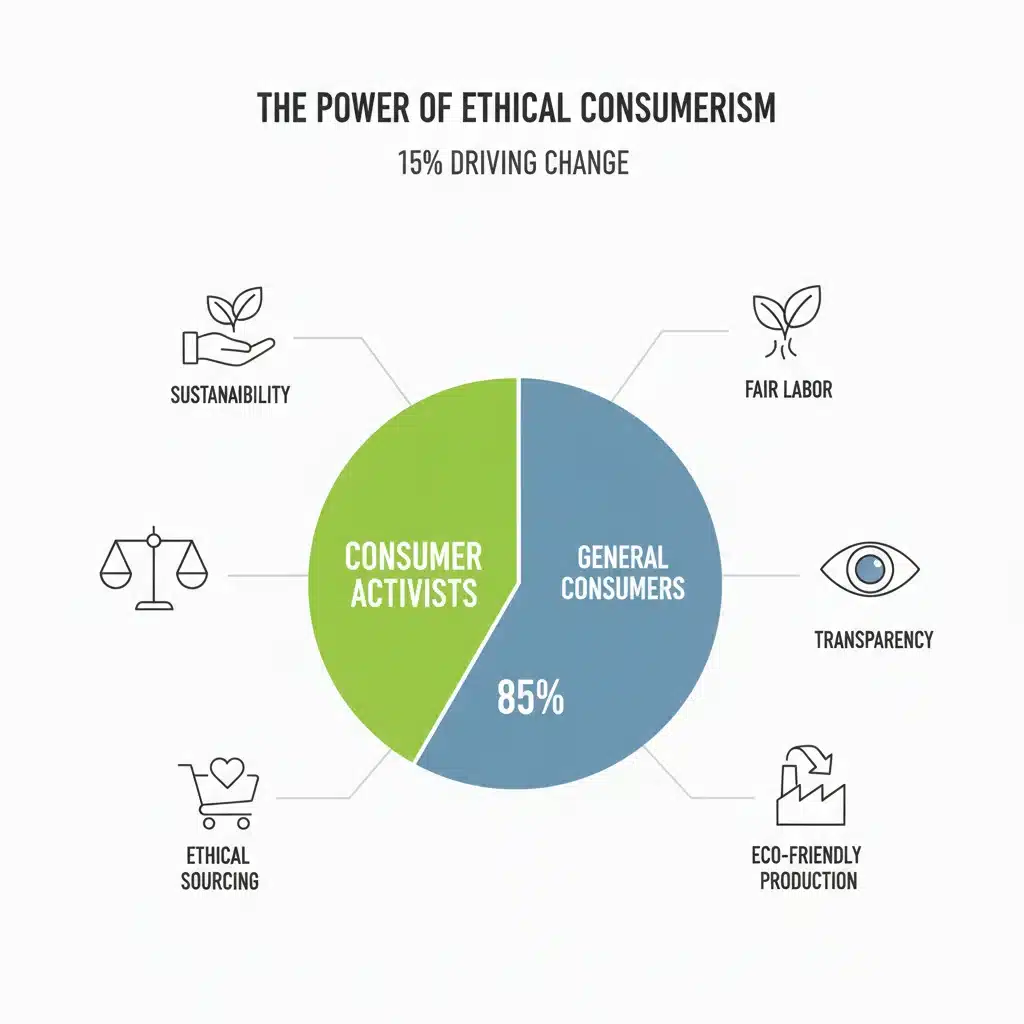
The retail landscape is in constant flux, but few shifts are as profound and transformative as the rise of consumer activism trends. By 2026, a significant 15% of shoppers are not just making purchasing decisions; they are actively shaping the market, forcing brands to re-evaluate their entire operational ethos. This isn’t a fleeting fad; it’s a fundamental recalibration of consumer power, driven by a deep-seated desire for ethical brand choices and corporate accountability. This article delves into the heart of this movement, providing insider knowledge on how this influential minority is steering the global market and what it means for businesses and consumers alike.
Anúncios
The Emergence of the Conscious Consumer Cohort
For years, discussions around ethical consumption have simmered, often relegated to niche markets or specialized product lines. However, as we approach 2026, these discussions have exploded into the mainstream, largely thanks to a highly engaged and vocal segment of the population. This 15% isn’t just aware of social and environmental issues; they are actively integrating these concerns into their purchasing habits. They are the early adopters, the trendsetters, and crucially, the influencers who are magnifying the impact of their choices far beyond their own spending power. Understanding these consumer activism trends is paramount for any brand aiming for long-term relevance.
This cohort is characterized by several key traits:
- Information-Savvy: They conduct extensive research, scrutinizing supply chains, labor practices, environmental impact, and corporate governance before making a purchase. They don’t just read labels; they delve into company reports and independent audits.
- Principled Purchasers: Their buying decisions are guided by strong ethical principles. They are willing to pay a premium for products that align with their values, and conversely, they are quick to boycott brands that fall short.
- Digitally Empowered: Social media is their megaphone. They share their positive and negative experiences widely, using platforms to praise ethical brands and expose those with questionable practices. This digital advocacy amplifies their voice exponentially.
- Community-Oriented: They often belong to online communities and activist groups, reinforcing their beliefs and coordinating collective actions, such as petitions, boycotts, and public awareness campaigns.
- Demographically Diverse: While often associated with younger generations, this 15% spans various age groups, demonstrating that ethical considerations are becoming universal concerns, not just generational ones.
The impact of this conscious consumer cohort extends beyond simple sales figures. They are setting new standards for corporate behavior, pushing for greater transparency, accountability, and genuine commitment to social and environmental responsibility. This shift is not merely about market share; it’s about redefining the very essence of corporate citizenship in the 21st century. The growing momentum of these consumer activism trends cannot be overstated.
Anúncios
Driving Forces Behind the Ethical Revolution
What has fueled this surge in consumer activism trends? Several interconnected factors have converged to create the fertile ground for this ethical revolution:
Increased Awareness and Accessibility of Information
The digital age has made information more accessible than ever before. Consumers can easily research a brand’s practices, read reviews, and uncover controversies with a few clicks. Investigative journalism, documentaries, and social media campaigns have shed light on issues such as fast fashion’s environmental toll, unfair labor practices in global supply chains, and the impact of plastic pollution. This heightened awareness empowers consumers to make informed choices.
Growing Concerns Over Climate Change and Sustainability
The undeniable reality of climate change and environmental degradation has instilled a sense of urgency in many consumers. They are actively seeking products and brands that demonstrate a genuine commitment to sustainability, renewable resources, waste reduction, and carbon neutrality. Brands that greenwash or fail to meet these expectations face swift backlash from the conscious consumer cohort.
Social Justice and Corporate Responsibility
Recent years have seen a global awakening to issues of social justice, equality, and human rights. Consumers are increasingly expecting brands to not only avoid harmful practices but to actively contribute positively to society. This includes fair wages, diverse and inclusive workplaces, ethical sourcing, and support for marginalized communities. Brands are now scrutinized for their stances on political and social issues, with consumers expecting them to align with progressive values.
Influence of Social Media and Digital Platforms
Social media has transformed individual voices into collective power. A single viral post can expose corporate misdeeds or champion an ethical brand, reaching millions in a matter of hours. Platforms like Instagram, TikTok, and X (formerly Twitter) serve as powerful tools for organizing boycotts, sharing information, and holding brands accountable. Influencers and thought leaders who champion ethical consumption further amplify these messages, making consumer activism trends highly visible and impactful.
Generational Shifts in Values
While not exclusive to any age group, younger generations, particularly Gen Z and Millennials, have consistently demonstrated a stronger inclination towards ethical consumption. Having grown up in an era of global challenges and digital interconnectedness, they are more attuned to the broader impact of their choices. As these generations gain more purchasing power, their values are increasingly dictating market direction, solidifying the importance of consumer activism trends.
The 15% Effect: How a Minority is Reshaping the Majority
The notion that a mere 15% of consumers can drive such significant change might seem counterintuitive. However, this minority possesses disproportionate influence due to several factors:
- Early Adopter Influence: This 15% often represents the early adopters and trendsetters. Their embrace of ethical products and brands signals to the broader market what is becoming desirable and acceptable. Other consumers, observing these trends, may begin to shift their own behaviors.
- Amplification Through Advocacy: As mentioned, their digital activism and word-of-mouth recommendations (or condemnations) have a far-reaching impact. A positive review from an ethical consumer can inspire many, just as a negative one can deter a multitude.
- Brand Reputation at Stake: In an era of instant information, a brand’s reputation is its most valuable asset. The 15% are highly effective at spotlighting ethical breaches, which can lead to significant reputational damage, sales declines, and investor concerns. Brands are increasingly aware that ignoring this cohort comes at a high cost.
- Market Segmentation and Niche Growth: The consistent demand from this 15% creates viable niche markets for ethical products. As these niches grow and prove profitable, larger brands are compelled to enter these segments or adapt their mainstream offerings to compete.
- Regulatory Pressure: The increased public discourse and pressure from consumer activism trends often translate into calls for stricter regulations on environmental protection, labor laws, and corporate transparency. This can lead to systemic changes that impact all businesses, regardless of their immediate consumer base.
The ripple effect of this 15% is undeniable. They are not just consumers; they are market catalysts, forcing a re-evaluation of business models and pushing for a more responsible global economy. The power of these consumer activism trends extends far beyond individual transactions.
Case Studies: Brands Adapting (or Failing to Adapt)
The impact of these consumer activism trends is best illustrated through real-world examples. Brands that have successfully navigated this landscape have embraced transparency and genuine ethical commitments, while those that have ignored or mishandled it have faced significant consequences.
Success Stories:
- Patagonia: A long-standing leader in ethical business, Patagonia’s commitment to environmental sustainability, fair labor practices, and product durability resonates deeply with conscious consumers. Their ‘Don’t Buy This Jacket’ campaign, encouraging repair over replacement, was a bold move that solidified their reputation as a truly ethical brand.
- TOMS: Known for its ‘One for One’ model, where a pair of shoes is donated for every pair purchased, TOMS tapped into the desire for social impact. While their model has evolved, their initial success demonstrated the power of purpose-driven consumption.
- The Body Shop: A pioneer in cruelty-free and ethically sourced beauty products, The Body Shop built its brand on activism. Their campaigns against animal testing and for community trade have consistently appealed to consumers looking for ethical alternatives.
Lessons from Brands That Struggled:
- Fast Fashion Giants: Many fast fashion brands have faced intense scrutiny for their environmental impact (waste, pollution) and alleged exploitative labor practices. While they still cater to a large market, the 15% cohort actively boycotts them, pushing for more sustainable and ethical alternatives. This pressure is slowly but surely impacting their market share and forcing some to invest in more sustainable lines, even if it’s a slow transition.
- Companies with Questionable Sourcing: Brands found to be sourcing materials from conflict zones or using child labor have faced severe public backlash, leading to significant drops in sales and long-term damage to their brand image. The rapid dissemination of such information by the 15% ensures that these issues no longer remain hidden.
- Greenwashing Scandals: Brands that have attempted to portray themselves as eco-friendly without genuine commitment (greenwashing) have been swiftly exposed by savvy consumers. This results in a loss of trust that is incredibly difficult to regain, highlighting the need for authentic ethical practices, not just marketing.
These examples underscore a critical truth: in 2026, authenticity and genuine commitment to ethical practices are non-negotiable for long-term success. The consumer activism trends are creating a new playing field where integrity is a key competitive advantage.
The Future of Ethical Brand Choices: Predictions for 2026 and Beyond
The influence of the 15% conscious consumer cohort is only set to grow. As we look beyond 2026, several key predictions emerge regarding the future of consumer activism trends and ethical brand choices:
Increased Demand for Radical Transparency
Consumers will demand even greater transparency, not just about ingredients or materials, but about the entire lifecycle of a product – from sourcing and manufacturing to distribution and end-of-life disposal. Blockchain technology may play a crucial role in providing immutable records of supply chains, satisfying this demand for verifiable ethics.
Standardization of Ethical Certifications
The proliferation of various ethical labels and certifications can be confusing. We can expect a push towards more standardized, globally recognized, and easily understandable certifications that genuinely reflect a brand’s ethical credentials. This will empower consumers to make quicker, more confident ethical choices, further fueling consumer activism trends.
Personalized Ethical Consumption Tools
AI-powered apps and platforms will likely emerge that allow consumers to personalize their ethical preferences and easily find brands and products that align with them. Imagine an app that scans a product barcode and instantly rates its ethical standing based on your chosen criteria (e.g., carbon footprint, labor practices, animal welfare).
Brands as Activists Themselves
Beyond simply meeting ethical demands, some brands will proactively become activists themselves, taking strong stances on social and environmental issues. This will involve using their platforms and resources to drive positive change, not just sell products. This will resonate deeply with the 15% and attract an even wider ethical consumer base.
The Blurring Lines Between Profit and Purpose
The traditional dichotomy between profit and purpose will increasingly dissolve. Businesses that integrate social and environmental responsibility into their core strategy will not only meet consumer demands but also find new avenues for innovation, cost savings (e.g., through sustainable practices), and talent acquisition. Ethical performance will become a key indicator of financial health and future viability, reinforcing the power of consumer activism trends.

Strategies for Brands to Thrive in the Ethical Market
For brands looking to not only survive but thrive in this evolving market, adapting to these strong consumer activism trends is not optional. Here are key strategies:
1. Embrace Authentic Transparency
Don’t just talk the talk; walk the walk. Be genuinely transparent about your supply chain, manufacturing processes, and environmental impact. Use clear, verifiable data and be honest about areas where you still need to improve. This builds trust and credibility with the conscious consumer.
2. Integrate Ethics into Core Business Strategy
Ethical considerations should not be an afterthought or a separate CSR department. They must be woven into the fabric of your business strategy, influencing product design, sourcing, operations, marketing, and corporate culture. This ensures that ethical brand choices are inherent to your offerings.
3. Engage with Your Ethical Consumers
Listen to your conscious consumers. Engage with them on social media, conduct surveys, and participate in industry dialogues. Understand their concerns and involve them in your efforts to improve. This fosters a sense of community and loyalty.
4. Invest in Sustainable Innovation
Continuously seek out and invest in sustainable materials, energy-efficient processes, and innovative solutions that reduce your environmental footprint. This not only meets consumer demands but can also lead to long-term operational efficiencies and new product development opportunities.
5. Support Fair Labor and Social Equity
Ensure fair wages, safe working conditions, and ethical treatment for all workers throughout your supply chain. Promote diversity, equity, and inclusion within your own organization. Demonstrate a commitment to social justice that resonates with the values of the 15%.
6. Avoid Greenwashing at All Costs
Be wary of making unsubstantiated environmental claims. Consumers are increasingly adept at spotting greenwashing, and the backlash can be severe. Focus on genuine, measurable actions rather than superficial marketing ploys. The consumer activism trends are too powerful to be fooled.
7. Partner with Reputable Certifiers and NGOs
Collaborate with established ethical certification bodies (e.g., B Corp, Fair Trade, Leaping Bunny) and non-governmental organizations (NGOs) that align with your values. These partnerships can provide credibility, guidance, and external validation for your ethical claims.
8. Educate and Empower Your Customers
Help your consumers understand the ethical challenges in your industry and how your brand is addressing them. Provide resources and information that empower them to make more informed choices, turning them into advocates for your brand and for ethical consumption in general.
Conclusion: The Irreversible Shift Towards Ethical Consumption
By 2026, the influence of the 15% of shoppers driving consumer activism trends and demanding ethical brand choices will be undeniable. This is not a niche market; it is the vanguard of a broader societal shift towards conscious consumption. Brands that recognize and adapt to this reality will not only secure their future but will also play a vital role in shaping a more responsible and sustainable global economy.
The message is clear: businesses can no longer afford to prioritize profit over purpose. The empowered consumer is demanding more, and their collective voice, amplified by digital platforms, is a force that cannot be ignored. The future belongs to brands that are authentic, transparent, and genuinely committed to making a positive impact on the world. Embrace these consumer activism trends, and you embrace the future of commerce.