
The Future of Remote Work: Economic Impact & 2026 U.S. Business Forecast
The COVID-19 pandemic irrevocably altered the landscape of work, thrusting remote work from a niche benefit to a mainstream operational model. As we navigate the mid-2020s, understanding the enduring economic implications of this shift is paramount for U.S. businesses. This comprehensive analysis delves into the multifaceted economic impacts of remote work and provides a detailed 2026 forecast, offering insights for strategic planning and adaptation in an increasingly distributed world. The remote work future is not just about where people work, but how it reshapes economies, industries, and societal structures.
Anúncios
The Genesis and Evolution of Remote Work
Before 2020, remote work was often seen as a perk, primarily adopted by tech companies or specific roles. The global health crisis, however, forced an unprecedented, rapid adoption across nearly all sectors capable of supporting it. This involuntary experiment proved to many skeptics that productivity could be maintained, and in many cases, even enhanced, outside traditional office settings. The initial scramble to adapt has now matured into a more deliberate and strategic embrace of hybrid and fully remote models. This fundamental shift has profound implications for the remote work future, influencing everything from urban planning to global talent acquisition.
Today, the discussion has moved beyond mere feasibility to optimizing these models for long-term sustainability and growth. Companies are investing in better remote infrastructure, refining communication strategies, and rethinking company culture to foster engagement and cohesion among distributed teams. The evolution is continuous, with new technologies and methodologies constantly emerging to support a more flexible and efficient workforce. The economic ripple effects are undeniable, touching various aspects of business operations and national productivity.
Economic Implications of Remote Work: A Deep Dive
Reduced Overhead Costs for Businesses
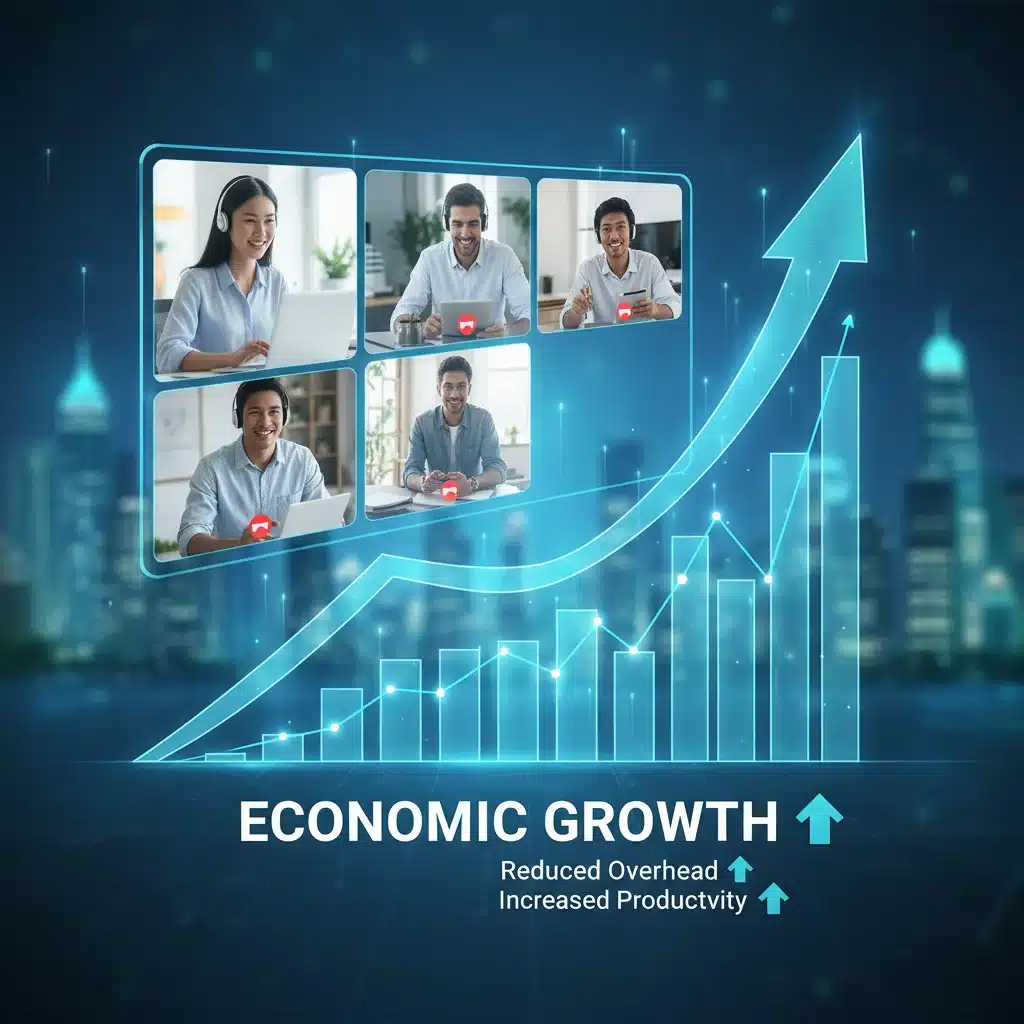
One of the most immediate and tangible economic benefits for businesses adopting remote work is the significant reduction in overhead costs. Companies can downsize their physical office spaces, leading to substantial savings on rent, utilities, maintenance, and office supplies. For instance, a report by Global Workplace Analytics estimated that businesses could save approximately $11,000 per year per remote employee due to reduced real estate and utility costs. These savings can then be reinvested into other areas, such as technology upgrades, employee development, or research and development, fostering innovation and competitiveness. This financial advantage is a key driver for the sustained growth of the remote work future.
Anúncios
Furthermore, reduced commuting costs for employees can translate into higher disposable income, potentially boosting consumer spending in local economies. While some urban centers might see a decrease in commercial real estate demand, suburban and rural areas could experience economic revitalization as remote workers choose to live outside traditional urban hubs. This geographical redistribution of wealth and economic activity is a critical component of understanding the broader economic landscape shaped by remote work.
Increased Productivity and Employee Satisfaction
Numerous studies have indicated a positive correlation between remote work and increased employee productivity. Without the daily commute, employees often gain more time for work and personal activities, leading to better work-life balance and reduced stress. This, in turn, can translate into higher job satisfaction, lower absenteeism, and reduced employee turnover. A highly satisfied and engaged workforce is inherently more productive, contributing directly to a company’s bottom line. The flexibility offered by remote work also empowers employees to tailor their work environment to their preferences, further enhancing focus and efficiency.
The ability to work from anywhere also opens up opportunities for companies to tap into a wider talent pool, hiring the best candidates regardless of their geographical location. This not only improves the quality of the workforce but also promotes diversity and inclusion, leading to more innovative and resilient organizations. The positive impact on employee morale and retention is a significant, albeit sometimes indirect, economic advantage that strengthens the overall business ecosystem. This aspect is crucial for shaping the trajectory of the remote work future.
Impact on Real Estate and Urban Planning
The shift to remote work has sent ripples through the commercial and residential real estate markets. Commercial office spaces in major metropolitan areas are experiencing higher vacancy rates and declining property values. This forces landlords and developers to reimagine these spaces, potentially converting them into mixed-use developments, residential units, or more flexible co-working spaces designed for hybrid models. The repurposing of commercial real estate could lead to new construction opportunities and urban regeneration projects, albeit with different economic drivers than before.
Concurrently, residential real estate in suburban and rural areas has seen an uptick in demand and prices, as individuals are no longer tethered to urban centers for employment. This demographic shift has implications for local economies, schools, and infrastructure development in these regions. Urban planners are now grappling with how to adapt city services and infrastructure to a less concentrated population during working hours and a more distributed residential base. The long-term effects of these changes on property taxes, local businesses, and community development will be a defining feature of the remote work future.
Changes in Consumer Spending Patterns
Remote work also alters consumer spending habits. With fewer commutes, expenses related to transportation, professional attire, and downtown lunch spots decrease. Conversely, spending on home office equipment, high-speed internet, home improvement, and local services in residential areas tends to increase. This reallocation of consumer spending can create new opportunities for businesses catering to the home-based economy and local communities, while posing challenges for traditional urban-centric businesses.
The rise of e-commerce and delivery services is further accelerated by remote work, as people rely more on online shopping for their needs. This shift necessitates businesses to strengthen their digital presence and logistics capabilities. Understanding these evolving consumer patterns is crucial for businesses to adjust their marketing strategies, product offerings, and distribution channels to remain competitive in the evolving economic landscape driven by the remote work future.
2026 Forecast for U.S. Businesses: Navigating the Remote Work Future
Prevalence of Hybrid Work Models
By 2026, the fully remote model, while viable for some, will likely not be the dominant paradigm for most U.S. businesses. Instead, hybrid work models are expected to become the new standard. This involves a blend of in-office and remote work, offering employees flexibility while maintaining opportunities for in-person collaboration, team building, and mentorship. Companies will continue to experiment with various hybrid structures – some might mandate specific in-office days, while others will allow teams to decide their cadence. The key will be flexibility and adaptability.
The challenge for businesses will be to optimize these hybrid models to prevent a two-tiered system where remote workers feel disconnected or disadvantaged. Investing in technology that facilitates seamless collaboration, regardless of location, and fostering inclusive company cultures will be critical for success. The equilibrium between in-person and remote presence will be a continuous point of refinement, shaping the very definition of the remote work future.
Technological Advancements and Digital Transformation
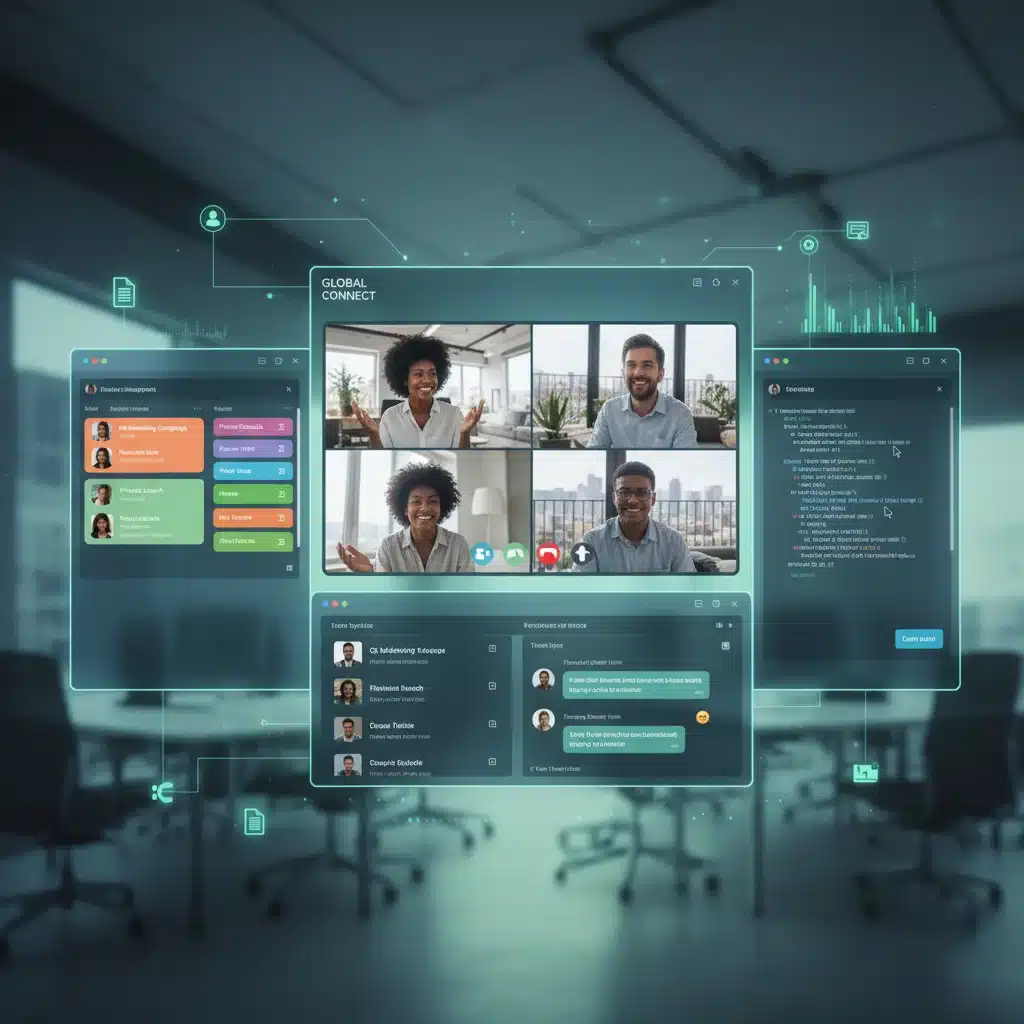
The acceleration of digital transformation will continue unabated. By 2026, businesses will rely even more heavily on advanced collaboration tools, cloud-based platforms, and robust cybersecurity measures to support their distributed workforces. Artificial intelligence (AI) and automation will play an increasingly significant role in streamlining workflows, enhancing productivity, and providing insights into employee engagement and well-being in remote settings. Tools that can accurately measure productivity, facilitate asynchronous communication, and provide immersive virtual meeting experiences will be commonplace.
Investment in IT infrastructure, including reliable high-speed internet access for all employees, will be a top priority. Furthermore, the focus will shift towards creating ‘digital headquarters’ – virtual spaces where employees can connect, collaborate, and access resources as effectively as they would in a physical office. This technological backbone is indispensable for realizing the full potential of the remote work future.
Rethinking Leadership and Company Culture
Traditional leadership styles, often rooted in in-person oversight, will continue to evolve. Leaders in 2026 will need to excel at managing remote teams, emphasizing trust, autonomy, and results over direct supervision. Skills such as empathetic communication, clear goal setting, and fostering psychological safety will be paramount. Companies will invest in training programs to equip managers with the competencies required to lead effectively in a hybrid environment.
Company culture, too, will undergo a transformation. Building a strong, inclusive culture that transcends physical boundaries will be a critical challenge and opportunity. This involves intentional efforts to create virtual social interactions, recognize achievements across locations, and ensure equitable opportunities for career growth for both remote and in-office employees. The ability to cultivate a cohesive and engaged workforce, irrespective of physical location, will define successful organizations in the remote work future.
Talent Acquisition and Retention Strategies
The geographical constraints on talent acquisition will significantly diminish by 2026. U.S. businesses will increasingly recruit from a global talent pool, seeking out the best skills regardless of location. This expanded talent market offers immense opportunities for companies to find specialized expertise and build more diverse teams. However, it also intensifies competition for talent, requiring businesses to offer competitive compensation, attractive benefits, and compelling remote work policies to attract and retain top performers.
Retention strategies will also need to adapt. Flexible work arrangements are no longer just a perk but an expectation for many employees. Companies that fail to offer such flexibility risk losing valuable talent to competitors. Focusing on employee well-being, professional development opportunities tailored for remote learning, and a clear path for career progression will be essential for keeping employees engaged and committed in the remote work future.
Regulatory and Policy Landscape
As remote work becomes more entrenched, the regulatory and policy landscape will inevitably evolve to catch up. By 2026, we can expect clearer guidelines and legislation regarding remote work, particularly concerning taxation, labor laws across different states or even countries, data privacy, and workplace safety. Businesses will need to stay abreast of these evolving regulations to ensure compliance and mitigate legal risks. This could include updated definitions of what constitutes a ‘workplace’ and how to handle cross-state or international employment.
The implications for tax revenue at local, state, and federal levels will also be a major point of discussion. As populations shift and work patterns change, governments will need to adapt their revenue collection methods and consider new policies to support the distributed workforce. Understanding and influencing these policy changes will be crucial for businesses planning for the long-term remote work future.
Challenges and Opportunities for U.S. Businesses
Challenges: Cybersecurity, Connectivity, and Collaboration Fatigue
While the benefits are numerous, the remote work future also presents significant challenges. Cybersecurity remains a top concern, as distributed networks create more potential entry points for cyber threats. Businesses must invest heavily in robust security protocols, employee training, and advanced threat detection systems. Ensuring equitable and reliable internet connectivity for all employees, especially in rural areas, is another hurdle that needs addressing.
Collaboration fatigue, stemming from an overload of virtual meetings and digital communication, can also impact employee well-being and productivity. Companies need to design intentional communication strategies that balance synchronous and asynchronous methods, encourage breaks, and protect employees’ personal time. Overcoming these challenges will require continuous innovation and a proactive approach to problem-solving.
Opportunities: Innovation, Global Reach, and Cost Efficiency
Despite the challenges, the opportunities presented by the remote work future are vast. The ability to tap into a global talent pool fosters greater diversity of thought and innovation. Reduced operational costs can free up capital for strategic investments, driving growth and competitiveness. Furthermore, the flexibility of remote work can lead to new business models and service offerings that cater to a distributed workforce, opening up entirely new market segments.
Companies can also leverage remote work to enhance their environmental sustainability efforts by reducing commutes and office energy consumption. The agility gained from a distributed workforce can make businesses more resilient to unforeseen disruptions, as demonstrated during the pandemic. Embracing these opportunities strategically will be key to thriving in the coming years.
Strategic Imperatives for 2026 and Beyond
For U.S. businesses to successfully navigate the remote work future, several strategic imperatives emerge:
- Invest in Robust Technology Infrastructure: Prioritize cloud computing, advanced collaboration platforms, and top-tier cybersecurity solutions.
- Develop Adaptive Leadership: Train managers in remote leadership skills, focusing on trust, empathy, and performance management in a distributed setting.
- Cultivate an Inclusive Hybrid Culture: Intentionally design cultural programs that connect remote and in-office employees, ensuring equitable opportunities and a sense of belonging.
- Rethink Real Estate Strategy: Optimize physical spaces for collaboration and specific in-person activities, reducing overall footprint where appropriate.
- Formulate Flexible Talent Strategies: Broaden recruitment efforts globally and offer competitive remote work policies to attract and retain diverse talent.
- Stay Agile on Policy and Compliance: Monitor evolving legal and regulatory frameworks related to remote work to ensure compliance and adapt business practices proactively.
- Prioritize Employee Well-being: Implement programs and policies that support mental health, work-life balance, and prevent burnout in a remote or hybrid setting.
These imperatives are not isolated but interconnected, requiring a holistic approach to organizational design and strategy. The most successful businesses will be those that view remote work not just as a logistical challenge but as a strategic lever for innovation, efficiency, and competitive advantage.
Conclusion: The Enduring Shift Towards a Flexible Remote Work Future
The economic implications of remote work are profound and far-reaching, reshaping industries, consumer behaviors, and urban landscapes. The 2026 forecast for U.S. businesses points towards a dominant hybrid work model, underpinned by significant technological advancements and evolving leadership paradigms. While challenges persist, particularly in cybersecurity and maintaining cohesive company culture, the opportunities for innovation, global talent acquisition, and cost efficiency are immense. Businesses that proactively adapt their strategies, invest in appropriate technologies, and foster supportive, flexible work environments will be best positioned to thrive in this new era. The remote work future is not a passing trend but a fundamental transformation that demands continuous attention and strategic foresight from all U.S. businesses aiming for sustained success.