Technological Advancements and Their 2026 Economic Impact: A Look at Automation and AI

Anúncios
The pace of technological change has never been more rapid, and as we approach 2026, the economic impact of these advancements, particularly in the realms of automation and artificial intelligence (AI), is becoming increasingly clear. We are on the cusp of a transformative era, where the very fabric of our economies, labor markets, and societies will be profoundly reshaped. This article delves into the anticipated shifts, challenges, and opportunities presented by this technological revolution, focusing specifically on the AI economic impact.
Anúncios
For decades, science fiction has painted vivid pictures of a future dominated by intelligent machines. Today, that future is not only arriving but is doing so at an accelerated rate. Automation, once confined to manufacturing assembly lines, is now permeating white-collar jobs, logistics, healthcare, and virtually every sector imaginable. AI, the brain behind many automated processes, is evolving from rudimentary algorithms to sophisticated systems capable of learning, reasoning, and even creating. Understanding the AI economic impact is crucial for businesses, policymakers, and individuals to navigate the coming years successfully.
The Shifting Landscape of Labor Markets: Jobs Transformed, Not Just Lost
One of the most immediate and frequently discussed aspects of the AI economic impact is its effect on employment. The narrative often oscillates between alarmist predictions of mass unemployment and optimistic views of new job creation. The reality, as always, is likely more nuanced. By 2026, we can expect significant shifts in the types of jobs available, the skills required, and the very nature of work itself.
Automation and AI are poised to take over repetitive, predictable, and data-intensive tasks. This includes roles in manufacturing, data entry, customer service, and even some aspects of legal and medical analysis. While this might lead to job displacement in certain sectors, it also frees up human workers to focus on tasks requiring creativity, critical thinking, emotional intelligence, and complex problem-solving – areas where AI still largely lags. The key will be adaptation and reskilling.
Anúncios
New job categories are already emerging, and this trend will only accelerate. Roles such as AI trainers, ethics officers for autonomous systems, data scientists, robotics engineers, and human-AI collaboration specialists will become increasingly vital. The demand for skills in areas like machine learning, natural language processing, and advanced data analytics will skyrocket. Furthermore, jobs that leverage uniquely human attributes – artists, therapists, educators, strategists – are likely to see increased value and demand.
The challenge lies in managing this transition. Governments, educational institutions, and businesses must collaborate to provide robust reskilling and upskilling programs. Lifelong learning will no longer be a buzzword but a necessity for individuals to remain relevant in a rapidly evolving job market. The AI economic impact on labor will thus be characterized by transformation rather than outright elimination, demanding a proactive approach to workforce development.
Productivity Gains and Economic Growth: A Double-Edged Sword
The promise of automation and AI extends far beyond simply replacing human labor; it offers unprecedented opportunities for productivity growth. By automating mundane tasks, optimizing processes, and providing insights from vast datasets, AI can significantly enhance efficiency across industries. This increased productivity is a primary driver of economic growth.
In manufacturing, AI-powered robots can work 24/7 with minimal errors, leading to higher output and lower production costs. In healthcare, AI can assist in diagnostics, drug discovery, and personalized treatment plans, improving patient outcomes and reducing operational expenses. In finance, algorithms can analyze market trends, detect fraud, and automate trading, leading to more efficient capital allocation. The sheer scale of these potential gains underscores the profound AI economic impact.
However, this growth is not without its complexities. While overall economic output may rise, the distribution of these gains is a critical concern. If the benefits of increased productivity are concentrated in the hands of a few corporations or individuals, it could exacerbate income inequality. This raises important questions about wealth distribution, taxation, and social safety nets in an AI-driven economy. Policymakers will need to consider mechanisms to ensure that the economic prosperity generated by AI is shared more broadly, fostering inclusive growth.
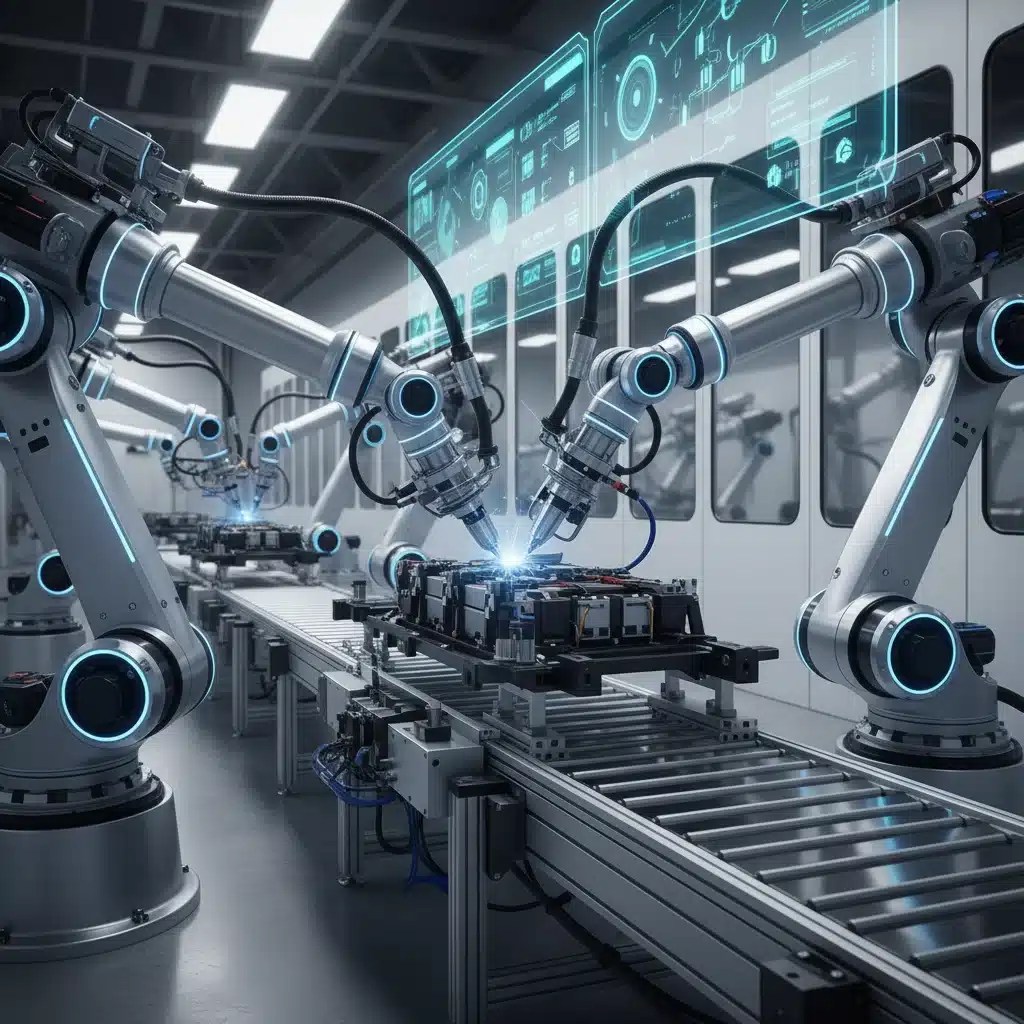
Moreover, the concept of "peak efficiency" also needs to be explored. While automation drives efficiency, it can also lead to systems that are less resilient to unforeseen disruptions. Over-reliance on highly optimized, automated systems might create new vulnerabilities. Balancing efficiency with resilience will be a key challenge in harnessing the full potential of the AI economic impact.
Reshaping Industries: From Manufacturing to Services
The AI economic impact is not uniform across all sectors; rather, it will selectively reshape industries based on their susceptibility to automation and their capacity to integrate AI technologies. By 2026, we will see significant transformations in virtually every economic domain.
Manufacturing and Logistics: The Automation Frontier
These sectors have historically been early adopters of automation, and AI is taking this to the next level. Smart factories, predictive maintenance, and autonomous logistics (drones, self-driving vehicles) will become more commonplace. Supply chains will become more efficient, responsive, and data-driven. This will likely lead to reshoring of some manufacturing, as labor costs become a less dominant factor, and proximity to markets and agility become more important.
Healthcare: Precision and Personalization
AI will revolutionize healthcare by assisting in disease diagnosis, drug discovery, personalized medicine, and administrative tasks. AI-powered tools can analyze medical images with greater accuracy than humans, predict disease outbreaks, and help develop new therapies faster. This will not only improve health outcomes but also significantly alter the economics of healthcare delivery, making it more efficient and accessible.
Finance: Algorithmic Trading and Fraud Detection
The financial sector is already heavily reliant on algorithms, and AI will deepen this dependency. Algorithmic trading, risk assessment, fraud detection, and personalized financial advice will all be enhanced by AI. This could lead to more stable markets (due to better risk management) but also potentially more complex and rapid financial events, requiring new regulatory frameworks to manage the AI economic impact on financial stability.
Retail and E-commerce: Hyper-Personalization and Automated Operations
AI will drive hyper-personalization in retail, from product recommendations to customized shopping experiences. Automated warehouses, drone delivery, and AI-powered customer service bots will streamline operations, reduce costs, and enhance customer satisfaction. The competition in this sector will intensify, with AI capabilities becoming a crucial differentiator for success.
Education: Adaptive Learning and Administrative Efficiency
AI will transform education by enabling adaptive learning platforms that tailor content to individual student needs. It can automate grading, provide personalized feedback, and help educators identify struggling students early. This could lead to more effective and efficient learning outcomes, but also raises questions about the role of human teachers and the potential for digital divides.
Policy Implications: Navigating the AI Economic Impact
The profound AI economic impact necessitates a proactive and thoughtful approach from policymakers. Ignoring these shifts could lead to widespread social disruption, increased inequality, and missed opportunities for national prosperity. Several key policy areas demand urgent attention:
Education and Workforce Development
As discussed, investing in education and reskilling programs is paramount. This includes reimagining curricula to emphasize critical thinking, creativity, digital literacy, and STEM skills from an early age. Governments should also facilitate vocational training and lifelong learning initiatives for adult workers whose jobs are most susceptible to automation.
Social Safety Nets and Income Inequality
The potential for job displacement and increased income inequality requires a re-evaluation of social safety nets. Concepts like Universal Basic Income (UBI) are gaining traction as potential mechanisms to provide a baseline standard of living in an economy where traditional employment might become less prevalent for some segments of the population. Other approaches include strengthening unemployment benefits, wage insurance, and public works programs.
Regulation and Ethics
As AI becomes more pervasive, regulatory frameworks will be essential to address issues of data privacy, algorithmic bias, accountability for AI decisions, and market concentration. Striking a balance between fostering innovation and ensuring ethical deployment of AI will be critical. International cooperation will also be necessary to establish global norms and standards for AI development and use.
Infrastructure Investment
The continued growth of AI and automation requires robust digital infrastructure. Investment in high-speed internet, 5G networks, and secure data centers will be crucial to support the increasing demands of AI-driven economies. Energy infrastructure will also need to adapt to the significant power requirements of advanced AI systems.
The Global Dimension: AI and Geopolitical Power
The AI economic impact is not confined within national borders; it has significant geopolitical implications. Nations that lead in AI development and deployment are likely to gain a substantial economic and strategic advantage. This has spurred an international race for AI supremacy, with countries investing heavily in research, talent development, and AI infrastructure.
This global competition can lead to both collaboration and contention. On one hand, international cooperation can accelerate AI research and address global challenges like climate change and pandemics. On the other hand, the strategic importance of AI could exacerbate trade tensions, intellectual property disputes, and even military rivalries. By 2026, the distribution of AI capabilities will likely be a major determinant of a nation’s economic influence and global standing.
Developing countries face a unique set of challenges and opportunities. While AI can help them leapfrog traditional stages of development (e.g., in healthcare or agriculture), they also risk being left behind if they cannot access or develop these technologies. International aid and technology transfer programs will be vital to ensure that the AI economic impact is a force for global development, not just further divergence.
Human-AI Collaboration: The Future of Work and Innovation
While discussions often focus on AI replacing humans, a more optimistic and likely scenario is that of human-AI collaboration. By 2026, we will see increasingly sophisticated partnerships between humans and intelligent machines, where each augments the other’s strengths.
In creative fields, AI can generate initial ideas or optimize elements, allowing human artists, designers, and writers to focus on conceptualization and refinement. In scientific research, AI can analyze vast datasets, identify patterns, and formulate hypotheses, accelerating discovery. In customer service, AI chatbots can handle routine queries, freeing human agents to address complex or emotionally charged issues.
This symbiotic relationship demands new skills from human workers, particularly in understanding how to interact with AI systems, interpret their outputs, and leverage them effectively. The ability to "prompt engineer" – to craft effective queries for AI models – is just one example of an emerging skill set. Furthermore, ethical considerations in human-AI interaction will become paramount, ensuring that AI systems are used responsibly and align with human values.
The emphasis will shift from simply performing tasks to managing, guiding, and collaborating with intelligent tools. This redefinition of work will require a flexible mindset and a willingness to continuously learn and adapt. The most successful individuals and organizations will be those that master the art of human-AI synergy, maximizing the positive AI economic impact.
Challenges and Risks: Beyond the Economic Upsides
While the economic upsides of AI are significant, it is crucial to acknowledge and address the inherent challenges and risks. These include:
- Job Displacement and Structural Unemployment: Even with reskilling efforts, some individuals may struggle to adapt, leading to increased long-term unemployment in certain demographics or regions.
- Increased Inequality: If the benefits of AI are not widely distributed, it could exacerbate wealth and income disparities, leading to social unrest.
- Algorithmic Bias: AI systems trained on biased data can perpetuate and even amplify societal biases, leading to unfair outcomes in areas like hiring, lending, or criminal justice.
- Privacy Concerns: The vast amounts of data required to train and operate AI systems raise significant privacy concerns, necessitating robust data protection regulations.
- Cybersecurity Risks: AI systems themselves can become targets for cyberattacks, and their widespread integration could create new vulnerabilities in critical infrastructure.
- Autonomous Decision-Making and Accountability: As AI systems become more autonomous, determining accountability for their actions, particularly in high-stakes situations, becomes a complex legal and ethical challenge.
- Technological Singularity and Control: While perhaps a more distant concern, the long-term risk of highly advanced AI systems operating beyond human comprehension or control remains a topic of philosophical and scientific debate.
Addressing these challenges requires a multi-faceted approach involving technological innovation, ethical guidelines, robust regulatory frameworks, and societal dialogue. The goal is not to halt progress but to guide it in a way that maximizes benefits while mitigating risks, ensuring that the AI economic impact is overwhelmingly positive.
Conclusion: A Future Shaped by Intelligent Machines
By 2026, the AI economic impact will be undeniable and pervasive. Automation and artificial intelligence will not merely be tools but foundational elements reshaping industries, redefining work, and influencing global power dynamics. We can anticipate significant productivity gains, the emergence of entirely new sectors and job roles, and a profound transformation of existing ones.
Navigating this future successfully requires foresight, adaptability, and a commitment to inclusive growth. Businesses must invest in AI adoption and workforce training. Governments must develop forward-thinking policies that support innovation, protect workers, and ensure ethical deployment. Individuals must embrace lifelong learning and cultivate uniquely human skills that complement AI capabilities.
The era of intelligent machines is here, and its economic ripples are just beginning to spread. By understanding and actively shaping the trajectory of AI and automation, we can harness their immense potential to create a more prosperous, efficient, and equitable future for all. The coming years will be a testament to humanity’s ability to adapt and innovate in the face of unprecedented technological change.
Author