Lifelong Learning Boosts Earnings: US Data Predicts 12% Higher Income by 2027

Anúncios
The Unmistakable Value of Continuing Education: US Data Shows 12% Higher Earnings for Lifelong Learners by 2027
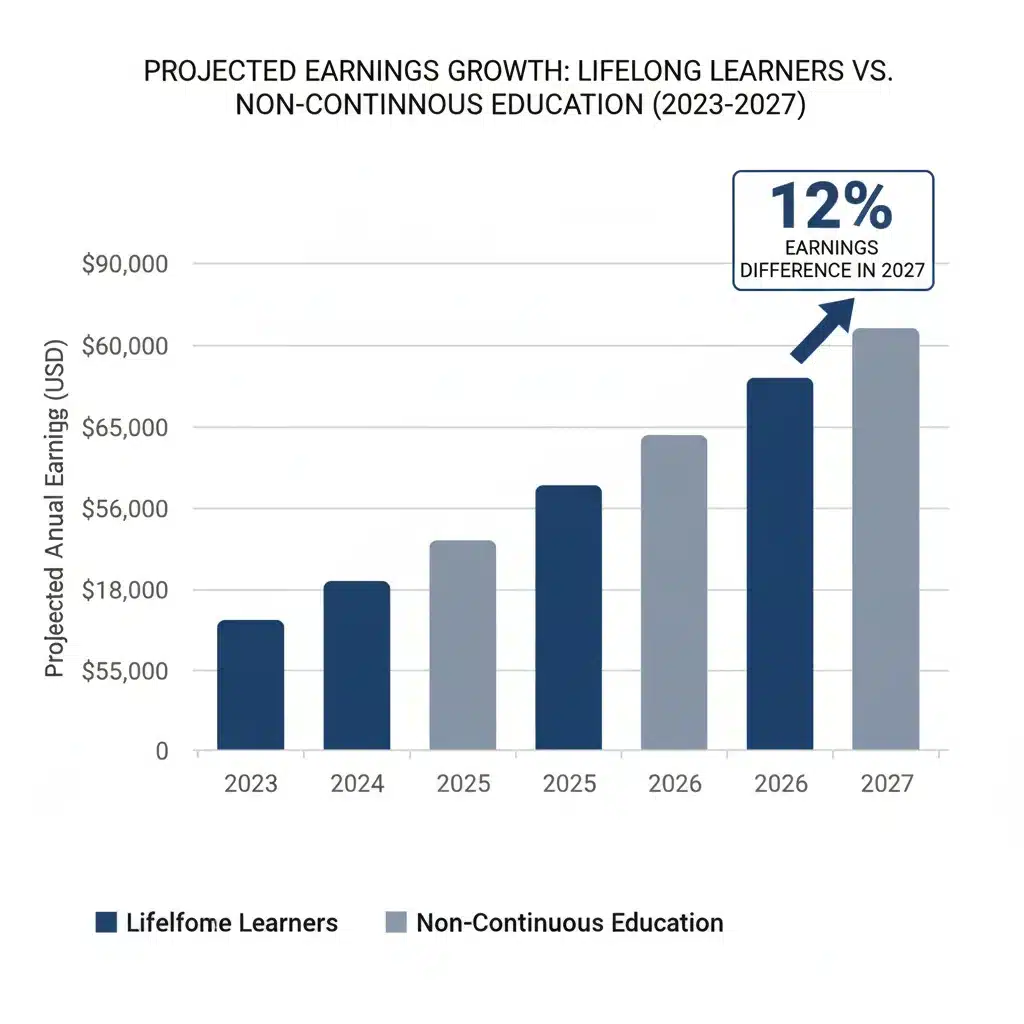
In an era defined by rapid technological advancements, evolving job markets, and a constant demand for new skills, the concept of lifelong learning benefits has transcended from a mere suggestion to an economic imperative. The notion that one’s education concludes with a diploma or degree is rapidly becoming a relic of the past. Today, continuous learning is not just about personal enrichment; it’s a direct pathway to enhanced earning potential and sustained career relevance. Startling new data from the United States underscores this reality, projecting that individuals who commit to ongoing education and skill development are set to earn a remarkable 12% more by 2027 compared to their counterparts who do not.
This isn’t merely a statistical anomaly; it’s a profound indicator of the shifting landscape of the modern workforce. Businesses are increasingly prioritizing adaptability, innovation, and a proactive approach to skill acquisition. For the individual, embracing lifelong learning benefits means future-proofing one’s career, unlocking new opportunities, and, crucially, securing a more robust financial future. This article will delve deep into the multifaceted value of continuing education, exploring the underlying reasons for this projected earnings gap, the types of learning that yield the best returns, and practical strategies for integrating lifelong learning into your professional journey.
Anúncios
The Economic Imperative: Why Lifelong Learning Translates to Higher Earnings
The 12% earnings premium projected for lifelong learners by 2027 is a powerful testament to the direct link between continuous education and economic success. But what drives this significant financial advantage? Several interconnected factors contribute to this phenomenon, painting a clear picture of why investing in yourself through learning pays dividends.
Adapting to a Dynamic Job Market
The modern job market is characterized by unprecedented dynamism. Industries are being disrupted, new technologies emerge at an astonishing pace, and skill sets that were once highly valued can quickly become obsolete. Consider the rise of artificial intelligence, data science, and cybersecurity in just the last decade. Professionals who have actively pursued education in these areas have not only remained relevant but have also positioned themselves for high-demand, high-paying roles. Those who stagnate risk being left behind, facing diminished opportunities and stagnant wages.
Anúncios
Lifelong learning benefits professionals by equipping them with the agility to pivot and adapt. It’s about developing a growth mindset that views change not as a threat, but as an opportunity to acquire new competencies. This adaptability makes individuals invaluable to employers seeking agile workforces capable of navigating uncertainty and driving innovation.
The Premium on Specialized Skills and Expertise
As industries become more complex, the demand for specialized skills intensifies. General knowledge, while foundational, is often not enough to command top salaries. Employers are willing to pay a premium for individuals who possess deep expertise in niche areas or who can bridge gaps between different disciplines. Continuing education, whether through certifications, advanced degrees, or specialized workshops, is the primary vehicle for acquiring such expertise.
For example, a software developer who specializes in machine learning or cloud architecture will likely earn significantly more than one with only general programming knowledge. Similarly, a marketing professional who masters advanced analytics or programmatic advertising will find themselves in a more competitive and lucrative position. These specialized skills are a direct result of ongoing learning and are key contributors to the projected 12% earnings increase.
Enhanced Problem-Solving and Critical Thinking
Beyond specific technical skills, lifelong learning benefits also cultivate higher-order cognitive abilities such as critical thinking, complex problem-solving, and creativity. Engaging with new information, diverse perspectives, and challenging concepts hones the mind’s ability to analyze situations, identify effective solutions, and innovate. These are universal skills that are highly valued across all industries and at all levels of an organization.
Employers recognize that individuals with strong problem-solving and critical thinking skills are more likely to drive efficiency, improve processes, and contribute to strategic growth. This intellectual capital translates directly into higher value for the organization, which in turn is reflected in higher compensation for the employee.
Networking Opportunities and Professional Advancement
Many continuing education programs, especially those that are cohort-based or involve professional associations, offer invaluable networking opportunities. Connecting with peers, instructors, and industry leaders can open doors to new career paths, mentorship, and collaborative projects. These connections are often just as valuable as the knowledge gained, providing access to hidden job markets and accelerating professional advancement.
Furthermore, demonstrating a commitment to lifelong learning benefits individuals by signaling ambition, self-discipline, and a proactive attitude to current and prospective employers. These qualities are highly attractive and often lead to promotions, leadership roles, and increased responsibilities, all of which come with commensurate salary increases.
Understanding the 12% Earnings Projection by 2027
The projection of a 12% earnings advantage by 2027 for lifelong learners is not an arbitrary figure. It stems from comprehensive analyses of labor market trends, skill demand, and the economic impact of educational attainment. This data often incorporates factors such as:
- Wage Growth Differentials: Tracking how wages for roles requiring updated skills outpace those for roles that do not.
- Job Security: Assessing the stability and growth prospects of careers that demand continuous learning.
- Return on Investment (ROI) of Education: Quantifying the financial benefits derived from various forms of continuing education, from certifications to advanced degrees.
- Industry-Specific Demands: Analyzing skill gaps in critical sectors and the premium placed on filling those gaps.
This 12% figure serves as a compelling incentive for individuals to proactively manage their career trajectories through continuous skill development. It suggests that those who embrace learning are not just keeping pace; they are actively outperforming the general workforce in terms of financial reward.
Forms of Continuing Education That Deliver Results
Lifelong learning benefits come in many forms, and not all are created equal in terms of their impact on earning potential. While any learning is generally good, strategic learning that aligns with market demands tends to yield the highest financial returns. Here are some of the most impactful avenues:
Professional Certifications and Badges
In many industries, professional certifications are highly valued. They provide tangible proof of specialized skills and knowledge, often endorsed by industry bodies or leading technology companies. Examples include certifications in project management (PMP), cloud computing (AWS, Azure, Google Cloud), cybersecurity (CompTIA Security+, CISSP), and data analytics (Google Data Analytics Professional Certificate).
These certifications are often designed to meet immediate industry needs, making certified professionals highly attractive to employers. They can lead to immediate salary bumps and open doors to more senior or specialized roles.
Online Courses and MOOCs (Massive Open Online Courses)
Platforms like Coursera, edX, Udemy, and LinkedIn Learning offer an unparalleled wealth of knowledge. They provide flexible, affordable, and often accredited courses from top universities and industry experts. From mastering a new programming language to understanding digital marketing strategies or refining leadership skills, MOOCs allow individuals to acquire specific competencies at their own pace.
The accessibility of these platforms makes integrating lifelong learning benefits into a busy schedule much easier, democratizing access to high-quality education and enabling continuous skill upgrades.
Advanced Degrees and Executive Education
For some career paths, an advanced degree (Master’s, PhD, MBA) remains a significant differentiator. These programs offer deep theoretical knowledge, advanced research skills, and often a robust professional network. While they represent a more substantial investment of time and money, the long-term earnings potential and career advancement opportunities can be substantial, particularly in fields like medicine, law, engineering, and business leadership.
Executive education programs, typically shorter and more focused, cater to experienced professionals looking to refine leadership skills, understand emerging business trends, or transition into new strategic roles. These are often highly intensive but provide immediate, actionable insights.
Workshops, Seminars, and Conferences
Attending industry-specific workshops, seminars, and conferences is another effective way to engage in continuous learning. These events offer opportunities to learn about the latest trends, best practices, and emerging technologies directly from thought leaders. They also provide excellent networking opportunities, fostering connections that can lead to new job prospects or collaborative ventures.
Self-Directed Learning and Mentorship
While less formal, self-directed learning through books, articles, podcasts, and online tutorials, combined with seeking mentorship from experienced professionals, can be incredibly powerful. This approach requires discipline and initiative but allows for highly personalized learning tailored to individual career goals and interests. A good mentor can provide guidance, share insights, and help navigate career challenges, accelerating professional growth.
Strategies for Integrating Lifelong Learning into Your Career
Knowing that lifelong learning benefits your career and wallet is one thing; effectively integrating it into your busy life is another. Here are practical strategies to make continuous education a sustainable part of your professional journey:
Identify Your Skill Gaps and Future Needs
Start by assessing your current skill set and identifying areas where you need to improve or develop new competencies. Research industry trends, job descriptions for desired roles, and speak with mentors or career advisors to understand future skill demands. Tools like LinkedIn’s skill assessments or job market analysis reports can be invaluable here. Prioritize skills that are in high demand and align with your career aspirations.
Set Clear Learning Goals
Just like any other professional objective, learning goals should be SMART: Specific, Measurable, Achievable, Relevant, and Time-bound. Instead of a vague goal like ‘learn more about AI,’ aim for ‘complete the Google AI Foundations course by the end of Q3 to understand machine learning basics.’ Clear goals provide direction and motivation.
Allocate Dedicated Time for Learning
In a world of competing priorities, carving out dedicated time for learning is crucial. This could be an hour each morning before work, a few evenings a week, or a block of time on weekends. Treat this learning time as non-negotiable, just like any important work meeting. Consistency is key to making progress and embedding new knowledge.
Leverage Employer-Sponsored Programs
Many companies recognize the value of lifelong learning benefits for their employees and offer tuition reimbursement, access to online learning platforms, or internal training programs. Explore what resources your employer provides and take full advantage of them. This is often a cost-effective way to acquire new skills.
Build a Learning Network
Connect with other learners, join professional communities, and participate in online forums related to your field of study. Sharing insights, discussing challenges, and collaborating on projects can enhance your learning experience and provide additional motivation. A supportive learning network can make the journey more engaging and effective.
Apply What You Learn Immediately
The most effective way to solidify new knowledge and skills is to apply them in real-world scenarios. Look for opportunities to use your newly acquired skills in your current role, volunteer for projects, or even start a side project. Practical application not only reinforces learning but also demonstrates your capabilities to employers, further boosting your career prospects and financial value.

The Future of Work and the Role of Lifelong Learning
The projected 12% earnings increase by 2027 for lifelong learners is not a fleeting trend but a harbinger of the future of work. As automation, artificial intelligence, and global interconnectedness continue to redefine industries, the ability to continuously learn and unlearn will be the most valuable skill of all. The emphasis will shift from what you know to how quickly and effectively you can acquire new knowledge and apply it.
The Rise of the ‘Skill Economy’
We are rapidly moving towards a ‘skill economy’ where specific, demonstrable skills are more important than traditional credentials alone. Employers are increasingly looking for individuals who can prove their capabilities through portfolios, projects, and certifications, rather than solely relying on degrees obtained years ago. This shift empowers individuals to take charge of their own skill development and career progression, making lifelong learning benefits even more pronounced.
Human Skills in an AI World
While technical skills are crucial, the rise of AI also highlights the enduring importance of uniquely human skills. Creativity, emotional intelligence, complex communication, ethical reasoning, and leadership will become even more valuable as routine tasks are automated. Continuing education in these ‘soft skills’ is just as vital as technical training for long-term career success and earning potential.
Personalized Learning Pathways
The future of lifelong learning will likely involve increasingly personalized and adaptive learning pathways. AI-powered platforms will be able to recommend specific courses, resources, and experiences based on an individual’s career goals, learning style, and existing skill set. This bespoke approach will make continuous education more efficient and effective, maximizing the lifelong learning benefits for each individual.
Overcoming Challenges to Lifelong Learning
Despite the clear advantages, engaging in lifelong learning can present challenges. Time constraints, financial investment, and a lack of clear direction are common hurdles. However, strategies exist to mitigate these:
- Time Management: Utilize time-blocking techniques, micro-learning (short, focused learning sessions), and integrate learning into daily routines.
- Financial Planning: Explore free resources (MOOCs, library access), employer-sponsored programs, scholarships, and consider the long-term ROI of paid programs.
- Motivation and Accountability: Join study groups, find an accountability partner, and regularly remind yourself of your goals and the tangible lifelong learning benefits you stand to gain.
- Information Overload: Focus on quality over quantity. Select reputable sources and programs that align directly with your objectives.
Conclusion: Invest in Yourself, Secure Your Future
The data is unequivocal: lifelong learning benefits are not just about personal growth; they are a direct investment in your financial future. The projection of a 12% higher earning potential for continuous learners by 2027 in the US is a powerful call to action for every professional. In a world that is constantly evolving, stagnation is no longer an option. Embracing a mindset of continuous education is the key to adaptability, resilience, and sustained success.
By strategically identifying skill gaps, setting clear learning goals, and actively pursuing diverse forms of continuing education, you can future-proof your career, unlock new opportunities, and significantly enhance your earning potential. Make lifelong learning a cornerstone of your professional strategy, and you’ll not only navigate the complexities of the modern workforce but thrive within it, securing a more prosperous and fulfilling future.
Author