US Economic Outlook 2026: Analysts Project 2.8% GDP Growth Amidst Global Trade Shifts
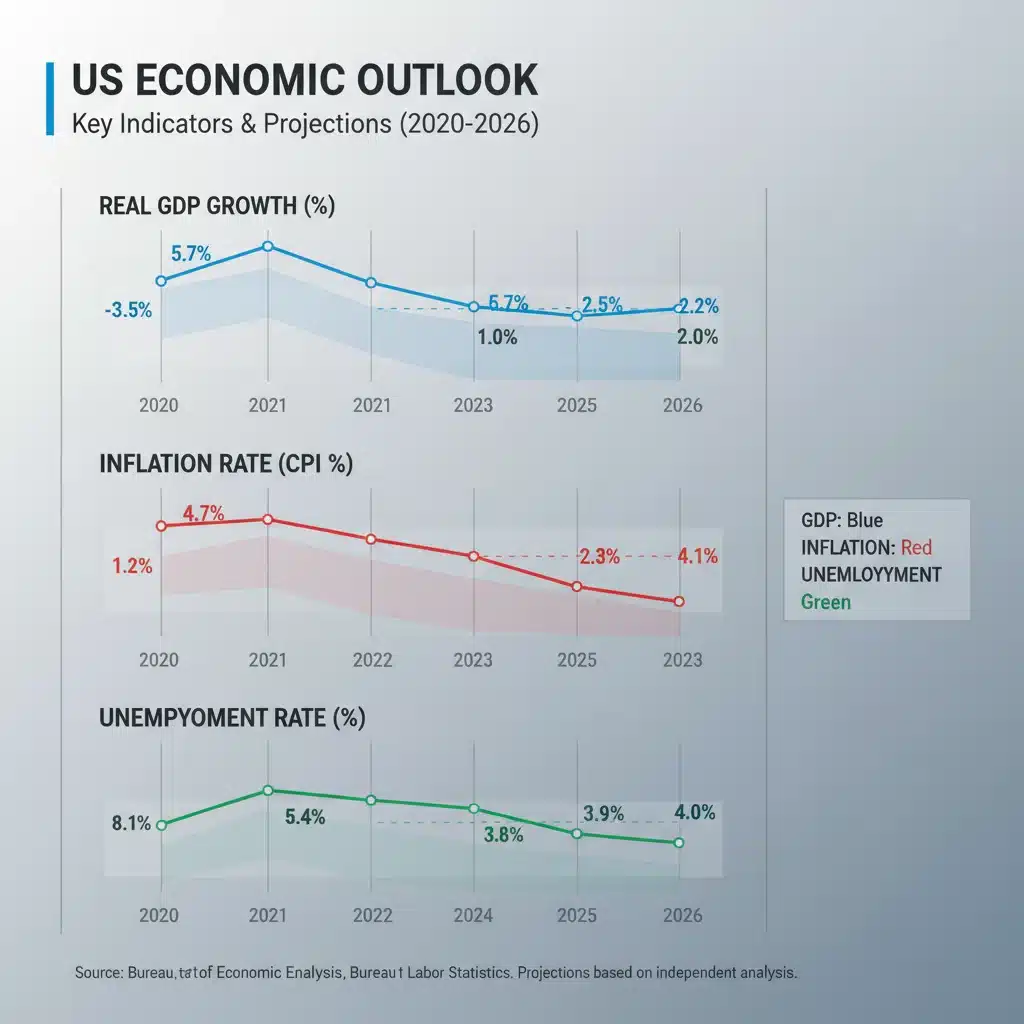
As we navigate the complexities of the global economic landscape, the US Economic Outlook 2026 stands as a beacon of potential stability and growth. Leading analysts are projecting a robust 2.8% GDP growth for the United States, a figure that signals resilience and adaptability in the face of ongoing global challenges. This optimistic forecast is not merely a number; it represents a confluence of factors including technological innovation, strategic policy decisions, and a dynamic labor market. Understanding the nuances of this projection is crucial for businesses, investors, and policymakers alike, as it will shape strategies and opportunities in the coming years.
The journey to 2026 involves careful consideration of various economic indicators and geopolitical developments. From evolving trade relationships to domestic fiscal policies, each element plays a pivotal role in shaping the nation’s economic trajectory. This comprehensive analysis will delve into the core drivers behind the anticipated growth, explore the potential headwinds that could temper these projections, and identify the emerging opportunities that astute stakeholders can leverage. Our focus on the US Economic Outlook 2026 will provide a detailed roadmap for understanding the future of the American economy.
Anúncios
Understanding the 2.8% GDP Growth Projection for the US Economic Outlook 2026
The 2.8% GDP growth projection for the US Economic Outlook 2026 is a significant indicator of the nation’s expected economic health. This figure, often cited by major financial institutions and economic research bodies, reflects a consensus view that the US economy will continue its expansionary path, albeit at a moderated pace compared to post-pandemic surges. Several key factors contribute to this optimistic outlook.
Drivers of Projected GDP Growth
- Technological Innovation: The US remains at the forefront of technological advancements, particularly in artificial intelligence, biotechnology, and renewable energy. These sectors are expected to drive productivity gains, create new industries, and generate high-value jobs, significantly contributing to GDP. Investments in research and development (R&D) continue to fuel this engine of growth.
- Robust Consumer Spending: Despite inflationary pressures, American consumer spending has shown remarkable resilience. A strong labor market, with historically low unemployment rates, supports steady wage growth, which in turn fuels consumer demand for goods and services. As inflation moderates, real wages are expected to increase, further bolstering spending power.
- Government Spending and Infrastructure Investment: Ongoing government initiatives, particularly in infrastructure development (e.g., the Infrastructure Investment and Jobs Act), are injecting substantial capital into the economy. These investments create jobs, improve logistical efficiencies, and lay the groundwork for future economic activity, providing a sustained boost to GDP.
- Private Sector Investment: Businesses are increasingly investing in capacity expansion, automation, and digitalization to enhance efficiency and competitiveness. This private capital expenditure is a critical component of GDP, signaling confidence in future economic prospects.
These drivers collectively paint a picture of an economy with strong underlying fundamentals, capable of sustained growth. The US Economic Outlook 2026 suggests that the confluence of these factors will create a favorable environment for both domestic and international economic participants.
Anúncios
Global Trade Shifts: A New Paradigm for the US Economy
The global trade landscape is undergoing a profound transformation, and these shifts will significantly influence the US Economic Outlook 2026. The era of hyper-globalization is giving way to a more regionalized and diversified trade environment, driven by geopolitical tensions, supply chain vulnerabilities exposed during the pandemic, and a renewed focus on national security and economic sovereignty.
Reshaping Supply Chains
Companies are increasingly prioritizing supply chain resilience over pure cost efficiency. This involves:
- Nearshoring and Friend-shoring: Businesses are relocating production closer to home (nearshoring) or to politically allied countries (friend-shoring) to reduce risks associated with geopolitical instability and long-distance logistics. This trend could lead to increased manufacturing activity within the US and North America.
- Diversification of Sourcing: Relying on a single country for critical inputs is being phased out. Companies are actively seeking multiple suppliers across different regions to mitigate disruption risks, creating new trade flows and opportunities for various economies.
Impact on US Trade Policy
US trade policy is evolving to reflect these global shifts. There is an increased emphasis on:
- Strategic Industries: Protecting and promoting domestic industries deemed critical for national security, such as semiconductors, advanced manufacturing, and renewable energy. This often involves tariffs, subsidies, and other protective measures.
- Bilateral and Regional Agreements: While multilateral trade agreements face headwinds, there’s a growing focus on forging stronger bilateral and regional trade partnerships that align with US strategic interests.
- Digital Trade: The increasing importance of digital services and data flows is leading to new discussions and frameworks for governing digital trade, an area where the US holds a significant competitive advantage.
These global trade shifts present both challenges and opportunities for the US Economic Outlook 2026. While some industries may face increased competition or adjustments, others will benefit from reshoring efforts and new market access. Adapting to this new paradigm will be crucial for maintaining economic competitiveness.
Key Sectors Driving the US Economic Outlook 2026
While the overall 2.8% GDP growth is a headline figure, a deeper dive into specific sectors reveals the engines powering the US Economic Outlook 2026. Certain industries are poised for significant expansion, contributing disproportionately to job creation, innovation, and overall economic output.
Technology and Innovation
The technology sector continues to be a powerhouse. Areas like artificial intelligence (AI), machine learning, cloud computing, and cybersecurity are not only growing rapidly themselves but are also enabling productivity gains across all other sectors. The ongoing digital transformation of businesses, from small enterprises to large corporations, ensures sustained demand for tech products and services. Furthermore, the US remains a global leader in venture capital funding for tech startups, fostering a continuous pipeline of innovation.
Renewable Energy and Green Technologies
With increasing global awareness of climate change and supportive government policies (e.g., tax credits and incentives), the renewable energy sector is experiencing a boom. Investments in solar, wind, battery storage, and electric vehicle (EV) infrastructure are creating new manufacturing jobs, driving technological advancements, and reducing reliance on fossil fuels. This sector is not just about energy production; it encompasses a vast ecosystem of related industries, from raw material extraction to advanced engineering and installation services, all contributing positively to the US Economic Outlook 2026.
Healthcare and Biotechnology
An aging population, coupled with continuous advancements in medical science and biotechnology, ensures steady growth in the healthcare sector. Innovations in pharmaceuticals, medical devices, personalized medicine, and digital health solutions are driving significant investment and job creation. The US continues to be a global hub for medical research and development, attracting top talent and capital, which further strengthens this sector’s contribution to the economy.
Advanced Manufacturing
Driven by reshoring efforts, technological integration (Industry 4.0), and strategic national interests, advanced manufacturing is making a resurgence. This includes high-tech production of semiconductors, aerospace components, defense equipment, and specialized industrial machinery. Automation, robotics, and advanced materials are transforming traditional manufacturing processes, making them more efficient and competitive globally. This revitalization of manufacturing is a crucial component of a robust US Economic Outlook 2026.
Potential Headwinds and Risks to the US Economic Outlook 2026
While the 2.8% GDP growth projection for the US Economic Outlook 2026 is optimistic, it’s essential to acknowledge potential headwinds and risks that could temper this growth. A realistic assessment requires understanding the challenges that policymakers and businesses will need to navigate.
Inflationary Pressures and Monetary Policy
Persistent inflation remains a concern. While central banks have made strides in bringing inflation down from its peak, geopolitical events (e.g., energy price shocks, supply chain disruptions) or strong domestic demand could reignite price pressures. If inflation proves more stubborn than anticipated, central banks might be forced to maintain higher interest rates for longer, which could dampen investment, slow consumer spending, and increase borrowing costs for businesses and households, thereby impacting the overall US Economic Outlook 2026.
Geopolitical Instability
Global geopolitical tensions, including ongoing conflicts, trade disputes, and political polarization in key regions, pose significant risks. These events can disrupt supply chains, create uncertainty in financial markets, and lead to sudden shifts in commodity prices. Such instability can erode business confidence, deter investment, and negatively affect international trade, all of which could impact US economic performance.
Labor Market Dynamics and Skills Gap
Despite a strong labor market, certain sectors face significant labor shortages and a skills gap. The demand for highly skilled workers in technology, healthcare, and advanced manufacturing often outpaces supply. This can lead to increased wage pressures, limit the ability of businesses to expand, and hinder innovation. Addressing this through education, vocational training, and immigration policies will be crucial for sustaining growth outlined in the US Economic Outlook 2026.
Public Debt and Fiscal Sustainability
The rising level of US national debt and ongoing budget deficits present long-term fiscal challenges. While not an immediate threat to the 2026 outlook, persistent large deficits could eventually lead to higher interest rates, increased pressure on government spending priorities, and a potential loss of investor confidence. Sustainable fiscal policies will be necessary to ensure long-term economic stability.
Global Economic Slowdown
A significant slowdown in major global economies, such as China or the Eurozone, could negatively impact US exports and multinational corporate earnings. Interconnectedness means that economic weakness abroad can spill over into the US economy through reduced demand for American goods and services, affecting the overall US Economic Outlook 2026.
Opportunities for Businesses and Investors in the US Economic Outlook 2026
Despite the challenges, the projected 2.8% GDP growth in the US Economic Outlook 2026 presents numerous opportunities for astute businesses and investors. Identifying and capitalizing on these trends will be key to success in the evolving economic environment.
Investing in Technology and Digital Transformation
Businesses that embrace digital transformation and invest in emerging technologies like AI, automation, and data analytics will gain a significant competitive edge. This includes not only tech companies but also traditional industries leveraging technology to improve efficiency, customer experience, and product innovation. Investors should look for companies at the forefront of these technological shifts.
Capitalizing on Supply Chain Reshoring and Diversification
The trend towards nearshoring and friend-shoring creates opportunities for domestic manufacturing, logistics, and related service industries. Businesses that can offer resilient, high-quality, and cost-effective solutions for localized supply chains stand to benefit. This also extends to companies involved in automation and robotics that facilitate more efficient domestic production.
Growth in Sustainable and Green Industries
The renewable energy sector, electric vehicle ecosystem, and other green technologies are ripe for investment and business expansion. This includes companies involved in renewable energy generation, energy storage, sustainable materials, waste management, and carbon capture technologies. Government incentives and growing consumer demand for sustainable products and services will drive this growth.
Healthcare Innovation and Services
Given the demographic trends and continuous medical advancements, opportunities abound in healthcare. This includes telehealth services, personalized medicine, medical device manufacturing, biotechnology research, and specialized care facilities. Companies that can provide innovative and efficient healthcare solutions will find a robust market.
Infrastructure Development
The ongoing commitment to infrastructure spending presents opportunities for companies in construction, engineering, materials supply, and related services. This includes traditional infrastructure (roads, bridges, utilities) as well as digital infrastructure (broadband expansion) and clean energy infrastructure (charging stations, smart grids). These investments provide long-term growth prospects.

Policy Implications for the US Economic Outlook 2026
The projected 2.8% GDP growth for the US Economic Outlook 2026 is not solely dependent on market forces; policy decisions will play a crucial role in either supporting or hindering this trajectory. Policymakers face a delicate balancing act to foster growth while managing inflation and addressing long-term challenges.
Fiscal Policy: Balancing Growth and Debt
Government spending, particularly on infrastructure and strategic industries, can stimulate economic activity. However, policymakers must also contend with rising national debt. Future fiscal decisions will likely focus on targeted investments that yield high returns, while also exploring strategies for fiscal consolidation to ensure long-term sustainability. Tax policies may also be adjusted to incentivize specific types of investment or to address income inequality.
Monetary Policy: Navigating Inflation and Stability
The Federal Reserve’s role will remain critical. Its primary challenge will be to manage inflation without stifling economic growth. This involves carefully calibrated interest rate decisions, quantitative easing/tightening, and clear communication to financial markets. The Fed’s ability to achieve a “soft landing” – bringing inflation down without triggering a recession – will be a key determinant of the economic landscape in 2026.
Trade Policy: Strategic Engagement in a Fragmented World
US trade policy will continue to evolve in response to global geopolitical shifts. This may involve a continued focus on protecting critical domestic industries, negotiating new bilateral or regional trade agreements, and addressing unfair trade practices. The goal will be to secure supply chains, promote American competitiveness, and ensure fair market access for US goods and services, all while navigating a more fragmented global trading system.
Labor and Education Policies: Addressing the Skills Gap
To sustain growth and innovation, policies aimed at strengthening the labor force will be essential. This includes investments in STEM education, vocational training programs, apprenticeships, and initiatives to reskill and upskill workers for future-oriented jobs. Immigration policies may also be reviewed to attract and retain top global talent, particularly in high-demand sectors. These policies directly impact the long-term potential of the US Economic Outlook 2026 and beyond.
Regulatory Environment: Fostering Innovation and Competition
The regulatory framework will need to strike a balance between consumer protection, environmental stewardship, and fostering innovation. Overly burdensome regulations can stifle growth, while a lack of oversight can lead to instability. Policies related to antitrust, data privacy, and emerging technologies (like AI) will be particularly important in shaping the competitive landscape and ensuring responsible technological advancement.
Conclusion: Navigating a Dynamic US Economic Outlook 2026
The US Economic Outlook 2026, with its projected 2.8% GDP growth, paints a picture of an economy poised for continued expansion, driven by innovation, consumer resilience, and strategic investments. However, this optimistic forecast is tempered by significant global trade shifts, persistent inflationary pressures, and geopolitical uncertainties. The coming years will be characterized by a dynamic interplay of these forces, requiring adaptability and foresight from all stakeholders.
For businesses, the opportunities lie in embracing technological transformation, capitalizing on the reshoring of supply chains, and investing in the burgeoning green and healthcare sectors. Investors will find value in companies that are agile, innovative, and aligned with these long-term trends. Policymakers, on the other hand, face the critical task of crafting balanced fiscal and monetary policies, fostering a skilled workforce, and navigating complex international relations to ensure sustainable and inclusive growth.
Ultimately, the US Economic Outlook 2026 is not a fixed destination but a journey through an evolving economic landscape. By understanding the drivers, acknowledging the risks, and seizing the opportunities, the United States can continue to solidify its position as a global economic powerhouse, fostering prosperity for its citizens and maintaining its influence on the world stage.