Government Spending & 2026 U.S. Budget Deficit: An Economic Analysis
Anúncios
Understanding the 2026 U.S. Budget Deficit: A Deep Dive into Government Spending
The economic landscape of the United States is perpetually shaped by a confluence of factors, with government spending and fiscal policy standing as monumental pillars. As we look towards 2026, projections for the U.S. budget deficit paint a complex picture, raising questions about economic stability, future growth, and intergenerational equity. Understanding the intricacies of the US Budget Deficit, its drivers, and potential ramifications is crucial for policymakers, economists, and citizens alike.
This comprehensive analysis will dissect the current trajectory of government spending, explore the key factors contributing to the projected 2026 budget shortfall, and delve into the economic consequences of sustained deficits. We will also examine potential policy responses and the broader implications for the U.S. and global economies. The conversation around the US Budget Deficit is not merely about numbers; it’s about the fundamental choices a nation makes regarding its priorities, its responsibilities, and its future.
Anúncios
The term ‘budget deficit’ refers to the difference between what the government spends and what it takes in through revenue over a specific period, typically a fiscal year. When spending exceeds revenue, a deficit occurs, leading to increased national debt. For decades, the U.S. has frequently run deficits, but the scale and persistence of these shortfalls have grown, particularly in the wake of major economic crises, demographic shifts, and evolving policy priorities. The projected US Budget Deficit for 2026 is a continuation of this trend, albeit with its own unique set of challenges and contributing factors.
The Anatomy of Government Spending: Where Does the Money Go?
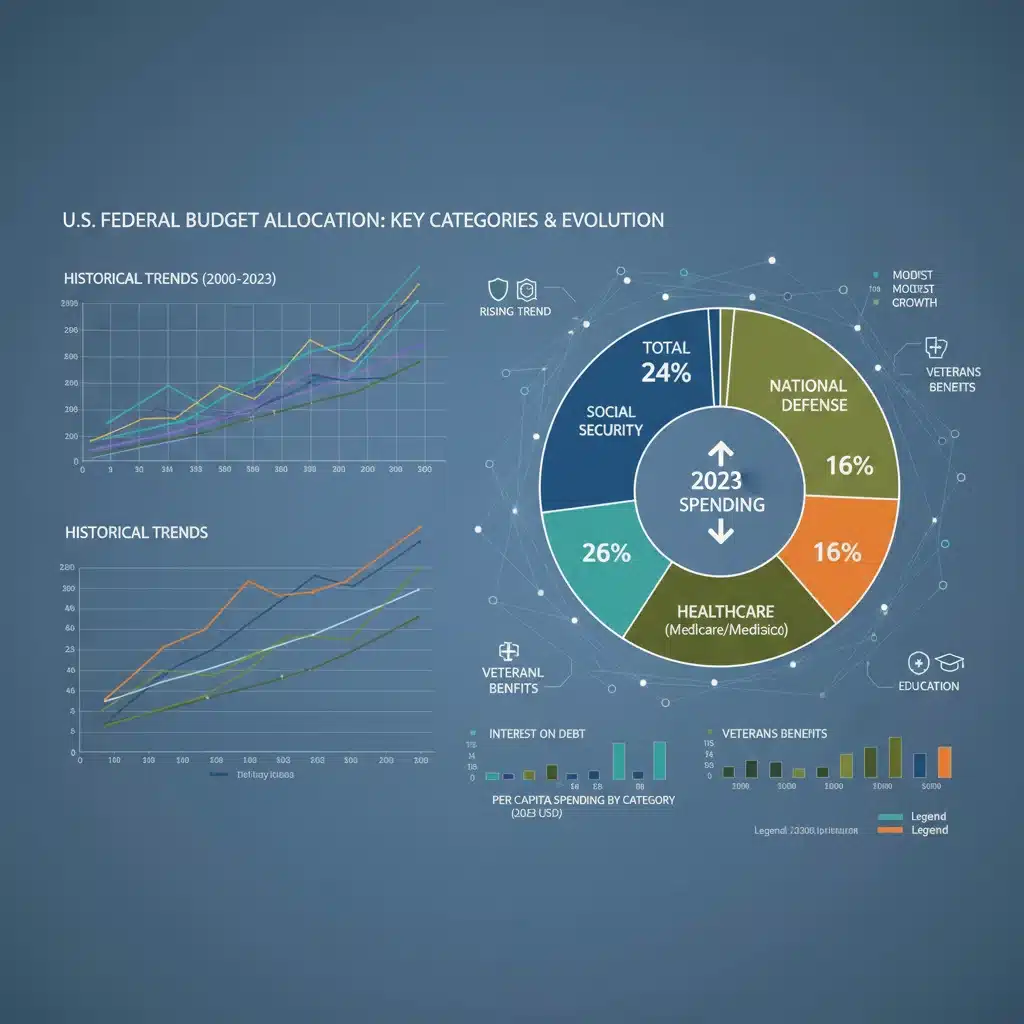
To grasp the magnitude of the projected 2026 US Budget Deficit, it’s essential to first understand the components of government spending. Federal outlays can be broadly categorized into mandatory spending, discretionary spending, and interest on the national debt.
Anúncios
Mandatory Spending
This category constitutes the largest portion of federal spending and includes programs like Social Security, Medicare, and Medicaid. These programs are mandated by existing laws, and their spending levels are not determined by annual appropriations acts. Instead, they are driven by eligibility rules and benefit formulas. As the U.S. population ages, the costs associated with Social Security and Medicare are projected to rise significantly, exerting immense pressure on the federal budget. The baby boomer generation’s entry into retirement and increased healthcare costs are primary drivers of this growth. Projections indicate that without significant reforms, mandatory spending will continue to consume an ever-larger share of the federal budget, making it a critical factor in the persistent US Budget Deficit.
Discretionary Spending
Discretionary spending refers to the portion of the federal budget that Congress appropriates annually through legislative acts. This includes funding for national defense, education, transportation, scientific research, environmental protection, and various other government agencies and services. While theoretically more flexible than mandatory spending, discretionary spending is often subject to political negotiations and shifting priorities. Significant increases in defense spending, infrastructure projects, or responses to unforeseen crises (like pandemics or natural disasters) can rapidly expand this category and contribute to the US Budget Deficit. The balance between necessary investments and fiscal restraint in discretionary spending is a perpetual challenge for lawmakers.
Net Interest on the National Debt
As the national debt grows due to accumulated deficits, so does the cost of servicing that debt. Interest payments on the national debt represent a significant and growing expenditure. With rising interest rates, even a stable national debt can lead to higher interest payments, further exacerbating the US Budget Deficit. This component of spending is particularly concerning because it represents money paid to bondholders rather than invested in domestic programs or services, effectively diverting resources that could otherwise be used for productive purposes. The snowball effect of accumulating debt and increasing interest payments is a major concern for long-term fiscal health.
Revenue Streams: The Other Side of the Ledger
Federal revenue primarily comes from individual income taxes, corporate income taxes, and social insurance taxes (payroll taxes). Economic growth plays a crucial role in determining tax receipts; a robust economy generally leads to higher employment and wages, thereby boosting income tax collections. Corporate profits also contribute significantly to tax revenue. However, tax policies, including rates, deductions, and credits, directly impact the amount of revenue collected. Fluctuations in economic activity, changes in tax legislation, and demographic shifts all influence the government’s ability to fund its expenditures and, consequently, affect the US Budget Deficit.
Projecting the 2026 U.S. Budget Deficit: Key Drivers
Several factors are converging to shape the projected US Budget Deficit for 2026:
- Aging Population and Healthcare Costs: The demographic shift towards an older population means more beneficiaries for Social Security and Medicare, increasing mandatory spending. Healthcare costs, which consistently outpace general inflation, further amplify this challenge.
- Rising Interest Rates: The Federal Reserve’s actions to combat inflation have led to higher interest rates. This significantly increases the cost of servicing the national debt, contributing substantially to the deficit.
- Persistent Structural Deficits: Even without major crises, the U.S. has a structural deficit, meaning that under current laws, spending is projected to exceed revenues over the long term. This is largely due to the growth of mandatory spending programs.
- Potential for Economic Slowdown: While the economy has shown resilience, the threat of a recession or slower economic growth could reduce tax revenues, further widening the US Budget Deficit.
- Geopolitical and National Security Demands: Ongoing global instability and national security priorities can necessitate increased defense spending or foreign aid, adding to discretionary outlays.
- Tax Policy Decisions: Future tax policy changes, whether reductions or increases, will directly impact revenue collection and thus the deficit. Debates around expiring tax cuts or new tax initiatives will be pivotal.
The combination of these factors creates a challenging fiscal outlook for 2026 and beyond, with the US Budget Deficit remaining a central economic concern.
Economic Implications of a Sustained US Budget Deficit
A sustained US Budget Deficit carries a multitude of economic implications, affecting various aspects of the economy:
Increased National Debt
The most direct consequence of deficits is the accumulation of national debt. A growing national debt can lead to higher interest payments, which divert funds from other critical public investments like education, infrastructure, or research and development. This can stifle long-term economic growth.
Crowding Out Private Investment
When the government borrows heavily to finance its deficit, it increases demand for loanable funds. This can drive up interest rates, making it more expensive for businesses to borrow money for investment in new plants, equipment, or innovation. This phenomenon, known as ‘crowding out,’ can reduce private sector growth and productivity.
Inflationary Pressures
While not a direct cause, persistent deficits, especially if financed by monetary expansion, can contribute to inflationary pressures. If the government’s spending injects more money into the economy than the supply of goods and services can absorb, prices can rise, eroding purchasing power.
Reduced Fiscal Flexibility
A large and growing national debt limits the government’s ability to respond to future economic crises or unforeseen events. With a significant portion of the budget dedicated to interest payments, policymakers have less room to maneuver when faced with recessions, natural disasters, or national security threats.
Intergenerational Equity Concerns
Accumulating debt essentially shifts the burden of current consumption onto future generations, who will be responsible for repaying the debt through higher taxes or reduced public services. This raises serious questions about fairness and sustainability across generations.
Impact on International Standing and Exchange Rates
A large US Budget Deficit can also affect international confidence in the U.S. economy. If foreign investors become concerned about the U.S.’s fiscal health, they may demand higher interest rates to hold U.S. debt, or divest, potentially weakening the dollar and increasing import costs.

Potential Policy Responses to Address the US Budget Deficit
Addressing the projected 2026 US Budget Deficit requires a combination of strategies, often involving difficult political choices. There are broadly two categories of solutions: increasing revenue and decreasing spending.
Revenue-Side Solutions
- Tax Increases: This could involve raising individual income tax rates, corporate tax rates, or introducing new taxes (e.g., a value-added tax or carbon tax). However, tax increases can be politically unpopular and may face arguments about their potential impact on economic growth.
- Tax Base Broadening: Reducing tax deductions, exemptions, and loopholes can increase the amount of income subject to taxation without necessarily raising headline tax rates. This can make the tax system more efficient and equitable.
- Improved Tax Enforcement: Enhancing the IRS’s ability to collect taxes owed can also boost revenue.
Spending-Side Solutions
- Reforming Mandatory Spending Programs: This is arguably the most impactful but also the most politically challenging area. Reforms to Social Security could include raising the retirement age, adjusting benefit formulas, or increasing payroll taxes. Medicare and Medicaid reforms could involve cost-containment measures, changes to provider reimbursement, or means-testing benefits.
- Reducing Discretionary Spending: This involves cutting funding for various government agencies, defense programs, or other federal initiatives. While politically contentious, targeted cuts can reduce the deficit, though their overall impact might be smaller than mandatory spending reforms given the relative sizes of the categories.
- Waste and Efficiency Improvements: Identifying and eliminating wasteful spending and improving government efficiency can yield savings, though these are often incremental compared to the scale of the deficit.
A balanced approach, combining elements of both revenue increases and spending cuts, is often considered the most effective way to achieve sustainable fiscal health and address the US Budget Deficit. However, the specific mix of policies is subject to intense political debate and economic considerations.
The Role of Economic Growth
While fiscal policy focuses on direct adjustments to spending and revenue, robust economic growth can significantly ameliorate the US Budget Deficit. Strong economic expansion leads to higher employment, increased wages, and greater corporate profits, all of which translate into higher tax revenues for the government. Furthermore, a growing economy can make it easier to absorb the national debt relative to the size of the economy (as measured by GDP). Policies that foster innovation, productivity, education, and investment are therefore crucial for long-term fiscal sustainability.
However, relying solely on economic growth to solve the deficit problem is often insufficient, especially when structural imbalances in spending and revenue are deeply entrenched. Sustainable growth requires a stable fiscal environment, and large, persistent deficits can undermine that stability.
Global Context and the US Budget Deficit
The US Budget Deficit does not exist in a vacuum; it has significant international implications. The U.S. dollar’s role as the world’s primary reserve currency and the depth of the U.S. Treasury market mean that global financial markets closely watch U.S. fiscal policy. Large deficits can influence global interest rates, capital flows, and currency valuations. If foreign investors perceive U.S. debt as less safe or less attractive due to mounting deficits, it could lead to higher borrowing costs for the U.S. government and potentially disrupt global financial stability.
Conversely, the global economic environment also impacts the U.S. budget. Global recessions can reduce demand for U.S. exports, dampen domestic economic activity, and consequently reduce tax revenues. Geopolitical events can also necessitate increased defense spending or international aid, further impacting the US Budget Deficit.
Challenges and Political Realities
Addressing the US Budget Deficit is not merely an economic exercise; it’s a political one, fraught with challenges. The deeply partisan nature of American politics often makes consensus on fiscal reforms difficult to achieve. Stakeholder groups fiercely defend their interests, making it hard to cut spending on popular programs or raise taxes. Short-term political cycles often incentivize decisions that yield immediate benefits but defer long-term costs, rather than tackling the structural issues contributing to the deficit.
Furthermore, the public’s understanding of the deficit and national debt can be limited, making it difficult to rally support for necessary but potentially painful fiscal adjustments. Effective communication and bipartisan leadership are essential to navigate these political realities and forge a path towards fiscal sustainability.
Conclusion: Charting a Course for Fiscal Responsibility
The projected 2026 US Budget Deficit serves as a stark reminder of the ongoing fiscal challenges facing the United States. Driven by an aging population, rising healthcare costs, increasing interest payments on a growing national debt, and various policy decisions, the deficit demands serious attention. While the short-term economic impacts can be managed, a sustained pattern of large deficits poses significant risks to long-term economic growth, financial stability, and intergenerational equity.
Addressing the US Budget Deficit will require a comprehensive and balanced approach, combining judicious spending reforms with thoughtful revenue enhancements. This will necessitate difficult conversations, political courage, and a willingness to prioritize long-term national interest over short-term political gains. The path forward is not easy, but the imperative to ensure a stable and prosperous economic future for the United States makes this one of the most critical policy challenges of our time. By understanding the forces at play and considering the array of potential solutions, we can better equip ourselves for informed participation in this vital national conversation.
Author