
The 2026 Tax Code Changes: How New Deductions Could Save U.S. Businesses Up to 15% This Fiscal Year
The landscape of taxation is in perpetual motion, and for U.S. businesses, understanding and adapting to these changes is not just about compliance, but about strategic financial optimization. As we look towards 2026, a significant overhaul of the tax code is on the horizon, promising both challenges and unprecedented opportunities. For forward-thinking businesses, these 2026 tax deductions are not merely line items on a form; they are potential catalysts for substantial savings, potentially shaving off up to 15% from their fiscal year tax burden. This comprehensive guide will delve into the intricacies of these impending changes, equipping you with the knowledge to navigate the new regulations and leverage them for your business’s benefit.
Anúncios
Understanding the Impetus Behind the 2026 Tax Code Revisions
Before we dive into the specifics of new deductions, it’s crucial to grasp the broader context of the 2026 tax code revisions. Tax legislation is often a reflection of economic goals, social priorities, and political dynamics. The upcoming changes are no exception, aiming to stimulate certain sectors of the economy, encourage specific types of investments, and potentially simplify some aspects of tax reporting for businesses. While the full scope of these changes is still being finalized and debated, the core intent appears to be a recalibration of the tax system to foster domestic growth, innovation, and global competitiveness.
Previous tax reforms, such as the Tax Cuts and Jobs Act (TCJA) of 2017, significantly altered the corporate tax rate and introduced new provisions. Many of these provisions have sunset dates, meaning they are scheduled to expire or change in the coming years. The 2026 tax code changes are partly a response to these expirations, but also an attempt to introduce new, more targeted incentives. For businesses, this means a fresh opportunity to re-evaluate their financial strategies, investment plans, and operational structures to align with the new tax environment.
Key New Deductions and How They Impact Your Business
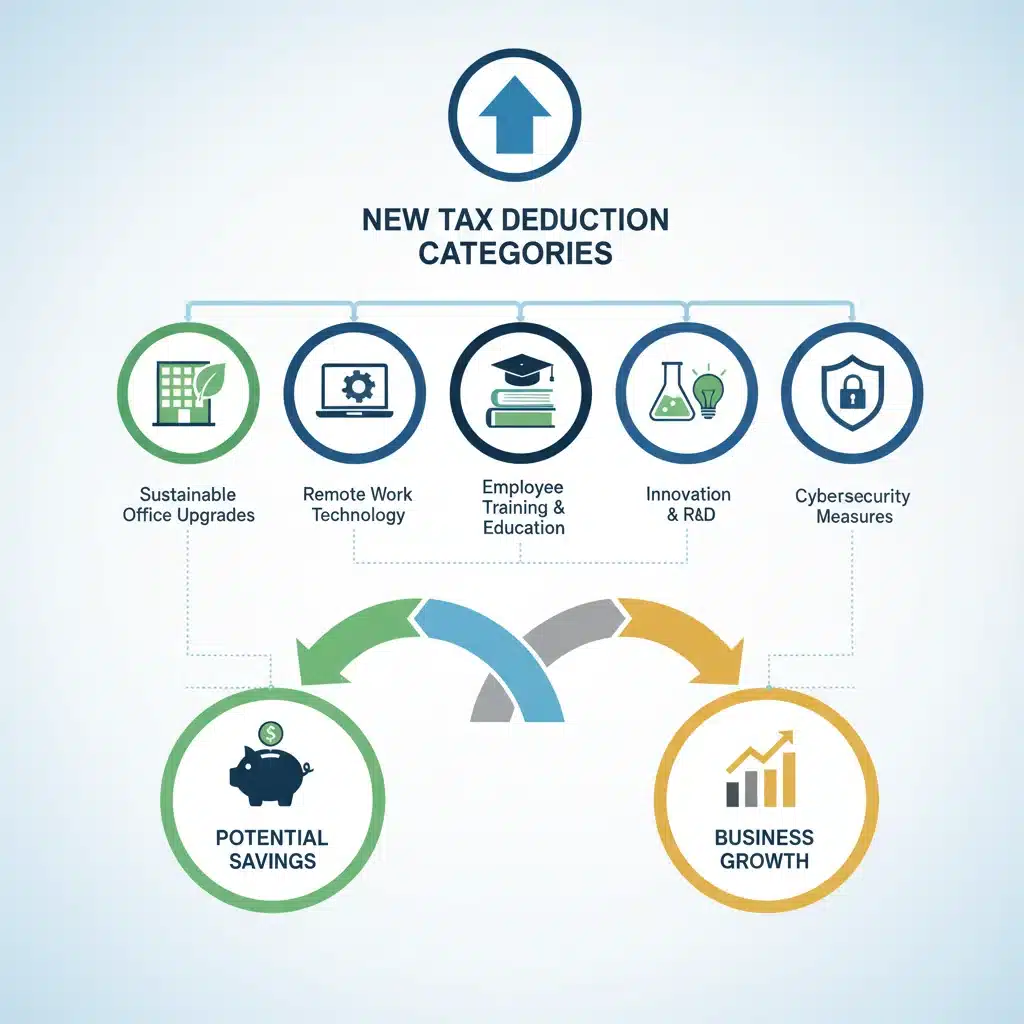
The most exciting aspect of the 2026 tax code for businesses is the introduction of several new deductions. These aren’t just minor adjustments; they represent significant avenues for reducing taxable income. While the final legislative language will provide precise details, early indications suggest a focus on areas like technological advancement, workforce development, and sustainable practices. Let’s explore some of the anticipated key 2026 tax deductions.
Anúncios
1. Enhanced Research and Development (R&D) Tax Credits and Deductions
Innovation is the lifeblood of a thriving economy, and the 2026 tax code is expected to provide even stronger incentives for businesses engaged in R&D. While R&D tax credits have existed, the new provisions are anticipated to broaden the scope of eligible activities and expenditures, making it easier for a wider range of businesses, particularly small and medium-sized enterprises (SMEs), to qualify. This could include:
- Expanded Definition of Qualified Research: Expect a more inclusive definition of what constitutes ‘qualified research,’ potentially encompassing software development, process improvements, and even certain design activities that were previously ambiguous.
- Increased Credit Rates: There’s a strong possibility of higher credit rates for R&D expenditures, translating directly into larger tax savings.
- Simplified Claiming Process: Advocacy groups have pushed for a simpler claiming process, reducing the administrative burden and making these valuable deductions more accessible to businesses without extensive in-house tax expertise.
For businesses investing in new technologies, product development, or process innovation, understanding and maximizing these enhanced R&D provisions will be critical. It’s not just about getting a tax break; it’s about making your innovation efforts more financially viable.
2. Workforce Development and Training Deductions
A skilled workforce is paramount to business success. The 2026 tax code is poised to introduce significant deductions for businesses investing in employee training and development. This is a strategic move to address skills gaps and boost productivity across various industries. Potential new deductions might include:
- Direct Training Costs: Deductions for tuition reimbursement, external training programs, certifications, and internal training initiatives.
- Apprenticeship Program Incentives: Enhanced deductions or credits for businesses establishing or participating in registered apprenticeship programs, fostering on-the-job training and skill transfer.
- Technology Up-skilling: Specific incentives for training employees in emerging technologies like AI, cybersecurity, and advanced manufacturing.
These provisions encourage businesses to invest in their human capital, leading to a more competent and adaptable workforce, while simultaneously reducing their tax liability. It’s a win-win for both employees and employers.

3. Green Initiatives and Sustainable Business Practices
With increasing global emphasis on sustainability, the 2026 tax code is expected to significantly bolster incentives for businesses adopting environmentally friendly practices. This could manifest as:
- Renewable Energy Investment Credits: Expanded and potentially more generous credits for businesses investing in solar panels, wind turbines, and other renewable energy sources for their operations.
- Energy Efficiency Upgrades: Deductions for improving building insulation, installing energy-efficient HVAC systems, and upgrading to LED lighting.
- Sustainable Supply Chain Incentives: Possible deductions or credits for businesses that can demonstrate a commitment to sustainable sourcing, waste reduction, and circular economy principles within their supply chains.
- Electric Vehicle Infrastructure: Incentives for installing electric vehicle charging stations for employees and customers.
These deductions not only contribute to a greener planet but also offer tangible financial benefits, making sustainable choices more economically attractive for businesses.
4. Small Business Growth Incentives
Small businesses are the backbone of the U.S. economy, and the 2026 tax code is likely to include provisions specifically designed to support their growth. While some existing small business deductions might be extended or modified, new ones could emerge, such as:
- Startup Cost Deductions: Enhanced ability to deduct startup and organizational costs, providing crucial relief in the initial, often capital-intensive, phases of a business.
- Access to Capital Incentives: Potential deductions or credits related to securing certain types of small business loans or investments, encouraging capital infusion into nascent enterprises.
- Simplified Accounting Methods: Further simplification of accounting methods for very small businesses, reducing compliance costs.
These measures aim to reduce the financial hurdles for new and growing small businesses, fostering entrepreneurship and job creation.
Strategic Tax Planning: Maximizing Your Savings
Simply being aware of these new 2026 tax deductions is only the first step. To truly save up to 15% or more, businesses must engage in proactive and strategic tax planning. This involves a multi-faceted approach:
1. Early Assessment and Forecasting
Don’t wait until 2026 to start planning. Begin now by assessing your current financial situation, projecting future revenues and expenses, and identifying areas where these new deductions could apply. Use financial modeling tools to forecast potential tax savings under different scenarios. This early assessment allows for proactive adjustments to your business operations and investment strategies.
2. Operational Alignment with New Incentives
Once you understand the new deductions, consider how your business operations can be aligned to maximize them. For instance, if enhanced R&D deductions are available, evaluate if certain projects can be reframed or initiated to qualify. If workforce development deductions are significant, plan for increased training budgets and programs. This isn’t about altering your core business, but about optimizing how you execute your strategies to take full advantage of the tax code.
3. Detailed Record Keeping
The importance of meticulous record-keeping cannot be overstated. For every deduction you claim, you will need robust documentation to support it. This includes invoices, contracts, employee training logs, project documentation for R&D, and receipts for sustainable investments. Implement systems now to track these expenditures effectively, ensuring you can substantiate all claims during an audit.
4. Consult with Tax Professionals
The 2026 tax code changes will be complex. Engaging with experienced tax attorneys or certified public accountants (CPAs) specializing in business taxation is not an expense, but an investment. They can provide tailored advice, interpret the nuances of the new legislation, and help you identify deductions that might not be immediately obvious. A good tax professional can often uncover savings far exceeding their fees.
5. Technology Adoption for Compliance and Efficiency
Leverage modern accounting and tax software solutions. These tools can automate much of the record-keeping, streamline reporting, and even flag potential deductions based on your financial data. Staying current with technology can significantly reduce the administrative burden of tax compliance and improve accuracy.
Potential Challenges and How to Mitigate Them
While the new 2026 tax deductions offer considerable opportunities, businesses should also be prepared for potential challenges:
- Legislative Uncertainty: Tax laws can be subject to last-minute changes or interpretations. Stay informed through reliable sources and your tax advisor.
- Increased Scrutiny: New deductions often come with increased scrutiny from tax authorities. Ensure your documentation is impeccable.
- Implementation Costs: Some deductions, like those for green initiatives or R&D, might require initial investments. Factor these costs into your financial planning.
- Complexity: The new rules might add layers of complexity to tax preparation. Professional guidance will be invaluable.
Mitigating these challenges involves continuous monitoring of legislative developments, rigorous internal processes, and a strong partnership with tax experts.
Case Studies: Imagining the Impact of 2026 Tax Deductions
To illustrate the potential impact, let’s consider hypothetical scenarios:
Case Study 1: The Tech Startup
Company: InnovateNow Inc., a burgeoning software development firm with 50 employees, currently investing heavily in AI-driven solutions.
Current Taxable Income (Pre-Deductions): $2,000,000
Estimated Current Tax Liability: $420,000 (at a hypothetical 21% corporate rate)
2026 Opportunities: InnovateNow could leverage enhanced R&D deductions for their AI development. They also plan to invest in advanced cybersecurity training for their team and install solar panels on their new office building.
Potential 2026 Deductions (Estimated):
- R&D Deduction: $150,000
- Workforce Development Deduction: $30,000
- Green Initiative Deduction (Solar): $50,000
New Taxable Income: $2,000,000 – ($150,000 + $30,000 + $50,000) = $1,770,000
New Estimated Tax Liability: $1,770,000 * 0.21 = $371,700
Savings: $420,000 – $371,700 = $48,300 (approx. 11.5% reduction)
Case Study 2: The Manufacturing SME
Company: Precision Parts Co., a medium-sized manufacturing company with 150 employees, looking to modernize its factory and upskill its workforce.
Current Taxable Income (Pre-Deductions): $5,000,000
Estimated Current Tax Liability: $1,050,000
2026 Opportunities: Precision Parts plans significant investments in energy-efficient machinery, an apprenticeship program for skilled trades, and implementing a new waste reduction system.
Potential 2026 Deductions (Estimated):
- Energy Efficiency Upgrade Deduction: $200,000
- Apprenticeship Program Deduction: $75,000
- Sustainable Supply Chain Incentive: $50,000
New Taxable Income: $5,000,000 – ($200,000 + $75,000 + $50,000) = $4,675,000
New Estimated Tax Liability: $4,675,000 * 0.21 = $981,750
Savings: $1,050,000 – $981,750 = $68,250 (approx. 6.5% reduction)
These examples, while hypothetical, demonstrate how various 2026 tax deductions can combine to create significant savings for businesses across different sectors. The key is to identify which deductions are most relevant to your operations and strategically invest in those areas.
The Broader Economic Impact of the 2026 Tax Code
Beyond individual business savings, the 2026 tax code changes are designed to have a broader impact on the U.S. economy. By incentivizing R&D, workforce development, and green technologies, the government aims to:
- Boost Innovation: Encourage companies to invest more in cutting-edge research and development, leading to new products, services, and industries.
- Enhance Competitiveness: Make U.S. businesses more competitive on the global stage by reducing their tax burden and encouraging investments that improve efficiency and productivity.
- Create Jobs: Stimulate job growth through increased business investment and expansion, particularly in sectors targeted by the new deductions.
- Promote Sustainability: Accelerate the transition to a greener economy by making environmentally friendly practices more financially rewarding for businesses.
- Strengthen the Workforce: Address skill shortages and improve overall workforce quality through increased investment in training and education.
Understanding these macro-economic goals can help businesses align their strategies not just for tax savings, but for long-term growth and contribution to the national economy.
Preparing for the Future: A Timeline for Businesses
To effectively navigate the 2026 tax code changes, businesses should consider the following timeline:
- Now (2024-2025):
- Stay informed about legislative proposals and ongoing discussions.
- Begin an internal audit of current expenditures that might qualify for future deductions (e.g., R&D activities, training costs, energy-efficient upgrades).
- Consult with tax professionals to understand potential impacts on your specific business.
- Start refining internal record-keeping systems to ensure they can capture the necessary data for new deductions.
- Late 2025 – Early 2026:
- Review the finalized tax legislation in detail.
- Update financial models and projections based on the confirmed rules.
- Adjust operational and investment plans to fully capitalize on the new 2026 tax deductions.
- Conduct employee training on any new compliance procedures.
- Throughout 2026 and Beyond:
- Implement new strategies and track qualifying expenditures rigorously.
- Regularly review your tax position with your advisors.
- Be prepared for potential clarifications or adjustments to the new rules as they are applied.
Proactive engagement at each stage will be crucial for maximizing benefits and minimizing compliance risks.
Conclusion: Seizing the Opportunity in 2026
The 2026 tax code changes represent a pivotal moment for U.S. businesses. Far from being a mere regulatory update, these revisions offer a strategic opportunity to significantly reduce your tax burden through new and enhanced deductions. By focusing on areas like R&D, workforce development, and sustainable practices, businesses can not only contribute to broader economic and environmental goals but also achieve substantial financial savings – potentially up to 15% or more of their fiscal year tax liability.
The key to unlocking these savings lies in proactive planning, meticulous record-keeping, and expert guidance. Don’t wait for the new year to arrive; start preparing now to understand, adapt, and ultimately thrive under the 2026 tax code. By embracing these changes strategically, your business can turn potential compliance challenges into powerful engines for growth and profitability.