2026 Child Tax Credit: Eligibility, Payouts, and Updates for Parents

Anúncios
The landscape of tax benefits for families is constantly evolving, and one of the most significant provisions for parents in the United States is the Child Tax Credit (CTC). As we look ahead to 2026, understanding the latest updates, eligibility criteria, and potential payouts is crucial for families planning their finances. The 2026 Child Tax Credit promises to be a pivotal support for many households, offering substantial financial relief that can significantly impact family budgets. This comprehensive guide will delve into what parents need to know, from the core mechanics of the credit to the nuances of its eligibility requirements and the much-anticipated potential $3,000 payout.
For years, the Child Tax Credit has been a cornerstone of federal support for families, designed to alleviate the financial burdens associated with raising children. Its structure and benefits have seen various adjustments over time, often reflecting economic conditions and legislative priorities. The upcoming 2026 Child Tax Credit is no exception, with discussions and potential reforms shaping its final form. Staying informed is not just about compliance; it’s about maximizing the benefits your family is entitled to, ensuring you can provide the best possible environment for your children while maintaining financial stability.
This article aims to be your definitive resource for navigating the 2026 Child Tax Credit. We’ll break down complex tax jargon into understandable terms, providing actionable insights and clear explanations. Whether you’re a first-time parent, a seasoned tax filer, or simply looking to understand how potential changes might affect your family, this guide will equip you with the knowledge you need. From income thresholds to the age of qualifying children, every detail matters when it comes to claiming the full credit. Let’s explore the intricacies of this vital financial aid and ensure you’re fully prepared for the tax year 2026.
Anúncios
Understanding the Basics of the 2026 Child Tax Credit
Before diving into the specifics of 2026, it’s essential to grasp the fundamental principles of the Child Tax Credit. At its core, the CTC is a tax benefit designed to help offset the costs of raising children. It directly reduces a taxpayer’s liability, meaning it can lower the amount of tax you owe or even result in a refund if the credit is refundable. The value of the credit, its refundability, and the income thresholds for eligibility are often subject to legislative changes, making it imperative to stay updated on the latest provisions for the 2026 Child Tax Credit.
Historically, the CTC has provided a maximum credit per qualifying child, with variations based on age and income. The most significant recent expansion occurred with the American Rescue Plan Act of 2021, which temporarily increased the credit amount, made it fully refundable, and introduced advance monthly payments. While these enhanced provisions were temporary and have largely reverted, discussions continue regarding potential permanent expansions or modifications that could impact the 2026 Child Tax Credit. The ongoing debate typically centers on increasing the maximum credit amount, lowering the income threshold for full refundability, and expanding the age limit for qualifying children.
Anúncios
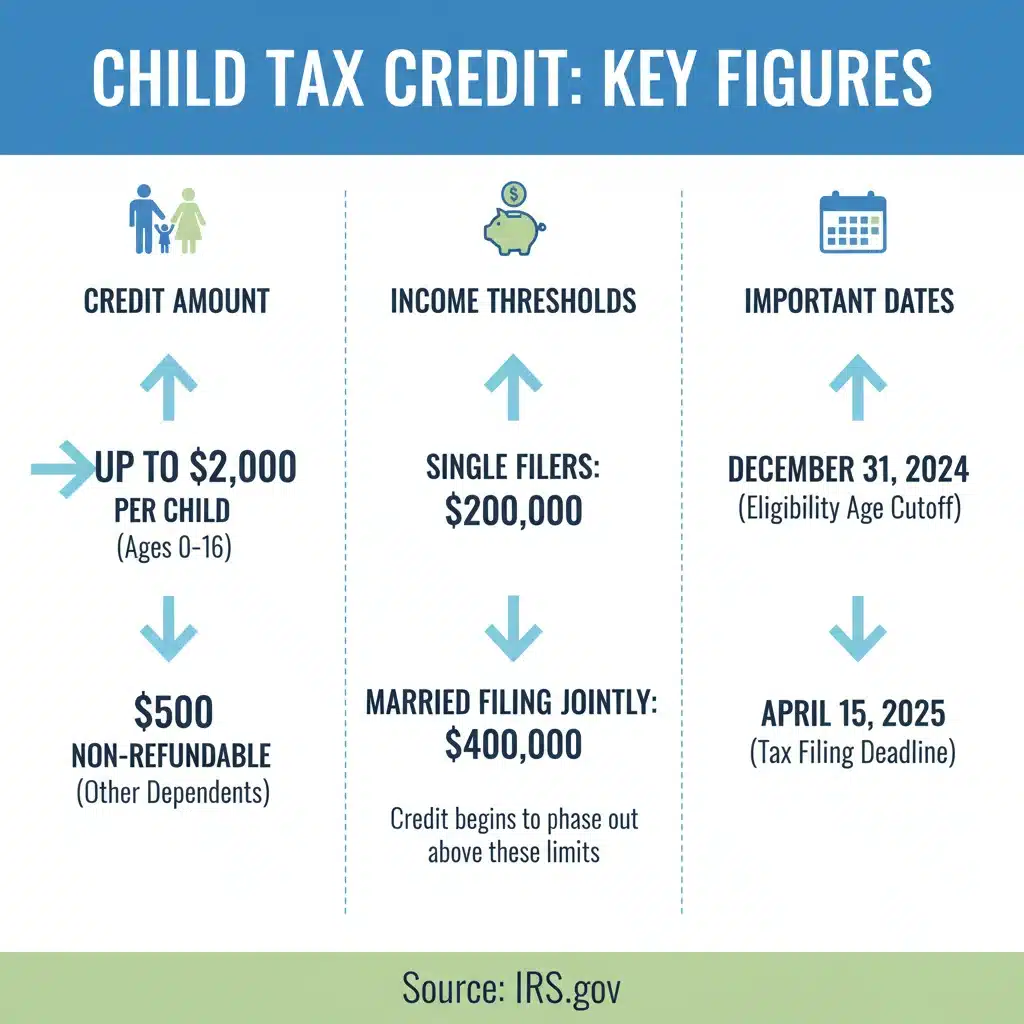
For the 2026 Child Tax Credit, the baseline framework is expected to revert to pre-2021 levels unless new legislation is passed. This means a maximum credit of $2,000 per qualifying child, with a refundable portion capped at $1,600 (adjusted for inflation). However, legislative proposals are actively seeking to reinstate some of the expanded benefits, potentially increasing the credit to $3,000 or even $3,600 for younger children, and making it fully refundable for more families. The outcome of these legislative efforts will directly determine the final parameters of the 2026 Child Tax Credit. It is crucial for families to monitor these developments closely, as they will dictate the level of financial assistance available.
Understanding the difference between a non-refundable and a refundable credit is also vital. A non-refundable credit can reduce your tax liability to zero, but you won’t receive any money back if the credit exceeds your tax bill. A refundable credit, on the other hand, can result in a refund even if you owe no taxes. The refundability of the 2026 Child Tax Credit is a key point of discussion in current legislative proposals, as an expansion of refundability would significantly benefit low-income families who often have little or no tax liability. This aspect is particularly important for those who rely on the credit as a vital source of income support.
Who Qualifies? Eligibility Requirements for the 2026 Child Tax Credit
Eligibility for the 2026 Child Tax Credit hinges on several key criteria related to the child, the taxpayer, and income levels. Meeting these requirements is paramount to claiming the credit successfully. While specific thresholds and definitions may be subject to legislative adjustments, the core principles of qualification are generally consistent.
Qualifying Child Criteria:
- Age: For the 2026 Child Tax Credit, a child must typically be under the age of 17 (i.e., 16 years old or younger) at the end of the tax year. This means that if a child turns 17 on December 31, 2026, they would generally not qualify for the credit for that year.
- Relationship: The child must be your son, daughter, stepchild, foster child, brother, sister, half-brother, half-sister, stepbrother, stepsister, or a descendant of any of them (e.g., a grandchild).
- Residency: The child must have lived with you for more than half of the year in the United States. Temporary absences due to special circumstances, such as illness, education, business, vacation, or military service, count as time the child lived with you.
- Support: The child must not have provided more than half of their own support for the year.
- Joint Return: If the child is married, they cannot file a joint return for the year unless they file it only to claim a refund of withheld income tax or estimated tax paid.
Taxpayer Eligibility:
- Adjusted Gross Income (AGI): The credit begins to phase out at certain AGI levels. For the 2026 Child Tax Credit, if no new legislation passes, the phase-out generally starts at $200,000 for single filers and $400,000 for married couples filing jointly. However, proposed expansions often include raising these thresholds or making the credit fully available to more families regardless of income, particularly for the refundable portion.
- Social Security Number (SSN): Both the taxpayer and the qualifying child must have a valid Social Security Number (SSN) issued by the Social Security Administration by the due date of the tax return (including extensions). This is a critical requirement that can sometimes be a barrier for certain families.
It’s important to note that the potential for a $3,000 payout for the 2026 Child Tax Credit is contingent on legislative action. If Congress passes a bill that expands the credit, the income thresholds and age limits might also be adjusted to align with the increased benefit. Therefore, staying informed about ongoing legislative debates is crucial for accurately determining your eligibility for the maximum possible credit. Consult official IRS guidance or a qualified tax professional as the tax year 2026 approaches to get the most up-to-date and personalized information.

Potential Payouts: Will the 2026 Child Tax Credit Reach $3,000?
The prospect of a $3,000 per child payout for the 2026 Child Tax Credit is a significant point of interest for many families. This higher amount was temporarily available under the American Rescue Plan in 2021 ($3,600 for children under six and $3,000 for those aged six to seventeen). While the credit has largely reverted to its pre-2021 levels, there is considerable political momentum and ongoing legislative efforts to restore and potentially expand these enhanced benefits for 2026 and beyond.
Currently, without new legislation, the maximum non-refundable credit for 2026 is expected to be $2,000 per qualifying child. The refundable portion, known as the Additional Child Tax Credit (ACTC), is generally limited to $1,600 per child (subject to inflation adjustments) or 15% of earned income above a certain threshold, whichever is less. This means that for many low-income families, the actual benefit received is less than the full $2,000, and significantly less than the $3,000 or $3,600 seen in 2021.
However, bipartisan negotiations and various legislative proposals are actively seeking to expand the 2026 Child Tax Credit. Key proposals often include:
- Increasing the Maximum Credit: Many proposals aim to raise the maximum credit amount to $3,000 or even $3,600 for younger children, similar to the 2021 expansion. This would provide a more substantial direct financial benefit to families.
- Full Refundability: A critical aspect of proposed reforms is making the credit fully refundable. This means that even families with little or no tax liability could receive the full benefit as a refund, directly addressing child poverty and supporting low-income households.
- Adjusting Phase-out Thresholds: Some proposals suggest adjusting the income phase-out thresholds to ensure more middle-income families can qualify for the full credit, rather than seeing it diminish at lower income levels.
- Age Expansion: While less common, some discussions have included slightly expanding the age limit for qualifying children beyond 16, though this is less likely to be a primary focus.
The passage of any such legislation before 2026 is not guaranteed, but the strong advocacy from various groups and the demonstrated positive impact of the expanded credit in 2021 provide a strong impetus for reform. Families should closely monitor news from Congress and the Treasury Department as the 2026 Child Tax Credit approaches. The difference between the current baseline and a potential $3,000 payout is significant for household budgets, impacting everything from childcare costs to educational expenses and daily necessities.
It’s important to differentiate between the maximum potential credit and the amount a specific family will receive. The actual payout will depend on a family’s income, the number of qualifying children, and the final legislative structure of the 2026 Child Tax Credit. Even if the maximum credit is $3,000, income phase-outs or partial refundability could mean a lower amount for some families. Therefore, understanding the interplay of these factors is essential for accurate financial planning.
Impact on Families: How the 2026 Child Tax Credit Can Help
The financial impact of the Child Tax Credit on families cannot be overstated. For many households, particularly those with lower and middle incomes, the credit represents a significant boost to their financial well-being. The potential for an expanded 2026 Child Tax Credit, especially if it reaches the $3,000 mark and is fully refundable, could have profound positive effects.
One of the primary benefits is the direct alleviation of financial strain. Raising children involves substantial costs, including food, clothing, healthcare, education, and childcare. The CTC helps families cover these essential expenses, freeing up resources that can be used for savings, debt reduction, or investments in a child’s future. For low-income families, a fully refundable credit can lift children out of poverty, providing a crucial safety net and improving overall quality of life.
Beyond direct financial relief, the 2026 Child Tax Credit can stimulate local economies. When families receive additional funds, they often spend them on goods and services, supporting local businesses and creating a ripple effect throughout communities. This economic injection can be particularly valuable during times of economic slowdown or recovery, contributing to broader prosperity.
Furthermore, the credit can reduce childhood poverty rates. Studies on the expanded 2021 CTC demonstrated a significant reduction in child poverty, highlighting the credit’s effectiveness as an anti-poverty measure. If the 2026 Child Tax Credit includes similar enhancements, it could continue this positive trend, offering long-term benefits for children’s health, education, and future opportunities. Access to better nutrition, stable housing, and educational resources can break cycles of poverty and improve societal outcomes.
For middle-income families, the credit can provide a much-needed buffer against rising costs of living. With inflation impacting everything from groceries to housing, the 2026 Child Tax Credit can help maintain purchasing power and prevent families from falling behind financially. It can enable parents to save for college, invest in extracurricular activities for their children, or simply manage unexpected expenses without incurring debt.
In essence, the 2026 Child Tax Credit is more than just a tax break; it’s an investment in the future of families and the nation. By providing direct financial support, it empowers parents to make choices that benefit their children, fostering healthier, more educated, and more resilient generations. Understanding its potential impact underscores the importance of advocating for and staying informed about its provisions.
Navigating the Application and Claiming Process for 2026
Claiming the 2026 Child Tax Credit typically involves filing a federal income tax return. While the process is generally straightforward for most taxpayers, understanding the nuances can ensure you receive the maximum benefit you’re entitled to. The IRS continually updates its forms and guidance, so it’s essential to use the most current information available as tax season for 2026 approaches.
Here’s a general overview of the claiming process:
- Gather Necessary Documentation: You will need accurate information for yourself, your spouse (if filing jointly), and all qualifying children. This includes Social Security Numbers (SSNs) for everyone, dates of birth, and residency information.
- Determine Eligibility: Review the eligibility criteria outlined earlier in this article. Ensure your children meet the age, relationship, residency, and support tests. Verify that your Adjusted Gross Income (AGI) falls within the qualifying thresholds for the 2026 Child Tax Credit, keeping in mind any potential legislative changes.
- File Your Tax Return: The Child Tax Credit is claimed on Schedule 8812, Credits for Qualifying Children and Other Dependents, which is filed with your Form 1040, U.S. Individual Income Tax Return. You can file electronically using tax software or through a tax professional, or by mail. Electronic filing is often recommended for accuracy and faster processing of refunds.
- Review for Accuracy: Double-check all information before submitting your return. Errors can delay your refund or result in a reduced credit. Ensure SSNs are correct and that all income and deduction information is accurately reported.
- Monitor Updates: As mentioned, the specifics of the 2026 Child Tax Credit are subject to potential legislative changes. Stay informed through official IRS channels, reputable tax news sources, or by consulting a tax professional. These updates could affect the amount you can claim or even introduce new claiming procedures.
For families who typically do not file a tax return because their income is below the filing threshold, the refundability of the 2026 Child Tax Credit is particularly important. If the credit is made fully refundable, these families would need to file a tax return to claim the credit, even if they have no other filing requirement. The IRS often provides simplified filing options or tools for non-filers in such scenarios, but proactive engagement is necessary to receive the benefit.
It’s also worth considering professional tax assistance, especially if your financial situation is complex or if you are unsure about any aspect of the 2026 Child Tax Credit. Tax professionals can help ensure you claim all eligible credits and deductions, potentially maximizing your refund and minimizing your tax liability. Free tax preparation services, such as IRS VITA (Volunteer Income Tax Assistance) and TCE (Tax Counseling for the Elderly) programs, are also available for eligible individuals.
Beyond 2026: The Future of the Child Tax Credit
While our primary focus is the 2026 Child Tax Credit, it’s beneficial to consider the broader trajectory and ongoing discussions surrounding this vital family benefit. The future of the CTC is a subject of continuous debate among policymakers, economists, and advocacy groups, reflecting differing views on its purpose, scope, and economic impact.
One of the central themes in these discussions is the balance between fiscal responsibility and providing robust support for families. Proponents of an expanded and fully refundable CTC often highlight its effectiveness in reducing child poverty, improving child well-being, and stimulating economic growth. They argue that investing in children yields long-term societal benefits, including a stronger workforce and reduced reliance on social safety nets in the future. The temporary expansion in 2021 provided compelling data on these positive outcomes, strengthening arguments for making such provisions permanent.
Conversely, some concerns revolve around the cost of a permanently expanded credit and its potential impact on the national debt. There are also debates about work incentives, with some arguing that a fully refundable credit could disincentivize work, while others contend that it provides the stability necessary for parents to seek and maintain employment. These discussions shape the legislative proposals and the ultimate form the 2026 Child Tax Credit and subsequent iterations will take.
Looking ahead, it’s probable that the Child Tax Credit will remain a dynamic area of tax policy. Future legislative changes could introduce new mechanisms for delivery, such as periodic payments (similar to the advance payments in 2021), or adjust the credit’s structure to better target specific family needs. The goal for many advocates is to create a more predictable and robust system of child support that is less susceptible to year-to-year political fluctuations.
For parents, this means that staying engaged and informed will be a continuous process. While this guide provides a snapshot for the 2026 Child Tax Credit, the tax landscape is always shifting. Subscribing to reputable tax news sources, following legislative updates, and consulting with tax professionals will be key to adapting to future changes and ensuring your family continues to receive the benefits it deserves. The evolution of the Child Tax Credit reflects a broader societal conversation about how best to support families and invest in the next generation, and its future will undoubtedly continue to be shaped by these important dialogues.
Conclusion: Preparing for the 2026 Child Tax Credit
The 2026 Child Tax Credit stands as a critical financial resource for millions of American families. While its exact parameters are subject to ongoing legislative developments, understanding the foundational eligibility criteria, the potential for a $3,000 payout, and the broader impact of this credit is essential for effective financial planning. The discussions surrounding its expansion and full refundability underscore a societal recognition of the financial challenges faced by parents and the profound benefits of investing in children.
As we approach the 2026 tax year, parents are encouraged to remain vigilant for official announcements from the IRS and legislative bodies. The difference between the baseline credit and a potentially enhanced one can significantly affect your family’s budget, impacting everything from daily living expenses to long-term savings goals. Proactive preparation, including gathering necessary documentation and understanding the claiming process, will ensure you are well-positioned to receive the maximum benefit your family is entitled to under the 2026 Child Tax Credit.
Remember that tax laws can be complex, and individual circumstances vary. While this guide provides a comprehensive overview, it is not a substitute for professional tax advice. Consulting with a qualified tax professional or utilizing reliable tax preparation software can help navigate the intricacies of the 2026 Child Tax Credit and ensure accuracy in your filing. By staying informed and taking proactive steps, you can harness the power of this vital credit to support your children and strengthen your family’s financial future.
Author