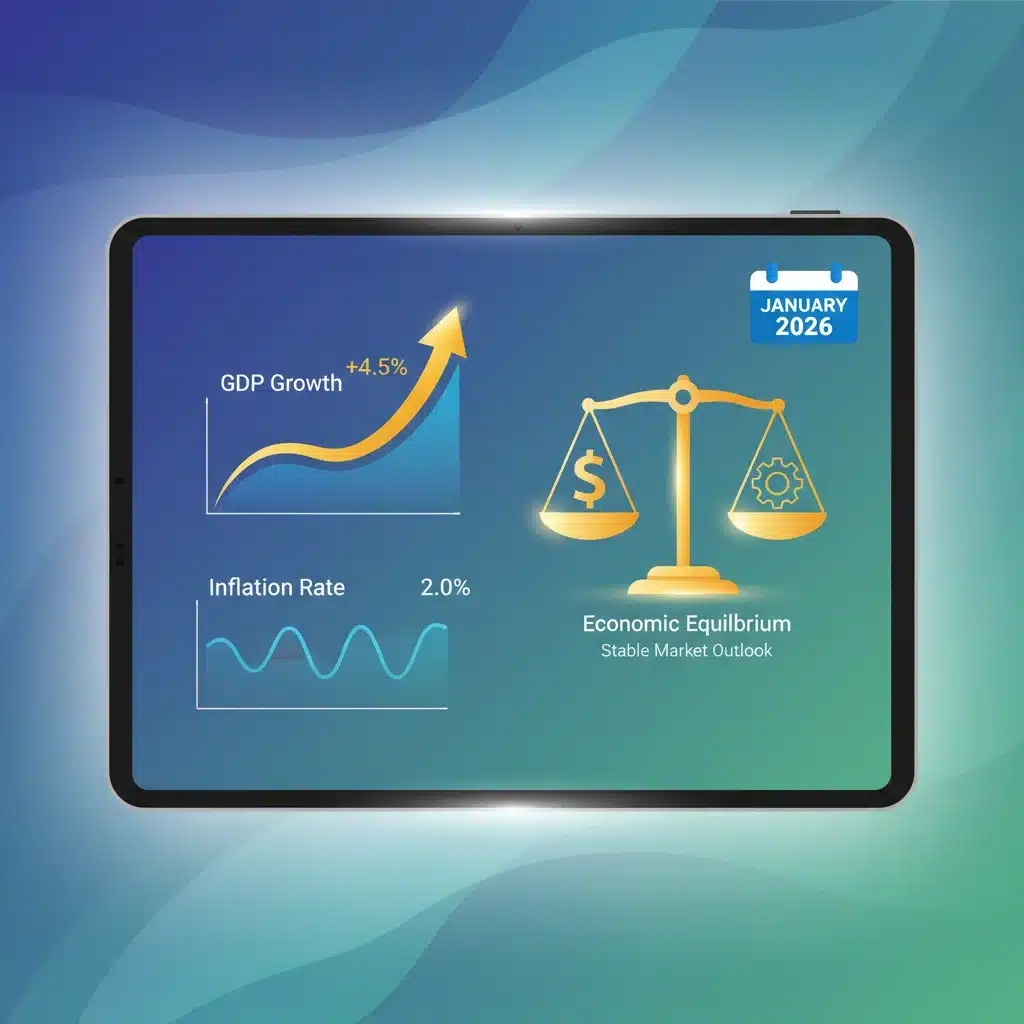
The US Economic Outlook for January 2026: Key Indicators and Forecasts
As we step into January 2026, the global economy continues to navigate a complex and dynamic landscape. For businesses, investors, and policymakers alike, understanding the US Economic Outlook 2026 is paramount. This comprehensive analysis will delve into the critical indicators shaping the American economy, offering insights and forecasts to help you prepare for the year ahead. From inflation and employment to interest rates and global trade, we’ll dissect the forces at play and project their likely trajectory.
Anúncios
Macroeconomic Overview: Setting the Stage for 2026
The dawn of 2026 finds the United States economy in a phase of recalibration. Following a period of significant post-pandemic recovery and subsequent inflationary pressures, the Federal Reserve’s aggressive monetary policy actions have largely set the tone. The objective has been clear: to tame inflation without triggering a severe recession. As we analyze the US Economic Outlook 2026, it’s crucial to acknowledge the delicate balance policymakers are attempting to strike.
Analysts generally agree that the economy is exhibiting resilience, albeit with varying degrees of growth across sectors. Consumer spending, a perennial driver of the US economy, remains robust, supported by a relatively strong labor market. However, elevated interest rates have started to cool certain interest-sensitive sectors, such as housing and manufacturing investment. Geopolitical tensions and global supply chain dynamics also continue to cast a shadow, adding layers of uncertainty to an already intricate forecast.
A key theme emerging for the US Economic Outlook 2026 is the transition towards a more sustainable, albeit slower, growth trajectory. The ‘soft landing’ scenario, once considered a distant hope, appears increasingly plausible, though not without its inherent risks. We will explore how these overarching trends translate into specific economic indicators in the following sections.
Anúncios
Inflationary Pressures: A Continued Focus
Inflation has been a dominant concern for central banks and consumers alike over the past few years. As we look at the US Economic Outlook 2026, the trajectory of inflation remains a primary determinant of economic stability and future policy decisions. By January 2026, most economists anticipate that inflation will have moderated considerably from its peaks, nearing the Federal Reserve’s target of 2%.
Several factors contribute to this projected moderation. Supply chain disruptions, which fueled much of the initial inflationary surge, have largely unwound. Energy prices, while volatile, are not expected to exert the same upward pressure as in previous years, assuming no major geopolitical shocks. Furthermore, the cumulative effect of higher interest rates has worked its way through the economy, dampening aggregate demand and reducing pricing power for many businesses.
However, core inflation, which excludes volatile food and energy prices, might prove stickier. Wage growth, while beneficial for workers, could contribute to persistent service sector inflation. The housing market, despite cooling, still faces supply constraints in many areas, which could keep shelter costs elevated. Therefore, while headline inflation is expected to be more manageable, vigilance regarding core inflationary components will be essential for the US Economic Outlook 2026.

The Labor Market: Strength and Shifting Dynamics
The US labor market has been a beacon of strength throughout recent economic fluctuations, and its condition will be pivotal for the US Economic Outlook 2026. As of January 2026, unemployment rates are expected to remain relatively low, though potentially ticking up slightly from historical lows as the economy continues to normalize. The demand for labor, while still robust in many sectors, may show signs of moderating.
Key trends to watch include:
- Wage Growth: While still positive, wage growth might decelerate from its recent rapid pace, aligning more closely with productivity gains. This moderation is crucial for preventing a wage-price spiral.
- Sectoral Shifts: The economy is undergoing structural changes. Demand for skilled workers in technology, healthcare, and renewable energy sectors is likely to remain high, while some traditional sectors may experience slower job creation.
- Labor Participation: Efforts to boost labor force participation, particularly among older workers and women, could alleviate some of the supply-side constraints that have characterized the post-pandemic labor market.
- Remote Work Trends: The prevalence of remote and hybrid work models continues to evolve, impacting office occupancy rates, urban economies, and the geographical distribution of the workforce.
The resilience of the labor market is a strong argument against a deep recession, providing a stable foundation for consumer spending. However, any significant weakening could quickly alter the positive projections for the US Economic Outlook 2026.
Interest Rates and Monetary Policy: The Fed’s Stance
The Federal Reserve’s actions on interest rates have been a central theme in economic discussions for the past two years. By January 2026, the consensus among economists suggests that the Fed will likely have completed its tightening cycle. The federal funds rate is expected to be at a level considered restrictive, but the focus may shift from further hikes to maintaining that level or even contemplating modest cuts if inflation is firmly under control and economic growth slows more than anticipated.
The Fed’s ‘higher for longer’ rhetoric has emphasized its commitment to bringing inflation down. This implies that even if rate hikes cease, rates may not return to pre-pandemic lows quickly. This sustained higher interest rate environment will continue to impact borrowing costs for businesses and consumers, influencing investment decisions, mortgage rates, and overall economic activity. The yield curve, a key indicator of recession risk, will also be closely watched for signs of inversion or normalization.
Any unexpected resurgence in inflation or a sharper-than-expected economic slowdown could force the Fed to reconsider its stance, adding an element of unpredictability to the US Economic Outlook 2026. Investors and businesses will be closely monitoring the Federal Open Market Committee (FOMC) statements for any shifts in forward guidance.
GDP Growth: A Moderate Expansion
Gross Domestic Product (GDP) growth is the ultimate measure of economic output. For the US Economic Outlook 2026, most projections point to a period of moderate, steady growth, rather than the rapid expansions seen in earlier recovery phases. Annual GDP growth is expected to settle into a range of 1.5% to 2.5%, reflecting a more mature stage of the economic cycle.
This moderate growth will be driven by continued, albeit slower, consumer spending, supported by the relatively stable labor market. Business investment, while somewhat constrained by higher interest rates, is expected to continue in areas like technology and infrastructure. Government spending, particularly on initiatives related to green energy and infrastructure, will also provide a tailwind.
However, potential headwinds include a slowdown in global demand, which could impact US exports, and the ongoing deleveraging by some sectors of the economy. The housing market, while stabilizing, is unlikely to return to its previous boom-like conditions, which could temper overall GDP contributions. Understanding these nuances is vital for anyone assessing the US Economic Outlook 2026.

Consumer Spending and Retail Sales: The Engine of Growth
Consumer spending constitutes approximately two-thirds of the US economy, making its trajectory a critical component of the US Economic Outlook 2026. Despite inflationary pressures and higher interest rates, American consumers have demonstrated remarkable resilience.
In January 2026, consumer spending is expected to continue its upward trend, albeit at a more tempered pace. Factors supporting this include:
- Strong Employment: A healthy job market provides income stability and confidence for consumers to spend.
- Wage Growth: While moderating, wage increases help offset some of the effects of inflation, maintaining purchasing power.
- Household Balance Sheets: Many households still possess elevated savings from the pandemic era, providing a buffer against economic shocks.
However, potential challenges include the depletion of excess savings for some households, increased credit card debt, and the psychological impact of sustained higher prices. Retail sales figures in early 2026 will offer crucial insights into the strength of consumer demand and its implications for the broader US Economic Outlook 2026. Businesses will need to adapt to evolving consumer preferences, with a continued emphasis on value, convenience, and digital integration.
Housing Market: Stabilization and Affordability Challenges
The US housing market experienced a significant boom and subsequent correction in recent years. As we look at the US Economic Outlook 2026, the market is expected to have largely stabilized, but affordability remains a key challenge.
Higher mortgage rates have significantly cooled demand, leading to a moderation in home price appreciation. In January 2026, we anticipate a market characterized by:
- Stable Prices: While rapid price increases are unlikely, significant declines are also not foreseen, assuming a soft landing for the broader economy.
- Limited Inventory: A persistent shortage of housing units, particularly affordable ones, continues to be a structural issue, preventing a steep fall in prices.
- Affordability Constraints: Elevated interest rates combined with still-high home prices mean that homeownership remains out of reach for many, especially first-time buyers.
- Rental Market Dynamics: As homeownership becomes less accessible, demand for rental properties could remain strong, keeping rental costs elevated in many urban centers.
The housing market’s performance will have ripple effects across various sectors, from construction to retail, making it an important indicator for the overall US Economic Outlook 2026.
Global Trade and Geopolitical Factors
The US economy does not operate in a vacuum. Global trade dynamics and geopolitical developments play a significant role in shaping the US Economic Outlook 2026. By January 2026, the global economic environment is expected to be one of cautious optimism, with some regions experiencing stronger growth than others.
Key international factors to monitor include:
- China’s Economic Performance: As a major trading partner and global economic powerhouse, China’s growth trajectory and any policy shifts will have implications for global supply chains and demand for US goods and services.
- European Economic Stability: The economic health of the Eurozone, influenced by energy prices and geopolitical events, will affect US exports and financial markets.
- Commodity Prices: Fluctuations in oil, gas, and other raw material prices, often driven by global demand and supply disruptions, can impact inflation and production costs in the US.
- Geopolitical Tensions: Ongoing conflicts and trade disputes can introduce volatility, disrupt supply chains, and impact investor confidence, adding an element of risk to the US Economic Outlook 2026.
The US policy stance on trade, tariffs, and international relations will also be crucial in determining how these global factors ultimately influence the domestic economy.
Technological Innovation and Productivity
Technological innovation continues to be a long-term driver of economic growth and productivity. In the context of the US Economic Outlook 2026, advancements in artificial intelligence (AI), automation, biotechnology, and renewable energy are poised to reshape industries and create new opportunities.
The adoption of AI, in particular, is expected to accelerate, leading to efficiency gains across various sectors. While some express concerns about job displacement, the historical pattern suggests that technological advancements often create new jobs and increase overall economic output. Investment in research and development (R&D) remains strong, indicating a continued commitment to innovation.
Improved productivity, driven by these technological advancements, could help offset some of the inflationary pressures by lowering production costs and increasing output. This would be a welcome development for the US Economic Outlook 2026, contributing to sustainable, non-inflationary growth.
Fiscal Policy and National Debt
While monetary policy has taken center stage, fiscal policy also plays a significant role in the US Economic Outlook 2026. Government spending, taxation, and the national debt are ongoing considerations. By January 2026, discussions around fiscal sustainability are likely to intensify, especially given rising interest rates that increase the cost of servicing the national debt.
Potential areas of focus for fiscal policy include:
- Infrastructure Spending: Continued investment in infrastructure projects could provide a boost to economic activity and employment.
- Energy Transition: Policies supporting renewable energy and climate initiatives are expected to drive investment and job creation in green sectors.
- Budget Deficits: The size of the federal budget deficit will be closely watched, with potential implications for long-term economic stability and future tax policies.
- Social Programs: Debates around the funding and sustainability of social security and healthcare programs will likely persist, influencing future spending patterns.
The interplay between fiscal and monetary policy will be crucial. A responsible fiscal approach can complement the Federal Reserve’s efforts to maintain economic stability, while unchecked spending could complicate the inflation fight and impact the overall US Economic Outlook 2026.
Investment Landscape: Opportunities and Risks
For investors, the US Economic Outlook 2026 presents a mixed bag of opportunities and risks. The anticipated moderation of inflation and a stable, albeit slower, growth environment could create a more predictable investing climate compared to the volatility of recent years.
Key considerations for investors include:
- Equity Markets: Corporate earnings will be a key driver. Sectors benefiting from technological innovation and strong consumer demand may outperform. However, higher interest rates could temper valuations.
- Fixed Income: With the Fed potentially holding rates ‘higher for longer,’ bond yields are likely to remain attractive, offering opportunities for income-seeking investors.
- Real Estate: While the residential market stabilizes, commercial real estate may face headwinds in some segments, particularly office spaces, due to evolving work patterns.
- Alternative Investments: Private equity, venture capital, and other alternative assets may continue to attract capital, especially in growth-oriented sectors.
Risk factors include unexpected geopolitical events, a deeper-than-anticipated global slowdown, or a resurgence of inflation. Diversification and a long-term perspective will remain crucial strategies for navigating the investment landscape in 2026.
Potential Headwinds and Tailwinds
Every economic forecast comes with inherent uncertainties. The US Economic Outlook 2026 is no exception. Understanding potential headwinds and tailwinds is essential for a balanced perspective.
Potential Headwinds:
- Persistent Inflation: If supply shocks re-emerge or wage growth remains stubbornly high, inflation could prove more difficult to tame, forcing the Fed to maintain a restrictive stance for longer, potentially dampening growth.
- Global Slowdown: A more severe global economic deceleration, particularly in major trading partners, could reduce demand for US exports and impact corporate earnings.
- Geopolitical Instability: Escalation of existing conflicts or the emergence of new ones could disrupt energy markets, supply chains, and investor confidence.
- Credit Market Stress: Elevated interest rates could expose vulnerabilities in certain sectors or within highly leveraged companies, leading to credit defaults.
- Political Uncertainty: Domestic political events, especially in an election year (if applicable), can create policy uncertainty that impacts business investment and consumer sentiment.
Potential Tailwinds:
- Accelerated Productivity Growth: Faster-than-expected adoption of AI and other technologies could lead to significant productivity gains, boosting economic output without fueling inflation.
- Stronger Global Recovery: A more robust rebound in key international economies could increase demand for US goods and services, supporting export growth.
- Consumer Resilience: If consumers continue to defy expectations and maintain strong spending, it could provide a significant buffer against economic downturns.
- Energy Independence: Continued advancements in domestic energy production could provide greater stability against global energy price shocks.
- Effective Policy Responses: Nimble and well-timed monetary and fiscal policy adjustments could help steer the economy through challenging periods.
Monitoring these factors will be critical in refining the US Economic Outlook 2026 throughout the year.
Conclusion: A Path of Moderate Growth and Continued Vigilance
The US Economic Outlook 2026 for January paints a picture of an economy navigating a path of moderate growth, with inflation gradually returning to target levels and a resilient, albeit normalizing, labor market. The Federal Reserve’s monetary policy is expected to remain firm, having largely completed its tightening cycle, with future decisions contingent on incoming data.
While the ‘soft landing’ scenario appears increasingly probable, risks persist from global geopolitical tensions, potential inflationary stickiness, and the long-term implications of national debt. Businesses and individuals will need to remain agile and adaptable, closely monitoring key economic indicators and policy shifts.
Ultimately, the American economy’s inherent dynamism, coupled with ongoing technological innovation, provides a strong foundation. However, successful navigation of 2026 will require careful strategic planning, informed by a deep understanding of these complex economic forces. Staying informed about the latest developments and adapting strategies accordingly will be key to thriving in the evolving economic landscape of the United States.