Future of Personalization: Beyond Names in 2026
Anúncios
The Future of Personalization: Consumer Expectations Beyond Your Name in 2026
In the rapidly evolving digital landscape, consumer expectations are not just changing; they are undergoing a profound transformation. What was once considered cutting-edge personalization – addressing a customer by their first name in an email – is now the bare minimum, almost an anachronism. By 2026, the concept of personalization will have evolved dramatically, driven by advancements in artificial intelligence, big data analytics, and an increasing demand for truly tailored experiences. This article delves into the intricate world of future personalization expectations, exploring what consumers will truly demand and how businesses can prepare to meet these sophisticated needs.
The journey towards hyper-personalization is not merely about enhancing marketing tactics; it’s about fundamentally reshaping the customer experience. Consumers are no longer passive recipients of generic messages; they are active participants seeking relevant, timely, and context-aware interactions. The businesses that thrive in this future will be those that can anticipate needs, understand nuanced preferences, and deliver value at every touchpoint, often before the customer even articulates their desire. Understanding these future personalization expectations is paramount for sustained success.
Anúncios
The Evolution of Personalization: A Brief Retrospective
To fully grasp the future of personalization expectations, it’s helpful to look back. Early personalization efforts were rudimentary, often limited to mail merges and basic segmentation. The rise of e-commerce brought about more sophisticated techniques, such as personalized product recommendations based on browsing history and past purchases. However, these methods, while effective for their time, were often reactive and lacked true predictive power. They treated customers as segments rather than unique individuals.
Today, we stand at the precipice of a new era. Data collection is more pervasive, AI algorithms are more powerful, and consumer savvy has increased exponentially. This combination creates an environment where ‘good enough’ personalization is no longer acceptable. Consumers expect brands to ‘know’ them, not in a creepy, intrusive way, but in a way that genuinely enhances their interactions and simplifies their lives. This shift in the landscape is what defines the future personalization expectations.
Anúncios
Key Pillars of Future Personalization Expectations in 2026
By 2026, consumer demands for personalization will be multifaceted, built upon several core pillars:
1. Hyper-Relevance and Contextual Awareness
The most significant shift will be towards hyper-relevance. Consumers will expect interactions to be precisely tailored to their immediate context, location, device, and even emotional state. This goes far beyond recommending products based on past purchases; it involves understanding the ‘why’ behind their actions.
- Predictive Personalization: AI and machine learning will enable brands to anticipate needs before they arise. Imagine a smart home system suggesting a grocery order for items running low, or a travel app proposing flight deals to a destination you’ve only casually mentioned in a conversation, based on your previous travel patterns and preferences. This proactive approach is central to future personalization expectations.
- Real-time Adaptation: Personalization will be dynamic, adapting in real-time to changing circumstances. A retail website might instantly adjust its layout and product display based on a customer’s current browsing behavior, even if it deviates from their usual patterns.
- Omnichannel Consistency: The personalized experience must be seamless across all channels – web, mobile, in-store, social media, and even voice assistants. A customer should be able to pick up a conversation or transaction exactly where they left off, regardless of the channel.
2. Proactive Problem Solving and Convenience
Consumers will expect brands to not only understand their preferences but also to proactively solve potential problems and offer unparalleled convenience. This means moving from reactive customer service to predictive customer care.
- Anticipatory Service: Imagine your internet provider notifying you of a potential service interruption before it happens, along with alternative solutions, or your bank flagging a suspicious transaction and offering immediate resolution options without you having to call. This level of anticipatory service redefines future personalization expectations.
- Effortless Journeys: Personalization will simplify complex tasks. For example, a healthcare provider might pre-fill appointment forms based on existing patient data and send personalized reminders for check-ups, integrating seamlessly with their digital calendar.
- Personalized Automation: AI-driven assistants will handle routine tasks, from managing subscriptions to optimizing energy consumption, all tailored to individual preferences and habits, further enhancing future personalization expectations.
3. Ethical Data Usage and Transparency
As personalization becomes more sophisticated, so too does consumer awareness and concern about data privacy. By 2026, ethical data usage and transparency will not just be a legal requirement but a cornerstone of trust and brand loyalty.
- Clear Value Exchange: Consumers will be more willing to share data if they perceive a clear and tangible benefit. Brands must articulate this value proposition effectively.
- Granular Control: Individuals will demand more granular control over their data, including what is collected, how it is used, and the ability to easily revoke access. Privacy dashboards and preference centers will become standard. This aspect is crucial for building trust around future personalization expectations.
- Explainable AI: When AI makes personalized recommendations or decisions, consumers will increasingly expect explanations for ‘why’ certain suggestions were made. This fosters trust and reduces the ‘black box’ perception of AI.
4. Emotional Intelligence and Empathy
Beyond data points, the future of personalization will tap into emotional intelligence. Brands that can understand and respond to the emotional nuances of their customers will forge deeper connections.
- Mood-Aware Interactions: Imagine a music streaming service suggesting calming playlists if your smart device detects stress, or a customer service chatbot adjusting its tone based on the customer’s sentiment analysis.
- Personalized Brand Voice: The tone and style of communication will adapt to individual preferences and the specific context of the interaction, making the brand feel more human and empathetic. This level of nuance is a key component of future personalization expectations.
- Empathy in Design: Product and service design will incorporate personalized elements that cater to individual emotional and psychological needs, leading to more intuitive and satisfying experiences.
5. Co-Creation and Customization
Consumers will move beyond passively receiving personalized experiences to actively participating in their creation. The line between consumer and creator will blur.
- Modular Products/Services: Brands will offer highly customizable products and services where consumers can select components, features, and even design elements to create truly unique offerings.
- Feedback-Driven Evolution: Personalization algorithms will not only learn from past behavior but also actively solicit and incorporate user feedback to refine and improve experiences over time. This iterative process is vital for meeting future personalization expectations.
- Community-Driven Personalization: Brands might leverage insights from like-minded communities to offer personalized recommendations and experiences, fostering a sense of belonging while still catering to individual tastes.
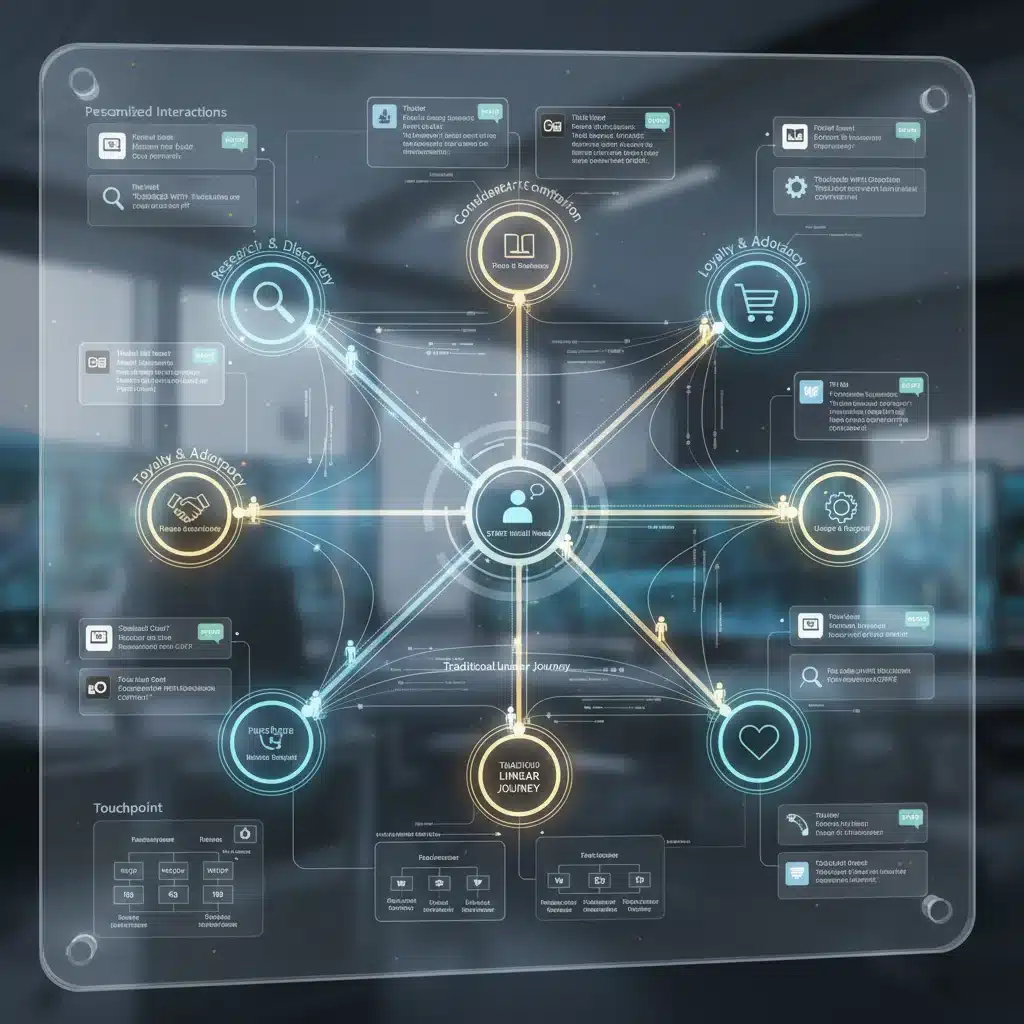
Technologies Driving Future Personalization Expectations
Achieving these advanced levels of personalization will require sophisticated technological infrastructure and strategic implementation. Here are some of the key technologies:
Artificial Intelligence (AI) and Machine Learning (ML)
AI and ML are the bedrock of future personalization. They enable brands to process vast amounts of data, identify complex patterns, make predictions, and automate personalized interactions at scale.
- Natural Language Processing (NLP): For understanding natural language queries, sentiment analysis in customer feedback, and generating human-like personalized responses.
- Computer Vision: For analyzing visual data, such as product preferences from images, or even inferring customer mood from facial expressions (with ethical considerations).
- Reinforcement Learning: For systems that learn and adapt personalization strategies based on continuous feedback and outcomes, constantly optimizing the customer experience.
Big Data and Analytics
The sheer volume, velocity, and variety of data generated by consumer interactions will continue to grow. Advanced big data platforms and analytics tools will be essential for extracting meaningful insights.
- Customer Data Platforms (CDPs): These will become indispensable for unifying customer data from various sources into a single, comprehensive profile, providing the 360-degree view necessary for deep personalization.
- Real-time Analytics: The ability to analyze data and derive insights in real-time is crucial for delivering contextually aware and timely personalized experiences.
Internet of Things (IoT)
IoT devices will play a significant role in collecting contextual data and delivering personalized experiences in physical environments.
- Smart Home Devices: Integrating with smart home ecosystems to offer personalized recommendations, automate tasks, or even adjust environmental settings based on individual preferences.
- Wearables: Providing data on health, activity, and location, enabling personalized wellness programs, fashion recommendations, or even emergency services.
- Connected Vehicles: Offering personalized infotainment, navigation, and predictive maintenance based on driving habits and preferences.
Extended Reality (XR) – VR/AR/MR
Virtual, Augmented, and Mixed Reality will open up new dimensions for personalized interactions.
- Personalized Virtual Try-ons: Trying on clothes or visualizing furniture in your home before purchase, tailored to your body shape or room dimensions.
- Immersive Brand Experiences: Creating personalized virtual showrooms or interactive experiences that adapt to individual user behavior and preferences within the XR environment.
Challenges and Considerations for Implementing Advanced Personalization
While the benefits of meeting future personalization expectations are clear, businesses will face several challenges:
Data Privacy and Security
This remains the paramount concern. Breaches of trust or mishandling of data can quickly erode customer loyalty. Robust security measures, transparent policies, and compliance with evolving regulations (like GDPR, CCPA, etc.) are non-negotiable.
Technological Complexity and Integration
Implementing and integrating the necessary AI, big data, and IoT technologies can be complex and costly. Businesses will need skilled talent and a strategic roadmap to avoid siloed systems and ensure seamless data flow.
Avoiding the ‘Creepy’ Factor
There’s a fine line between helpful personalization and intrusive surveillance. Brands must be mindful of how their personalization efforts are perceived and always prioritize providing value over merely collecting data. The ‘creepy’ factor can quickly undermine efforts to meet future personalization expectations.
Organizational Silos and Change Management
Achieving true omnichannel personalization requires breaking down departmental silos and fostering a customer-centric culture across the entire organization. This often involves significant change management.
Measuring ROI
Demonstrating a clear return on investment for advanced personalization initiatives can be challenging. Businesses need to define clear metrics and attribution models to track the impact on customer lifetime value, engagement, and retention.
Strategies for Businesses to Meet Future Personalization Expectations
To thrive in the era of advanced personalization, businesses should consider the following strategies:
1. Invest in a Robust Customer Data Platform (CDP)
A CDP is fundamental for creating a unified, real-time view of each customer. It allows for the collection, cleaning, and activation of data across all touchpoints, enabling truly personalized experiences.
2. Embrace AI and Machine Learning
Start experimenting with AI and ML for predictive analytics, recommendation engines, and automated customer service. Begin with smaller, manageable projects and scale up as expertise and infrastructure develop.
3. Prioritize Data Ethics and Transparency
Develop clear data privacy policies and communicate them effectively to customers. Offer easy-to-use privacy controls and demonstrate how data is used to provide value. Build trust by being transparent about data practices.
4. Foster an Omnichannel Mindset
Ensure that personalization strategies are designed for a seamless experience across all channels. Break down internal silos and align teams around a unified customer journey. This holistic approach is essential for future personalization expectations.
5. Focus on Value Exchange
Always ask: “What value are we providing to the customer in exchange for their data and attention?” Personalization should genuinely enhance the customer’s life, not just serve the brand’s objectives.
6. Personalize Beyond Marketing
Extend personalization beyond marketing campaigns to product development, customer service, and even internal operations. Every customer interaction is an opportunity for a personalized touch.
7. Experiment and Iterate
The landscape of personalization is constantly evolving. Businesses should adopt an agile approach, continuously experimenting with new techniques, gathering feedback, and iterating on their strategies.
The Ethical Imperative: Building Trust in a Personalized World
As we move towards hyper-personalized experiences, the ethical dimension becomes increasingly critical. The potential for misuse of data, algorithmic bias, and erosion of privacy are real concerns. Brands that navigate this landscape successfully will be those that embed ethical considerations into the very core of their personalization strategies.
This means not just complying with regulations, but actively striving for privacy-by-design principles, ensuring data anonymization where appropriate, and providing clear, actionable consent mechanisms. It also involves being mindful of the psychological impact of personalization – avoiding manipulative tactics and ensuring that personalization genuinely serves to empower and benefit the consumer. The future personalization expectations are not just about technology, but about responsibility.
Conclusion: The Dawn of the Truly Individualized Experience
By 2026, consumer expectations for personalization will demand experiences that are hyper-relevant, predictive, proactive, and ethically sound. The era of ‘just knowing your name’ is firmly in the past. The future belongs to brands that can harness advanced technologies like AI, big data, and IoT to create truly individualized journeys, all while building unwavering trust through transparency and ethical data practices. Businesses that proactively embrace these future personalization expectations will not only meet customer demands but will also forge deeper, more meaningful relationships, driving loyalty and sustained growth in an increasingly competitive market. The journey to the truly individualized experience is complex, but the rewards for those who master it will be immense.
Author