Mastering Your Professional Portfolio: A 2026 Guide for US Job Seekers

Anúncios
Mastering Your Professional Portfolio: A 2026 Guide for US Job Seekers
In the rapidly evolving landscape of the US job market, simply having a stellar resume and cover letter is no longer enough. As we look towards 2026, the need for a dynamic, comprehensive, and strategically crafted professional portfolio has become paramount. This isn’t just an accessory; it’s a critical tool that can significantly boost your employability, showcase your unique skills, and differentiate you from the competition. Understanding what constitutes an effective professional portfolio 2026 is crucial for anyone aiming to thrive in their career.
A professional portfolio is more than just a collection of your best work; it’s a narrative of your professional journey, a testament to your capabilities, and a glimpse into your potential. It provides tangible evidence of your skills, achievements, and experiences, allowing potential employers to see, rather than just read about, what you can bring to their organization. In an increasingly competitive and digital world, a well-curated portfolio can be the deciding factor in landing your dream job.
Anúncios
This comprehensive guide will delve into the essential elements of creating a US-optimized professional portfolio for 2026. We’ll explore the latest trends, digital tools, and strategic approaches to help you build a portfolio that not only impresses but also effectively communicates your value. Whether you’re a recent graduate, a seasoned professional looking for a career change, or an entrepreneur seeking new opportunities, mastering your professional portfolio is an investment in your future success.
Why a Professional Portfolio is Indispensable for 2026
The US job market in 2026 is characterized by rapid technological advancements, an increased demand for specialized skills, and a growing emphasis on practical experience. Employers are looking beyond traditional credentials; they want to see proof of concept, problem-solving abilities, and a clear demonstration of how you can contribute from day one. This is precisely where a robust professional portfolio 2026 shines.
Anúncios
Firstly, it offers a tangible representation of your work. While a resume lists your accomplishments, a portfolio shows them. For instance, a graphic designer can display their best designs, a writer can present published articles, a software engineer can link to their GitHub repositories and deployed projects, and a project manager can share case studies of successful projects they’ve led. This direct evidence builds credibility and trust far more effectively than words alone.
Secondly, a portfolio allows you to tell your unique professional story. It’s an opportunity to highlight your strengths, showcase your growth, and articulate your career aspirations in a way that resonates with potential employers. You can strategically select projects that align with the roles you’re targeting, demonstrating your relevance and suitability for specific positions.
Thirdly, in an era of remote work and global talent pools, a digital portfolio provides instant accessibility. Recruiters and hiring managers can review your work at their convenience, from anywhere in the world. This streamlines the hiring process and ensures your application stands out in a crowded inbox. A well-optimized digital professional portfolio 2026 can significantly expand your reach and open doors to opportunities you might not otherwise discover.
Lastly, developing and maintaining a portfolio encourages continuous learning and self-reflection. It prompts you to regularly update your skills, document your achievements, and critically assess your professional development. This proactive approach not only keeps your portfolio fresh but also fosters a mindset of ongoing improvement, which is highly valued in today’s dynamic work environment.
Key Components of an Effective Professional Portfolio for the US Market
Creating a portfolio that stands out in the US job market requires careful consideration of its content and presentation. Here are the essential components:
1. Curated Work Samples: Quality Over Quantity
The cornerstone of any professional portfolio 2026 is your work samples. These should be your absolute best pieces, meticulously selected to demonstrate your most relevant skills and achievements. Instead of including every project you’ve ever worked on, focus on 3-5 high-impact examples that directly relate to the type of roles you’re pursuing. Each sample should be accompanied by a brief but compelling description that:
- Explains the project’s objective.
- Outlines your specific role and responsibilities.
- Details the challenges you faced and how you overcame them.
- Quantifies the results or impact of your work (e.g., “increased user engagement by 20%,” “reduced project time by 15%”).
- Highlights the skills utilized.
For creative fields like design, writing, or marketing, visual appeal is crucial. For technical roles, clear documentation, code samples, or project walkthroughs are essential. Always ensure that you have permission to share any proprietary work; if not, create anonymized versions or personal projects that showcase similar skills.
2. Professional Biography/About Me Section
This section is your opportunity to introduce yourself beyond your resume. It should be a concise, engaging narrative that outlines your professional journey, your passions, your career goals, and what motivates you. Think of it as your personal brand statement. Highlight your unique value proposition and what makes you an ideal candidate for your target roles. This is where you can infuse personality and connect with employers on a more personal level.
3. Skills Matrix and Expertise Showcase
While your resume lists skills, your portfolio can demonstrate them. Create a dedicated section that clearly outlines your core competencies, both technical and soft skills. For technical skills, consider showing proficiency levels or examples of how you’ve applied them. For soft skills like leadership, communication, or problem-solving, refer back to your project descriptions where these skills were utilized effectively. This reinforces your claims and provides context.
4. Testimonials and Recommendations
Social proof is incredibly powerful. Include testimonials from former managers, colleagues, clients, or mentors who can vouch for your skills, work ethic, and contributions. These can be short quotes or links to full LinkedIn recommendations. Positive feedback from credible sources adds significant weight to your professional portfolio 2026 and builds trust with potential employers.
5. Contact Information and Call to Action
Make it easy for employers to connect with you. Clearly display your professional email address, LinkedIn profile, and any other relevant social media handles. Include a clear call to action, inviting them to reach out for an interview or to discuss potential opportunities. This proactive approach streamlines the follow-up process.
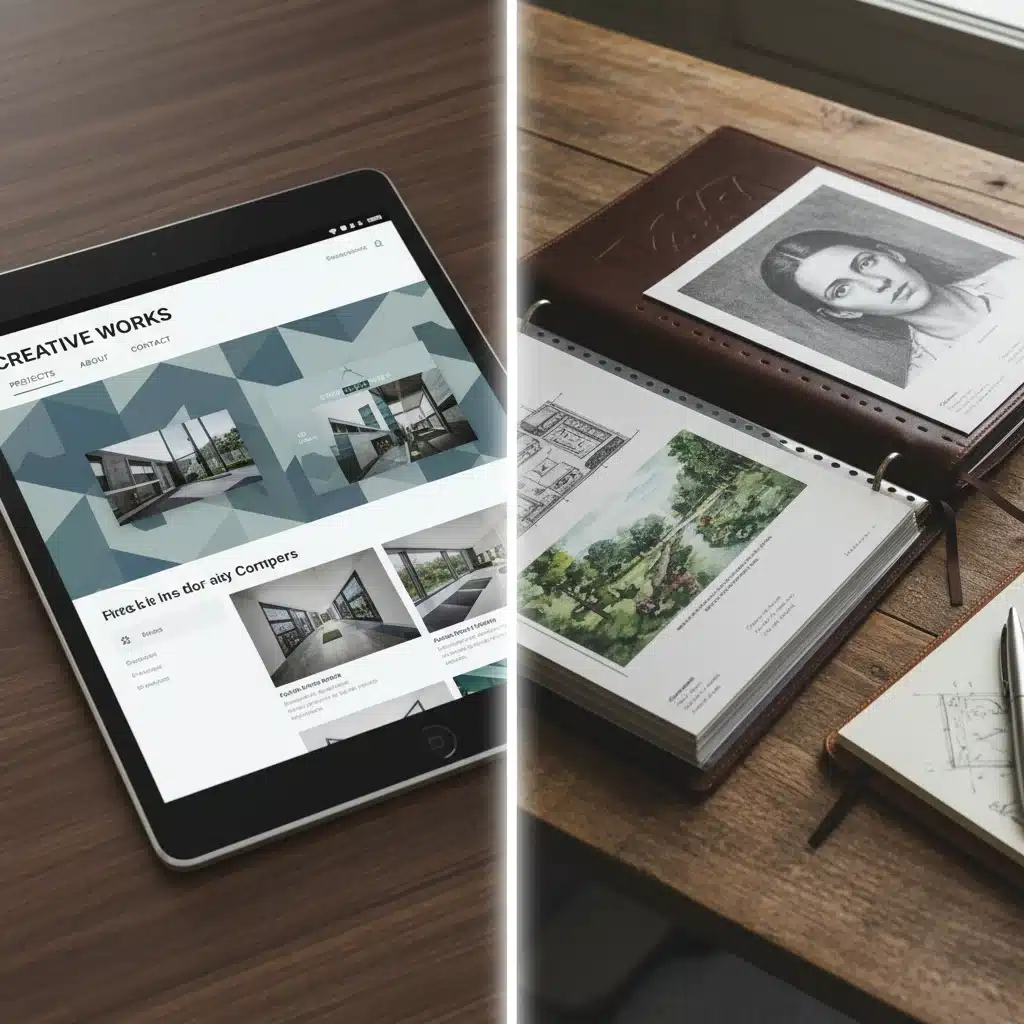
Digital vs. Physical: Choosing Your Professional Portfolio Format
In 2026, the digital format reigns supreme, but there are still scenarios where a physical portfolio can be beneficial. Understanding the nuances of each is key to optimizing your professional portfolio 2026.
The Dominance of Digital Portfolios
A digital portfolio is accessible 24/7, easily shareable, and can incorporate a wide range of media, including videos, interactive elements, and live links. Platforms like Behance, Dribbble (for designers), GitHub (for developers), Muck Rack (for journalists), or personal websites built with WordPress, Squarespace, or Wix are excellent choices. Key advantages include:
- Global Reach: Share your work with anyone, anywhere, at any time.
- Rich Media Integration: Embed videos, audio clips, animations, and interactive prototypes.
- Easy Updates: Quickly add new projects or update existing ones without reprinting.
- Analytics: Track who views your portfolio, how long they stay, and which projects they engage with most.
- SEO Opportunities: Optimize your personal website to be found through search engines, enhancing your visibility.
When creating a digital portfolio, prioritize a clean, intuitive user interface (UI) and user experience (UX). Ensure it’s mobile-responsive, as many recruiters will view it on various devices. Use high-quality images and videos, and ensure all links are active and lead to the correct content.
The Niche for Physical Portfolios
While less common, a physical portfolio can still be effective in certain situations, particularly for in-person interviews or specific creative fields where tactile experience is valued (e.g., fine art, architecture, product design). A physical portfolio demonstrates attention to detail and can leave a lasting impression. If you opt for a physical version, ensure:
- Professional Presentation: Use a high-quality binder or case.
- Impeccable Print Quality: Ensure all printed materials are crisp, color-accurate, and free of smudges.
- Concise Selection: Only include your very best, most impactful pieces.
- Portability: It should be easy to carry and present.
Often, the best approach for a professional portfolio 2026 is a hybrid model: a primary digital portfolio for general applications and a refined physical version ready for specific in-person opportunities.
Optimizing Your Professional Portfolio for the US Job Market in 2026
To truly stand out, your portfolio needs to be tailored to the expectations and trends of the US job market. Here’s how to optimize it:
1. Understand Industry-Specific Norms
Different industries have different expectations for portfolios. Research what successful professionals in your target field are showcasing. For example, a software developer’s portfolio might focus on code repositories and technical documentation, while a marketing professional’s might emphasize campaign results and creative assets. Aligning your professional portfolio 2026 with these norms demonstrates your industry awareness.
2. Emphasize Impact and Results
US employers are highly results-oriented. For every project, clearly articulate the impact of your work. Use metrics, percentages, and specific outcomes whenever possible. Instead of saying, “I designed a new website,” say, “I designed a new website that increased conversion rates by 15% and reduced bounce rate by 10% within three months.” This quantifiable evidence makes your contributions undeniable.
3. Showcase Problem-Solving Abilities
The ability to identify problems and devise effective solutions is a prized skill. For each project, briefly describe the challenge you addressed, the process you followed, and the solution you implemented. This demonstrates your critical thinking and strategic approach, key attributes for any professional portfolio 2026.
4. Tailor for Each Application
While maintaining a core portfolio, be prepared to customize it for specific job applications. If a job description emphasizes a particular skill or experience, ensure that relevant projects are prominently featured or even create a custom link that highlights those specific pieces. This shows you’ve done your homework and are genuinely interested in the role.
5. Ensure Accessibility and Speed
Your digital portfolio must be fast-loading and easily navigable. Slow loading times or complex navigation can deter recruiters. Use optimized images, minimize unnecessary code, and ensure your hosting is reliable. Test your portfolio on various devices and browsers to guarantee a seamless experience for all users.
6. Leverage AI Tools (Judiciously)
As AI tools become more sophisticated, consider how they can assist in portfolio creation, but always maintain authenticity. AI can help with generating initial content ideas, refining project descriptions, or even suggesting design layouts. However, the core content and personal narrative must come from you. Your professional portfolio 2026 should reflect your unique voice and expertise.
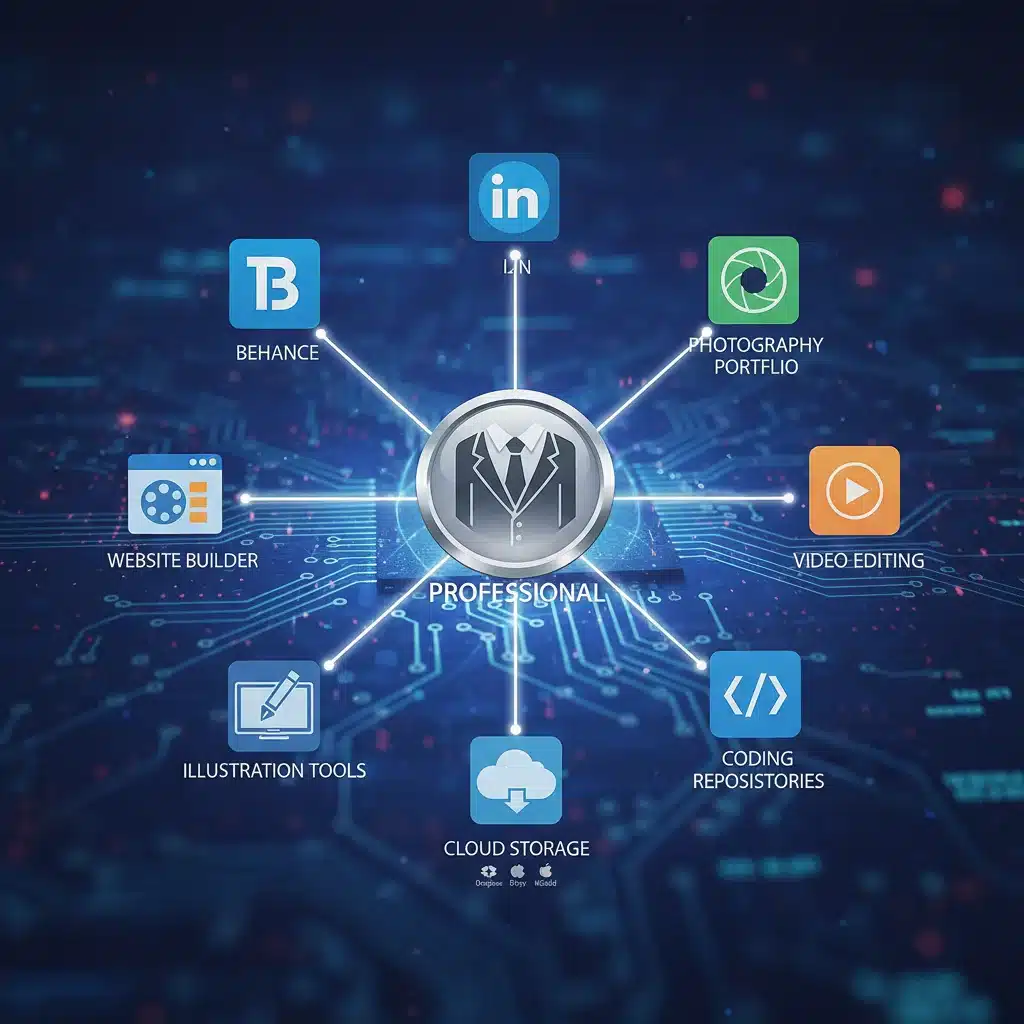
Building Your Digital Professional Portfolio: Step-by-Step
Let’s break down the practical steps to construct a compelling digital professional portfolio 2026.
Step 1: Choose Your Platform
The first decision is where your portfolio will live. Options include:
- Personal Website: Offers maximum customization and control. Platforms like WordPress (with themes like Elementor), Squarespace, Wix, or Webflow are popular. This is ideal for establishing a strong personal brand.
- Portfolio Hosting Sites: Behance (creative), Dribbble (design), GitHub (development), ArtStation (artists). These are great for industry-specific networking and exposure.
- LinkedIn: While not a dedicated portfolio platform, LinkedIn allows you to add media to your experience sections, turning your profile into a mini-portfolio.
Consider your industry, technical skills, and budget when making this choice. A personal website often provides the most flexibility and a professional image.
Step 2: Select Your Best Work
Go through all your projects and identify 3-5 (or up to 7 for very experienced professionals) that best demonstrate your skills and align with your career goals. Ask yourself:
- Is this project high-quality and representative of my best work?
- Does it showcase skills relevant to my target jobs?
- Can I clearly articulate my contribution and the impact?
If you lack professional projects, create personal ones! A side project or a volunteer effort can be just as impactful if it demonstrates relevant skills for your professional portfolio 2026.
Step 3: Craft Compelling Project Case Studies
Each selected project needs a story. Use the STAR method (Situation, Task, Action, Result) or a similar framework to structure your descriptions. Include:
- Project Title: Clear and descriptive.
- Overview: What was the project about?
- Your Role: What exactly did you do?
- Challenge: What problem were you solving?
- Process/Solution: How did you approach it? What tools did you use?
- Results/Impact: Quantify your achievements.
- Visuals: High-quality images, screenshots, videos, or links to live demos.
Step 4: Write Your Professional Bio and Skills Section
Develop a concise yet engaging “About Me” section. Think about your elevator pitch and expand it. For your skills section, categorize them (e.g., Technical Skills, Soft Skills, Tools & Technologies) and provide context where necessary. For example, instead of just listing “Python,” you might say “Python (data analysis, web scraping, automation).”
Step 5: Gather Testimonials and References
Reach out to former colleagues, managers, and clients. Politely ask for a brief testimonial focusing on your strengths relevant to your target roles. If you have LinkedIn recommendations, you can embed or link to them. Always ask for permission before including someone’s name or contact information.
Step 6: Design and User Experience
Even if you’re not a designer, the aesthetic and usability of your portfolio matter. Choose a clean, professional template if using a website builder. Ensure:
- Consistent Branding: Use consistent fonts, colors, and imagery.
- Easy Navigation: A clear menu and intuitive layout.
- Mobile Responsiveness: It must look good and function well on all devices.
- Fast Loading Speed: Optimize images and code.
Remember, your portfolio’s design reflects your attention to detail and professionalism, which is vital for any professional portfolio 2026.
Step 7: Optimize for Search Engines (SEO)
If using a personal website, consider basic SEO principles. Use relevant keywords in your page titles, descriptions, and content. This can help recruiters find your portfolio if they’re searching for specific skills or roles. Ensure your images have descriptive alt text and relevant filenames.
Step 8: Proofread and Test Thoroughly
Before launching, meticulously proofread all text for typos and grammatical errors. Check every link to ensure it works correctly. Ask a friend or mentor to review your portfolio for clarity, impact, and user experience. Fresh eyes can catch mistakes you might have overlooked.
Step 9: Share and Promote Your Portfolio
Integrate your portfolio link into your resume, LinkedIn profile, email signature, and any other professional communication. Share it on relevant social media platforms or industry forums. The more visible your professional portfolio 2026 is, the more opportunities it can attract.
Maintaining and Evolving Your Professional Portfolio in 2026
A professional portfolio is not a static document; it’s a living, breathing representation of your career. To keep it effective in 2026 and beyond, continuous maintenance and evolution are crucial.
Regular Updates
As you gain new skills, complete new projects, or achieve new milestones, update your portfolio. Aim for at least quarterly reviews to ensure it reflects your most current and impressive work. Remove outdated projects that no longer align with your career trajectory or showcase your best abilities. A stale portfolio can be just as detrimental as no portfolio at all.
Seek Feedback Constantly
Periodically ask trusted colleagues, mentors, or even recruiters for feedback on your portfolio. Constructive criticism can provide invaluable insights into areas for improvement, helping you refine your narrative and presentation. This iterative process ensures your professional portfolio 2026 remains sharp and impactful.
Stay Abreast of Industry Trends
The job market and industry expectations are always shifting. Keep an eye on emerging technologies, new skill demands, and innovative ways professionals are presenting their work. Adapt your portfolio to incorporate these trends, whether it’s adding new types of projects, utilizing interactive elements, or focusing on different skill sets. For instance, if sustainability or AI ethics become critical in your field, ensure your portfolio subtly reflects your awareness or contribution to these areas.
Backup Your Work
Always maintain backups of all your portfolio content, including raw files, project documentation, and high-resolution images. Cloud storage solutions or external hard drives can prevent data loss and ensure you can easily access and update your materials whenever needed. This foresight is part of maintaining a truly professional approach to your professional portfolio 2026.
Network and Connect
Your portfolio is a fantastic networking tool. When connecting with industry peers, potential collaborators, or thought leaders, share your portfolio. It provides a concrete basis for discussion and can lead to unexpected opportunities, partnerships, or even referrals for new roles.
Common Pitfalls to Avoid with Your Professional Portfolio
Even with the best intentions, some mistakes can undermine the effectiveness of your portfolio. Be mindful of these common pitfalls:
- Lack of Focus: Trying to appeal to everyone means appealing to no one. Your portfolio should have a clear purpose and target audience.
- Poor Quality Work: Only include your absolute best. Low-quality work, even if relevant, can detract from your overall presentation.
- Inconsistent Branding: Ensure your portfolio’s design, tone, and messaging are consistent across all platforms and with your other professional documents.
- Outdated Content: A portfolio that hasn’t been updated in years signals a lack of engagement or current skills.
- Overwhelming Content: Too many projects or excessively long descriptions can lead to information overload. Be concise and impactful.
- Ignoring Permissions: Always get permission before sharing proprietary or confidential work.
- Broken Links or Files: Nothing is more frustrating for a recruiter than encountering broken links or unreadable files. Double-check everything.
- No Call to Action: Don’t leave employers guessing what to do next. Guide them with a clear call to action.
- Lack of Personalization: A generic portfolio won’t resonate. Inject your personality and tailor content to specific opportunities.
Avoiding these errors will ensure your professional portfolio 2026 remains a powerful asset in your career toolkit.
Conclusion: Your Professional Portfolio as a Strategic Asset
In the competitive US job market of 2026, a well-crafted professional portfolio is no longer optional; it is a strategic asset. It serves as a dynamic showcase of your skills, experiences, and potential, offering tangible proof of your capabilities in a way that traditional resumes cannot. By meticulously curating your best work, telling compelling stories behind each project, and leveraging digital platforms effectively, you can create a portfolio that not only captures attention but also drives your career forward.
Remember, your professional portfolio 2026 is a reflection of your professional identity and aspirations. Invest time and effort into its creation and ongoing maintenance, and view it as a continuous project that evolves with your career. By doing so, you will significantly enhance your employability, open doors to new opportunities, and solidify your position as a valuable and sought-after professional in your field. Start building and refining your portfolio today, and prepare to make a lasting impression in the job market of tomorrow.
Author