2026 Consumer Data Privacy: What Every American Needs to Know Now

Anúncios
In an increasingly digital world, our personal information has become an invaluable commodity. From our online shopping habits to our health records, every click, purchase, and interaction leaves a digital footprint. As technology advances, so too does the complexity of managing and protecting this data. The year 2026 is poised to bring significant shifts in the landscape of consumer data privacy in the United States, impacting every American. Understanding these changes isn’t just for tech-savvy individuals or legal experts; it’s a fundamental necessity for anyone who uses the internet, owns a smartphone, or engages with digital services. This comprehensive guide will equip you with the knowledge to navigate the evolving regulations, understand your rights, and take proactive steps to safeguard your personal information.
The Shifting Sands of Consumer Data Privacy: Why 2026 Matters
The concept of consumer data privacy has been a hot topic for years, but 2026 marks a crucial juncture. Why? Because a confluence of factors – including new state-level legislation reaching full implementation, the potential for federal privacy laws, and the increasing sophistication of data collection technologies – is creating a more robust, albeit complex, regulatory environment. Historically, the U.S. has taken a sector-specific approach to data privacy, with laws like HIPAA for health information and COPPA for children’s online privacy. However, a broader, more comprehensive framework is beginning to emerge, driven largely by consumer demand for greater control over their personal data.
Anúncios
The European Union’s General Data Protection Regulation (GDPR), enacted in 2018, served as a global wake-up call, demonstrating the power of comprehensive privacy legislation. Its principles of transparency, user consent, and data minimization have influenced legislators worldwide, including within the United States. While a federal equivalent to GDPR has yet to materialize in the U.S., several states have taken the lead, creating a patchwork of regulations that businesses and consumers alike must understand. By 2026, many of these state laws will have matured, and their collective impact will be profoundly felt.
Key State-Level Privacy Laws Shaping 2026
While a single federal privacy law remains elusive, several states have enacted their own comprehensive data privacy statutes, significantly influencing the landscape of consumer data privacy. These laws often share common principles but also contain nuances that make compliance and understanding complex. Here’s a look at the most influential ones and their expected impact by 2026:
California Consumer Privacy Act (CCPA) & California Privacy Rights Act (CPRA)
The CCPA, which came into effect in 2020, was a trailblazer in U.S. privacy legislation. It granted California consumers significant rights regarding their personal information, including the right to know what data is collected, the right to delete it, and the right to opt out of its sale. The CPRA, effective in 2023, expanded upon the CCPA, creating the California Privacy Protection Agency (CPPA) to enforce these laws, introducing new rights like the right to correct inaccurate personal information, and establishing a new category of ‘sensitive personal information’ with enhanced protections. By 2026, the CPPA will have several years of enforcement under its belt, setting precedents and clarifying ambiguities, making California’s privacy framework a de facto national standard for many businesses.
Anúncios
Virginia Consumer Data Protection Act (VCDPA)
Effective January 1, 2023, the VCDPA marked Virginia as another pioneer in comprehensive state privacy laws. Similar to CCPA/CPRA, it grants consumers rights to access, delete, and opt out of the sale of their personal data. However, it adopts an ‘opt-out’ model for targeted advertising and sale of data, differing slightly from California’s more explicit ‘opt-in’ for sensitive data. Its enforcement mechanisms and interpretations by 2026 will further shape how businesses handle data for residents in the Mid-Atlantic region and beyond.
Colorado Privacy Act (CPA)
Also effective January 1, 2023, the CPA empowers Colorado consumers with rights similar to those in California and Virginia, including the right to opt out of the sale of personal data and targeted advertising. A key distinction of the CPA is its definition of ‘personal data,’ which is broadly inclusive. By 2026, the Colorado Attorney General’s office will have established clear guidelines and enforcement patterns, providing crucial insights into its practical application.
Utah Consumer Privacy Act (UCPA)
Effective December 31, 2023, the UCPA is generally considered more business-friendly than its Californian, Virginian, and Coloradan counterparts. It applies to fewer businesses and offers fewer individual rights, particularly regarding the right to correct data. However, it still provides consumers with important rights to access, delete, and opt out of the sale of their personal data. Its impact by 2026 will be observed in how it influences data practices in the Western U.S. and whether its more relaxed approach becomes a model for other states.
Connecticut Data Privacy Act (CTDPA)
Taking effect July 1, 2023, the CTDPA mirrors many aspects of the VCDPA and CPA, granting consumers rights to access, correct, delete, and opt out of the sale of personal data and targeted advertising. It also includes specific provisions for universal opt-out mechanisms, which could become a significant trend by 2026. As one of the newer comprehensive laws, its initial enforcement and interpretations will be critical to watch.
Other Emerging State Laws
Beyond these established laws, numerous other states, including Iowa, Indiana, Montana, Tennessee, and others, have enacted or are considering similar comprehensive privacy legislation. While many of these are inspired by the earlier state laws, each introduces its own nuances. By 2026, the sheer volume of these state-specific regulations will create a complex compliance environment for businesses operating nationwide, further emphasizing the need for robust consumer data privacy strategies.
The Push for Federal Consumer Data Privacy Legislation
The increasing complexity and fragmentation of state-level privacy laws have intensified calls for a unified federal privacy standard. Businesses, in particular, advocate for a single national law to streamline compliance, rather than navigating a patchwork of 50 different regulations. From a consumer perspective, a federal law could ensure consistent privacy protections across state lines, regardless of where one resides.
Several federal proposals have been introduced in Congress, such as the American Data Privacy and Protection Act (ADPPA), which gained bipartisan support but ultimately stalled. While its future is uncertain, the core principles it embodied – data minimization, individual rights, and robust enforcement – are likely to resurface in future legislative efforts. By 2026, it’s highly probable that discussions around federal consumer data privacy will intensify, potentially leading to a breakthrough, or at the very least, a clearer roadmap for national legislation. The absence of a federal law by 2026 would only underscore the continued importance of understanding and complying with the diverse state-level requirements.
Understanding Your Rights: What Consumer Data Privacy Means for You in 2026
With the evolving legal landscape, it’s more important than ever for Americans to understand their fundamental rights regarding consumer data privacy. While specific rights may vary slightly by state, several core principles are emerging as universal:
1. The Right to Know/Access
You have the right to know what personal information a business collects about you, where it comes from, what it’s used for, and to whom it’s disclosed. This includes specific pieces of information, categories of sources, business purposes for collection, and categories of third parties with whom the information is shared.
2. The Right to Delete
You have the right to request that a business delete personal information it has collected from you. There are some exceptions, such as when the data is necessary to complete a transaction or comply with a legal obligation, but in many cases, businesses must honor these requests.
3. The Right to Opt-Out (of Sale or Sharing)
Most state laws grant you the right to opt out of the sale of your personal information to third parties. Some laws also extend this right to opt out of the sharing of your data for targeted advertising or cross-context behavioral advertising. This is a powerful tool for limiting how your data is monetized.
4. The Right to Correct Inaccurate Information
A newer but increasingly common right, this allows you to request that a business correct inaccurate personal information it maintains about you. This is crucial for ensuring the integrity and accuracy of your digital identity.
5. The Right to Limit Use and Disclosure of Sensitive Personal Information
Certain categories of data, such as racial or ethnic origin, religious beliefs, health information, precise geolocation, and sexual orientation, are often classified as ‘sensitive personal information.’ Many laws provide consumers with the right to limit how businesses use and disclose this sensitive data, often requiring explicit opt-in consent for its processing.
6. The Right to Non-Discrimination
Businesses cannot discriminate against you for exercising your privacy rights. This means they cannot deny you goods or services, charge different prices, or provide a different level or quality of goods or services simply because you chose to exercise your privacy rights.
7. The Right to Appeal
If a business denies your privacy request, you often have the right to appeal that decision. This provides an additional layer of consumer protection and accountability for businesses.
Impact on Businesses: Compliance Challenges and Opportunities
For businesses operating in the U.S., the evolving consumer data privacy landscape by 2026 presents both significant challenges and opportunities. The primary challenge is the complexity of compliance, particularly for companies operating across multiple states. Each state law has its own definitions, thresholds, and specific requirements, making a one-size-fits-all approach difficult.
Key Compliance Areas for Businesses:
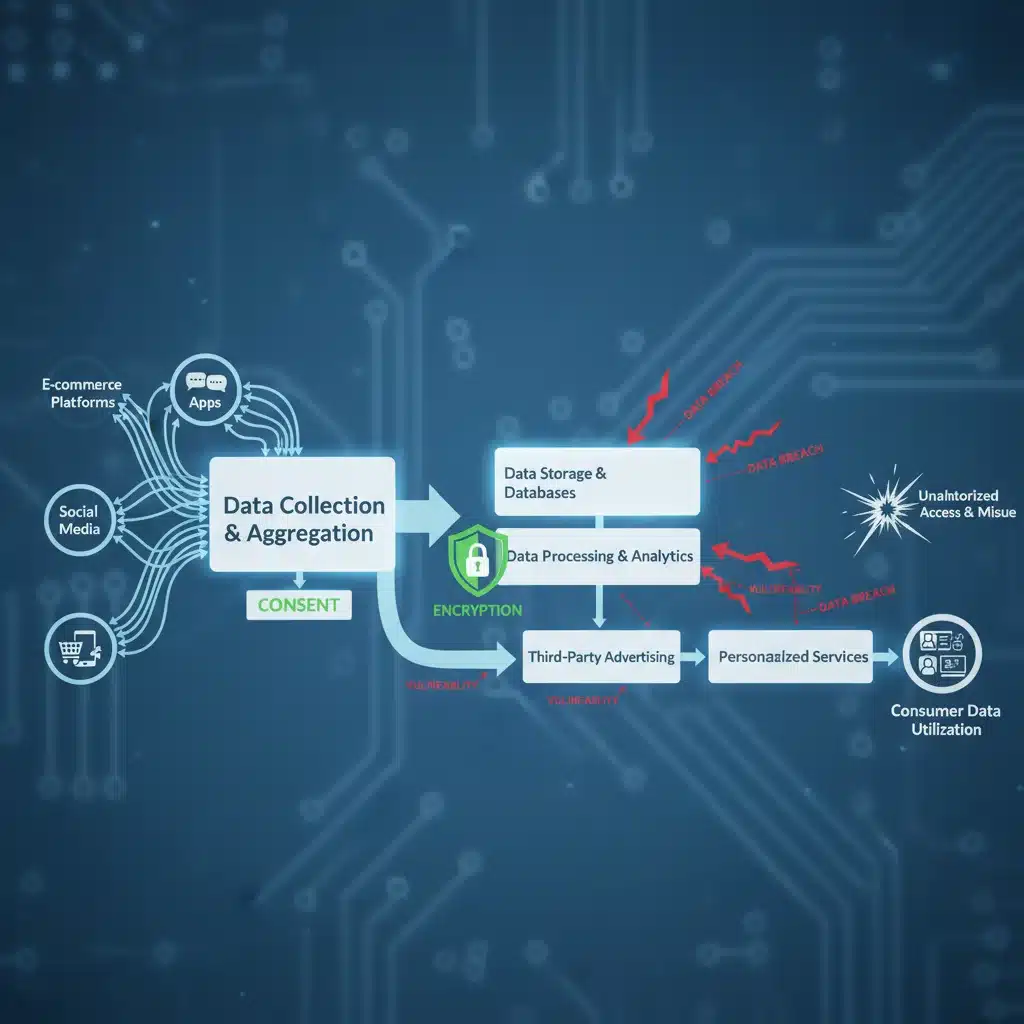
- Data Mapping and Inventory: Businesses must know what data they collect, where it’s stored, how it’s used, and with whom it’s shared. This often requires extensive data mapping exercises.
- Privacy Policies: Policies must be updated to clearly and conspicuously inform consumers about their rights and the business’s data practices, tailored to the specific regulations that apply.
- Consent Mechanisms: Implementing robust consent mechanisms, especially for sensitive data or targeted advertising, is crucial.
- Data Subject Request (DSR) Handling: Businesses need efficient processes to receive, verify, and respond to consumer requests to access, delete, or correct their data within specified timeframes.
- Third-Party Vendor Management: Contracts with third-party vendors who process data on behalf of the business must be reviewed and updated to ensure they comply with privacy regulations.
- Security Measures: Maintaining reasonable security measures to protect personal information from unauthorized access, disclosure, alteration, and destruction remains paramount.
- Data Protection Assessments: Some laws require businesses to conduct data protection assessments for certain high-risk processing activities.
However, these challenges also present opportunities. Companies that prioritize consumer data privacy can build greater trust with their customers, differentiate themselves from competitors, and potentially reduce legal risks. Proactive investment in privacy-by-design principles and robust data governance can transform compliance from a burden into a competitive advantage.
Emerging Trends in Consumer Data Privacy by 2026
Beyond the legislative landscape, several technological and societal trends will continue to shape consumer data privacy leading up to and beyond 2026:
1. Universal Opt-Out Mechanisms
The concept of a universal opt-out mechanism, often a browser-based signal (like Global Privacy Control – GPC), allowing consumers to universally signal their privacy preferences, is gaining traction. Some state laws, like California’s CPRA and Connecticut’s CTDPA, mandate recognition of such signals. By 2026, the widespread adoption and enforcement of these mechanisms could significantly simplify how consumers manage their privacy preferences online.
2. Focus on Biometric Data and AI
As biometric authentication (fingerprints, facial recognition) and artificial intelligence become more pervasive, so too will concerns about the privacy implications of these technologies. Laws specifically addressing the collection, storage, and use of biometric data are already emerging (e.g., Illinois’ BIPA), and by 2026, we can expect more robust regulations governing AI’s use of personal data, particularly in areas like profiling and automated decision-making.
3. Data Localization and Cross-Border Data Flows
While primarily a global issue, discussions around data localization – requiring data to be stored and processed within a specific geographic boundary – could influence U.S. policy. The complexities of cross-border data transfers, especially with stricter international privacy regimes, will continue to be a significant area of focus for businesses and policymakers.
4. Increased Enforcement and Litigation
As privacy laws mature and enforcement agencies gain experience, we can anticipate increased enforcement actions and a rise in privacy-related litigation. This will lead to clearer interpretations of existing laws and potentially drive further legislative changes. The financial penalties for non-compliance can be substantial, making robust privacy programs a business imperative.
5. Privacy-Enhancing Technologies (PETs)
The demand for privacy-enhancing technologies (PETs) that allow data to be used for analytics and insights while preserving individual privacy (e.g., differential privacy, homomorphic encryption, zero-knowledge proofs) will grow. Businesses will increasingly explore these technologies to balance data utility with privacy compliance.
Practical Steps for Americans to Protect Their Data in 2026
Understanding the legal landscape is the first step, but proactive measures are essential for truly safeguarding your consumer data privacy. Here are actionable steps every American can take:
1. Review Privacy Policies (Yes, Really!)
While often lengthy, privacy policies explain how companies collect, use, and share your data. Make it a habit to quickly scan key sections, especially for services you use frequently or those handling sensitive information. Look for sections on data sharing, data retention, and your rights.
2. Exercise Your Data Rights
Don’t just know your rights – use them! If you live in a state with comprehensive privacy laws (like California, Virginia, Colorado, etc.), visit company websites to find their ‘Do Not Sell My Personal Information’ or ‘Privacy Request’ links. Request access to your data, ask for deletion, or opt out of sales/sharing. Many companies now offer self-service portals for these requests.
3. Use Strong, Unique Passwords and Multi-Factor Authentication (MFA)
This is foundational digital security. A strong, unique password for every online account, combined with multi-factor authentication (MFA), significantly reduces the risk of unauthorized access to your data, even if one service is breached.
4. Be Mindful of What You Share Online
Every piece of information you post on social media, in forums, or on websites can potentially be collected and used. Think before you share, and adjust privacy settings on social media platforms to limit visibility.
5. Manage Your Device Privacy Settings
Regularly check the privacy settings on your smartphone, computer, and smart home devices. Control app permissions (location, microphone, camera access), limit ad tracking, and review data-sharing options. Many devices now offer detailed privacy dashboards.

6. Understand and Use Opt-Out Options for Targeted Advertising
Many websites and ad networks allow you to opt out of targeted advertising. While this won’t eliminate all ads, it can reduce the personalization based on your browsing history. Look for links like ‘Ad Choices’ or visit industry opt-out pages (e.g., Digital Advertising Alliance).
7. Be Wary of Public Wi-Fi
Public Wi-Fi networks are often unsecured, making your data vulnerable to interception. Avoid conducting sensitive transactions (banking, online shopping) on public Wi-Fi. If you must use it, consider a Virtual Private Network (VPN).
8. Use a VPN
A Virtual Private Network (VPN) encrypts your internet connection and masks your IP address, making it harder for third parties to track your online activities and potentially intercept your data.
9. Consider Privacy-Focused Browsers and Search Engines
Browsers like Brave or Firefox, and search engines like DuckDuckGo, offer enhanced privacy features, including built-in ad blockers and tracking prevention, reducing your digital footprint.
10. Stay Informed
Consumer data privacy is an evolving field. Follow reputable privacy news sources, government agency updates (like the CPPA or state Attorneys General), and consumer advocacy groups to stay informed about new laws, regulations, and best practices.
The Future of Consumer Data Privacy Beyond 2026
While 2026 will be a pivotal year, the evolution of consumer data privacy won’t stop there. We can anticipate continued legislative activity, both at the state and potentially federal levels, as technology progresses and new data collection methods emerge. The balance between innovation and privacy protection will remain a central theme.
The increasing focus on data ethics, corporate accountability, and consumer empowerment suggests a future where individuals have even greater control over their digital lives. Businesses that embrace these principles will likely thrive, while those that lag behind risk significant legal, reputational, and financial consequences. For Americans, being informed and proactive will be the best defense in an ever-changing digital landscape.
Conclusion
The year 2026 represents a critical milestone in the ongoing journey of consumer data privacy in the United States. With a complex web of state laws maturing and the persistent discussion around federal legislation, understanding your rights and the responsibilities of businesses is paramount. By taking proactive steps to manage your digital footprint, utilizing available privacy tools, and staying informed about the latest developments, you can assert greater control over your personal information. Data privacy is no longer a niche concern; it is a fundamental aspect of modern citizenship, and by embracing the knowledge and tools available, every American can play a vital role in shaping a more secure and private digital future.
Author