Anúncios
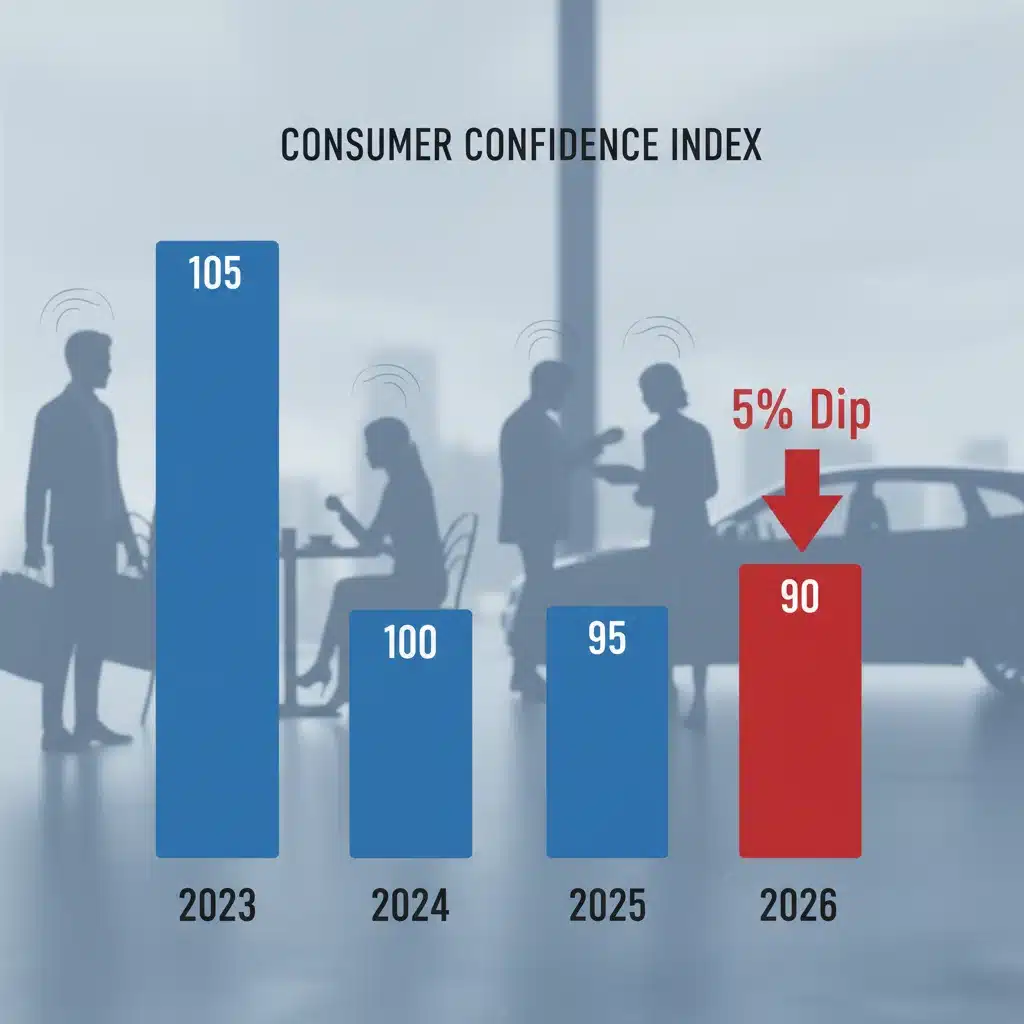
The economic landscape is a constantly shifting terrain, influenced by myriad factors ranging from global events to local policies. Among the most crucial barometers of economic health is the consumer confidence index. This vital metric offers a snapshot of how optimistic or pessimistic consumers feel about the state of the economy and their own financial prospects. A recent announcement has sent ripples through financial circles: the 2026 Consumer Confidence Index has registered a notable 5% dip. While a single percentage point can sometimes be overlooked, a 5% decline is significant, signaling potential shifts in consumer behavior and, consequently, the broader economy. For businesses, policymakers, and individual consumers alike, understanding the nuances of this decline is paramount. It’s not just a number; it’s a harbinger of potential changes in spending, saving, and investment patterns. This article will delve deep into what this 5% dip in the consumer confidence index truly means for your spending habits, offering insider knowledge and practical insights to navigate the evolving financial climate.
Understanding the Consumer Confidence Index (CCI)
Before we dissect the implications of the 2026 dip, it’s essential to grasp what the Consumer Confidence Index is and why it matters so much. The CCI is a monthly survey conducted by various organizations (like The Conference Board in the U.S.) that gauges how consumers feel about current economic conditions and future expectations. It typically covers several key areas: current business conditions, current employment conditions, business conditions six months hence, employment conditions six months hence, and total family income six months hence. The responses are then compiled into an index, with a baseline usually set to 100 in a specific year. A rising index suggests consumer optimism, often leading to increased spending and economic growth. Conversely, a falling index, like the one we’re observing for 2026, indicates growing pessimism, which can lead to reduced spending and a slowdown in economic activity.
The significance of the consumer confidence index lies in its predictive power. Consumer spending accounts for a substantial portion of the Gross Domestic Product (GDP) in many economies. When consumers feel secure and optimistic, they are more likely to make large purchases, invest, and generally contribute to economic expansion. When confidence wanes, they tend to retrench, save more, and defer discretionary spending, which can act as a drag on economic growth. Therefore, a 5% dip is not just a statistical anomaly; it’s a strong signal that consumers are becoming more cautious, and this caution will inevitably translate into tangible changes in the marketplace.
Anúncios
The 2026 Dip: What Triggered the Decline?
Identifying the precise causes of a decline in the consumer confidence index is often complex, as it’s usually a confluence of factors rather than a single event. However, based on preliminary analyses and insider observations, several key areas likely contributed to the 2026 dip:
- Persistent Inflationary Pressures: While central banks have been battling inflation, consumers may still be feeling the pinch of elevated prices for everyday goods, housing, and energy. Lingering inflation erodes purchasing power and makes individuals more cautious about future spending.
- Interest Rate Hikes and Credit Costs: To combat inflation, central banks have often resorted to raising interest rates. While necessary for economic stability, higher interest rates translate to more expensive borrowing for mortgages, car loans, and credit card debt. This increased cost of credit can deter consumers from making significant purchases.
- Geopolitical Instability: Ongoing global conflicts, trade disputes, or political uncertainties can create an environment of unease. Such instability often translates into consumer anxiety about job security, market volatility, and the overall economic future.
- Slowing Job Market Growth: While employment might still be strong, any signs of a slowdown in job creation or an increase in unemployment claims can quickly dampen consumer spirits. Job security is a cornerstone of consumer confidence.
- Stock Market Volatility: Fluctuations in the stock market can directly impact the wealth perception of many households. A volatile or declining market can make consumers feel less wealthy and, consequently, less inclined to spend.
- Housing Market Concerns: Whether it’s rising mortgage rates, unaffordable home prices, or concerns about a potential housing market correction, issues in the housing sector significantly influence consumer sentiment, as homeownership is a major financial asset for many.
These factors, individually and collectively, can erode the optimism that underpins a robust consumer confidence index. The 5% dip suggests that a critical mass of consumers is now reacting to these pressures, leading to a more conservative outlook.
Direct Impact on Your Spending Habits
A decline in the consumer confidence index doesn’t just affect abstract economic models; it has very real, tangible consequences for individual spending habits. When consumers feel less secure about their financial future, they tend to adjust their behavior in several predictable ways:
Reduced Discretionary Spending
This is often the first area to be impacted. Discretionary spending includes non-essential purchases like dining out, entertainment, travel, luxury goods, and new gadgets. Faced with uncertainty, consumers are likely to cut back on these items, prioritizing necessities. This shift can have a significant ripple effect on industries heavily reliant on consumer leisure and luxury spending.
Increased Saving and Debt Repayment
A cautious outlook often leads to a desire for a stronger financial buffer. Consumers may prioritize saving more money, building up emergency funds, or paying down existing debts rather than incurring new ones. While fiscally responsible for individuals, a collective increase in saving can slow down economic circulation.
Delaying Major Purchases
Big-ticket items like cars, homes, major appliances, or significant home renovations are often put on hold during periods of low consumer confidence. These purchases typically involve substantial financial commitments, and if the future feels uncertain, consumers are less willing to take on such burdens.
Seeking Value and Discounts
Even for essential purchases, consumers become more price-sensitive. They are more likely to seek out sales, use coupons, opt for generic brands, and generally look for the best value for their money. This can intensify competition among retailers and push prices down in certain sectors.
Shift Towards Essentials and Durables
Spending may shift more towards essential goods and services – groceries, utilities, healthcare, and education. Within non-essentials, there might be a preference for durable goods that offer long-term value over ephemeral experiences or fast fashion.

Sector-Specific Implications of a Lower Consumer Confidence Index
The impact of a 5% dip in the consumer confidence index won’t be uniform across all sectors. Some industries will feel the pinch more acutely than others:
- Retail (Non-Essential): Luxury brands, high-end fashion, and general merchandise stores selling discretionary items are likely to see a slowdown. Expect more promotions and discounts as retailers try to stimulate demand.
- Hospitality and Travel: Airlines, hotels, restaurants, and entertainment venues might experience reduced bookings and lower foot traffic. People may opt for ‘staycations’ or less expensive travel options.
- Automotive: Car sales, especially for new vehicles, could decline as consumers postpone major investments. The used car market might see a slight uptick as a more budget-friendly alternative.
- Real Estate: While essential, the housing market can also slow down. Potential homebuyers might delay purchases due to economic uncertainty or higher interest rates, leading to fewer transactions.
- Technology (Consumer Electronics): Upgrades to smartphones, laptops, and other gadgets might be deferred unless absolutely necessary or if significant discounts are available.
- Financial Services: While some areas like saving might increase, demand for new loans (mortgages, personal loans) could decrease. Financial advisors might see increased demand for conservative investment strategies.
Conversely, sectors dealing in necessities, discount retailers, and businesses offering essential services (like healthcare or basic utilities) might prove more resilient, or even see increased demand as consumers reallocate their budgets.
Navigating the New Economic Climate: Strategies for Consumers
For individuals, a declining consumer confidence index is not a signal for panic, but rather a call for prudent financial management. Here are actionable strategies to navigate the potentially tighter economic climate:
- Review and Adjust Your Budget: This is the foundation of financial health. Scrutinize your income and expenses. Identify areas where you can cut back on discretionary spending without significantly impacting your quality of life.
- Prioritize Debt Repayment: High-interest debt, especially credit card debt, becomes even more burdensome in an uncertain economy. Prioritize paying it down to free up cash flow and reduce financial stress.
- Build or Bolster Emergency Savings: Aim for at least 3-6 months’ worth of essential living expenses in an easily accessible savings account. This provides a crucial safety net if unexpected financial challenges arise, such as job loss or medical emergencies.
- Delay Non-Essential Large Purchases: If you were planning a major purchase that isn’t absolutely necessary, consider postponing it. Observe how the economic situation unfolds before committing significant funds.
- Seek Value and Compare Prices: Become a smarter shopper. Look for sales, use price comparison tools, and consider generic or store brands for everyday items.
- Diversify Income Streams: If possible, explore opportunities to create additional income streams, such as freelancing, a side hustle, or investing in income-generating assets.
- Review Investments and Financial Goals: Consult with a financial advisor to ensure your investment portfolio aligns with your risk tolerance and long-term goals in the current environment. Avoid impulsive decisions based on market volatility.
- Focus on Skill Development: In a potentially tighter job market, enhancing your skills or acquiring new ones can increase your job security and earning potential.
By proactively addressing these areas, individuals can mitigate the negative effects of a lower consumer confidence index and even find opportunities for financial strengthening.
The Broader Economic Outlook: What Policymakers and Businesses Can Expect
The 5% dip in the consumer confidence index also sends a clear message to policymakers and businesses. For governments and central banks, it reinforces the need for careful economic stewardship. They might consider:
- Monetary Policy Adjustments: Central banks might reassess their interest rate policies, potentially pausing hikes or even considering cuts if economic activity slows significantly.
- Fiscal Stimulus: Governments could explore targeted fiscal measures, such as tax breaks or infrastructure spending, to inject liquidity and stimulate demand.
- Support for Vulnerable Sectors: Policies aimed at supporting industries heavily impacted by reduced consumer spending might be implemented to prevent widespread job losses.
For businesses, the decline in the consumer confidence index necessitates a strategic re-evaluation:
- Cost Management: Companies will likely focus on optimizing operational costs to maintain profitability amidst potentially lower sales volumes.
- Marketing and Sales Adjustments: Advertising campaigns may shift to emphasize value, necessity, and long-term benefits rather than luxury or impulse buys. Sales strategies might include more aggressive discounting or bundled offers.
- Inventory Management: Businesses might reduce inventory levels to avoid holding excess stock that could become difficult to sell.
- Innovation and Diversification: Companies might invest in developing new products or services that cater to more budget-conscious consumers or explore new market segments.
- Customer Retention: In a challenging market, retaining existing customers becomes even more critical. Businesses will likely focus on enhancing customer loyalty programs and service.

Historical Precedents and Future Projections
Looking back at historical data, significant dips in the consumer confidence index have often preceded or coincided with periods of economic slowdowns or recessions. For instance, declines during the dot-com bubble burst, the 2008 financial crisis, and the initial phase of the COVID-19 pandemic were all strong indicators of impending economic contraction. While a 5% dip is concerning, it doesn’t automatically guarantee a recession. The key is the duration and magnitude of subsequent changes. If confidence continues to fall, the risks increase. However, if the underlying factors causing the dip are addressed, confidence can rebound.
Future projections for the consumer confidence index will largely depend on how inflation evolves, the trajectory of interest rates, and the stability of global geopolitical events. A swift resolution to supply chain issues, a moderation in energy prices, and stable employment growth could help restore consumer optimism. Conversely, escalating conflicts, persistent inflation, or a significant rise in unemployment could deepen the current pessimism.
Economists will be closely watching several indicators in the coming months: retail sales figures, unemployment rates, manufacturing output, and of course, subsequent releases of the consumer confidence index. These will provide further clarity on whether the 5% dip was an isolated adjustment or the beginning of a more prolonged period of consumer caution.
The Psychological Aspect of Consumer Confidence
It’s crucial to remember that the consumer confidence index isn’t just about hard economic data; it’s deeply rooted in psychology. Human emotions play a significant role in economic decisions. Fear, uncertainty, and optimism can be self-fulfilling prophecies. If consumers collectively believe the economy will worsen, they spend less, which can indeed lead to a downturn. Conversely, if optimism prevails, spending increases, fostering growth.
This psychological element highlights why communication from policymakers and business leaders is so vital during periods of declining confidence. Reassuring messages, clear economic strategies, and transparent reporting can help temper fears and prevent a downward spiral of sentiment. Understanding this interplay between data and human emotion is key to fully appreciating the implications of a shift in the consumer confidence index.
Conclusion: Adapting to the Evolving Landscape
The 5% dip in the 2026 consumer confidence index is a clear signal that both consumers and the broader economy are entering a period of increased caution. While it’s not a cause for alarm, it certainly warrants attention and proactive adjustment. For individuals, this means a renewed focus on financial prudence: budgeting, saving, and smart spending. For businesses, it necessitates strategic agility, cost management, and a focus on value. And for policymakers, it underscores the importance of carefully calibrated economic interventions.
The economic environment is dynamic, and the consumer confidence index serves as a crucial compass. By understanding its movements and adapting our financial behaviors accordingly, we can better navigate the challenges and potentially uncover new opportunities in the evolving economic landscape. Staying informed, making conscious financial choices, and preparing for various scenarios will be key to thriving in the wake of this significant shift in consumer sentiment.
Further Reading and Resources:
- The Conference Board: Consumer Confidence Index
- Federal Reserve Economic Data (FRED): Consumer Sentiment Index
- Financial Planning Association: Find a Financial Planner