2026 Federal Reserve Hikes: Investor’s Guide to 3.5% Interest Rate Increases
Anúncios
Navigating the 2026 Federal Reserve Interest Rate Hikes: What Every American Investor Needs to Know About 3.5% Increases
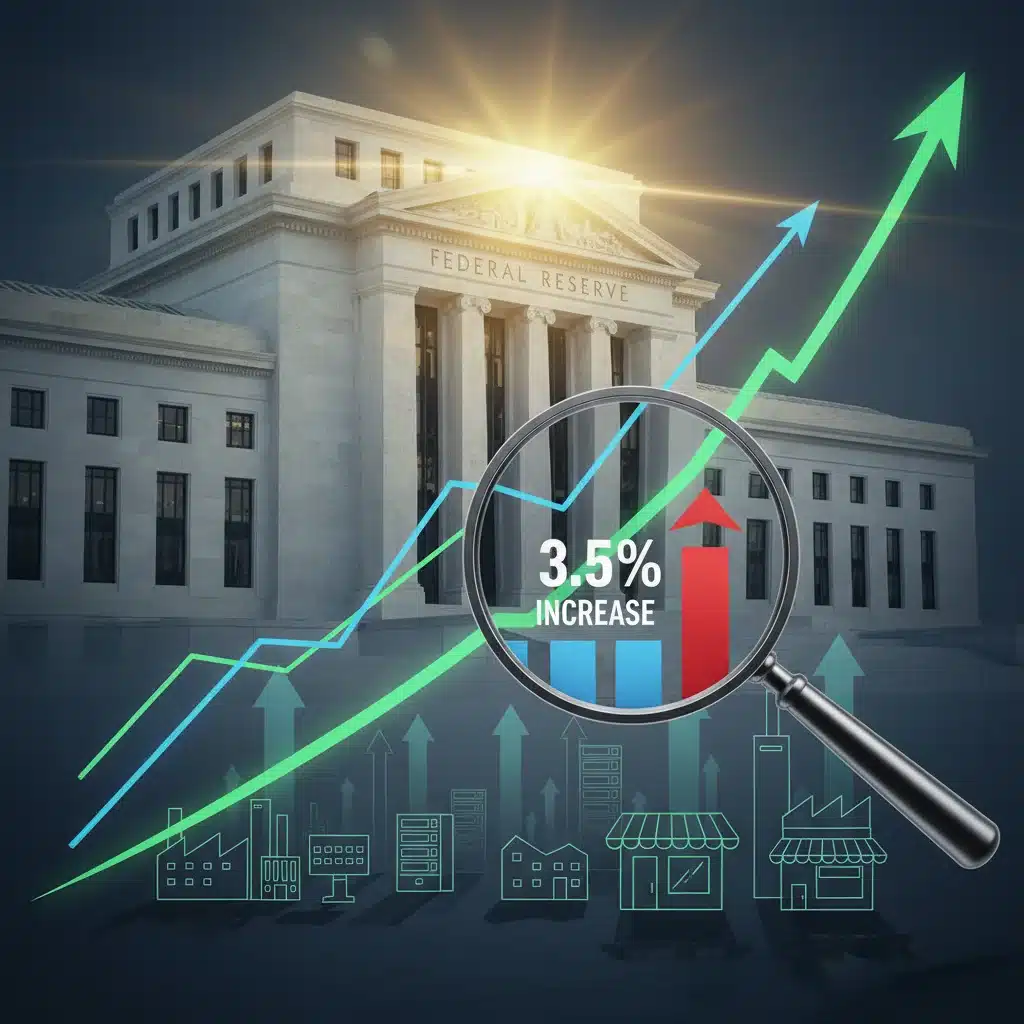
The financial landscape is constantly evolving, and a significant shift is on the horizon for American investors: the anticipated 2026 Federal Reserve interest rate hikes. With projections hinting at potential increases of up to 3.5%, understanding the implications of these changes is not just prudent, but essential for safeguarding and growing your wealth. This comprehensive guide will delve deep into what these Federal Reserve Hikes mean for various investment sectors, offering actionable strategies to help you navigate the upcoming economic environment.
Interest rate decisions by the Federal Reserve, often referred to as the Fed, are pivotal in shaping the nation’s economic trajectory. These decisions influence everything from the cost of borrowing for consumers and businesses to the attractiveness of different asset classes for investors. A 3.5% increase, while speculative at this stage, would represent a substantial tightening of monetary policy, designed to combat inflation or cool an overheating economy. For the savvy investor, foresight and preparation are key to turning potential challenges into opportunities.
Anúncios
Our goal is to equip you with the knowledge needed to make informed decisions. We will explore the historical context of Fed rate hikes, analyze their potential impact on stocks, bonds, real estate, and other investments, and provide expert insights into crafting a resilient portfolio. Whether you are a seasoned investor or just starting, understanding the nuances of the 2026 Federal Reserve Hikes is crucial for your financial future.
Understanding the Federal Reserve’s Role and the Mechanism of Rate Hikes
Before we dissect the impact, let’s establish a foundational understanding of the Federal Reserve and why its interest rate decisions hold such sway. The Fed serves as the central bank of the United States, tasked with a dual mandate: maximizing employment and maintaining stable prices (i.e., controlling inflation). To achieve these goals, it employs various monetary policy tools, with the federal funds rate being one of the most prominent.
Anúncios
The federal funds rate is the target rate for overnight lending between banks. While the Fed doesn’t directly set this rate, it influences it through open market operations, primarily by buying or selling government securities. When the Fed raises its target rate, it signals a tightening of monetary policy. This makes it more expensive for banks to borrow money, which in turn leads to higher interest rates on loans for consumers and businesses, such as mortgages, car loans, and credit cards.
Historically, the Fed raises interest rates to curb inflation when the economy is growing rapidly and prices are rising too quickly. Conversely, it lowers rates to stimulate economic activity during downturns. The anticipated 2026 Federal Reserve Hikes of 3.5% suggest a proactive measure against potential inflationary pressures or an attempt to normalize rates after a period of accommodative policy. This significant increase would ripple through the entire financial system, affecting everything from corporate borrowing costs to consumer spending power.
The market typically reacts to signals from the Fed, even before official announcements. Forward guidance, economic projections, and speeches by Fed officials all contribute to market expectations. Therefore, understanding these signals and their potential implications is part of being a well-informed investor. The 3.5% figure, while a forecast, is substantial enough to warrant serious attention and strategic planning for your investment portfolio.
Historical Context: Lessons from Past Federal Reserve Hikes
Looking back at previous periods of significant Federal Reserve Hikes can offer valuable lessons. While no two economic cycles are identical, historical patterns can provide insights into how different asset classes tend to perform. For instance, during periods of rising rates, fixed-income investments like bonds often see their values decline, as newly issued bonds offer higher yields, making older, lower-yielding bonds less attractive.
Equity markets, on the other hand, can exhibit mixed reactions. Initially, rising rates might be viewed negatively as they increase borrowing costs for companies, potentially impacting profitability and growth. However, if rate hikes are a response to a strong economy and contained inflation, corporate earnings might still be robust, supporting stock prices. Sectors such as financials, which benefit from higher net interest margins, might even see a boost.
Consider the early 2000s or the mid-2000s, when the Fed gradually raised rates. These periods saw adjustments across markets, with some sectors performing better than others. Real estate, for example, often cools down as mortgage rates rise, making homeownership less affordable. Understanding these historical precedents helps contextualize the potential impact of the 2026 Federal Reserve Hikes.
It’s also important to remember that market reactions are not always linear or predictable. Investor sentiment, geopolitical events, and unexpected economic data can all influence outcomes. The key takeaway from history is the importance of diversification and adaptability. Portfolios that are resilient across various economic conditions tend to fare better in the long run, especially during periods of significant monetary policy shifts.
Impact on Your Investment Portfolio: Stocks, Bonds, and Beyond
A 3.5% increase in interest rates by the Federal Reserve would have a profound impact across virtually all asset classes. Let’s break down the potential effects on different components of your investment portfolio.
Stocks: Navigating Volatility and Identifying Opportunities
For the stock market, rising interest rates typically present a mixed bag. Higher borrowing costs can squeeze corporate profits, especially for companies with significant debt or those reliant on cheap financing for growth. Tech and growth stocks, often valued on future earnings potential, can be particularly vulnerable as higher discount rates reduce the present value of those future earnings.
However, not all sectors react equally. Financial institutions, such as banks and insurance companies, often benefit from higher interest rates as their lending margins expand. Value stocks, which tend to be more established companies with stable earnings, might also become more attractive relative to growth stocks. Companies with strong balance sheets, low debt, and robust free cash flow are generally better positioned to withstand rising rates.
Investors should review their equity holdings, focusing on companies’ debt levels, cash flow generation, and sensitivity to interest rate changes. Diversification across sectors and geographies becomes even more critical during such periods. Consider rebalancing towards sectors that traditionally perform well in a rising rate environment, while carefully evaluating the long-term prospects of growth-oriented investments.

Bonds: Reassessing Fixed Income Strategies
The bond market is perhaps the most directly affected by Federal Reserve Hikes. When interest rates rise, the value of existing bonds with lower coupon rates typically falls. This is because new bonds are issued with higher yields, making older bonds less appealing. Bond prices and interest rates move in inverse directions.
For investors holding individual bonds, this means a potential capital loss if they need to sell before maturity. For those invested in bond funds, the net asset value (NAV) can decline. To mitigate this, consider strategies such as shortening the duration of your bond portfolio, which reduces its sensitivity to interest rate fluctuations. Short-term bonds and floating-rate bonds may become more attractive.
While rising rates initially hurt bond prices, they also present an opportunity for investors to lock in higher yields on new bond purchases. As rates climb, the income generated from fixed-income investments becomes more substantial, which can be beneficial for income-focused portfolios over the long term. Patience and a strategic approach to bond investing are key during these times.
Real Estate: A Shifting Landscape for Homeowners and Investors
The real estate market is highly sensitive to interest rate changes, and the anticipated 2026 Federal Reserve Hikes of 3.5% would undoubtedly create significant ripples. For prospective homebuyers, higher mortgage rates mean increased monthly payments, reducing affordability and potentially slowing down demand. This could lead to a moderation or even a decline in home prices in some markets.
Existing homeowners with adjustable-rate mortgages (ARMs) could see their monthly payments increase, impacting their household budgets. Those with fixed-rate mortgages, however, would remain unaffected by the rate changes on their current loans. For real estate investors, the dynamics become more complex. Higher borrowing costs for property acquisitions can compress cap rates and reduce profitability for leveraged investments.
Commercial real estate might also feel the pinch, as financing for development and acquisitions becomes more expensive. Property valuations could be reassessed, and transaction volumes might decrease. However, certain segments, such as properties with long-term leases and stable tenants, might offer more resilience. Investors in Real Estate Investment Trusts (REITs) should examine the underlying portfolios of these trusts, focusing on their debt levels and the nature of their assets.
For those considering real estate investments, it becomes crucial to perform thorough due diligence, focusing on cash flow, debt service coverage ratios, and market fundamentals rather than relying solely on appreciation. Identifying markets with strong underlying demand and limited supply could be a defensive strategy.

Other Investments: Commodities, Currencies, and Alternative Assets
The reach of Federal Reserve Hikes extends beyond traditional stocks and bonds, influencing commodities, currencies, and alternative investments.
Commodities
Commodities, such as gold, oil, and agricultural products, can react in various ways. Gold, often seen as a safe-haven asset, typically has an inverse relationship with interest rates. As rates rise, the opportunity cost of holding non-yielding gold increases, potentially making it less attractive. However, if rate hikes are perceived as a sign of impending economic slowdown or increased volatility, gold might still retain its appeal.
Oil and other industrial commodities are more closely tied to global economic growth. If the rate hikes slow down the U.S. economy, it could dampen demand for these commodities. Conversely, if the hikes are a response to robust global demand and inflation, commodity prices might remain elevated.
Currencies
Higher interest rates in the U.S. typically strengthen the U.S. dollar. This is because a higher yield makes dollar-denominated assets more attractive to foreign investors, increasing demand for the currency. A stronger dollar can have mixed effects: it makes U.S. imports cheaper but makes U.S. exports more expensive, potentially impacting multinational corporations.
Alternative Investments
Alternative investments, which include private equity, hedge funds, and infrastructure, often have different sensitivities to interest rates. Private equity, for example, relies heavily on debt financing for acquisitions, so higher rates can increase costs and reduce returns. However, certain alternative strategies, particularly those focused on absolute returns or uncorrelated assets, might offer diversification benefits during periods of market turbulence caused by Federal Reserve Hikes.
Investors with exposure to alternative assets should scrutinize the underlying strategies and how they are positioned to perform in a rising rate environment. Due diligence on fees, liquidity, and correlation to traditional markets is paramount.
Strategies for American Investors: Building a Resilient Portfolio
Given the potential for significant Federal Reserve Hikes by 2026, American investors should proactively review and adjust their portfolios. Here are some strategies to consider:
1. Reassess Your Asset Allocation
Evaluate your current mix of stocks, bonds, and other assets. Consider whether your allocation aligns with your risk tolerance and long-term goals in a rising rate environment. You might consider adjusting your exposure to interest-rate-sensitive assets.
2. Focus on Quality and Strong Balance Sheets
In the equity market, prioritize companies with strong fundamentals, low debt-to-equity ratios, robust cash flows, and sustainable competitive advantages. These companies are better equipped to absorb higher borrowing costs and maintain profitability.
3. Shorten Bond Duration
For fixed-income investments, consider shifting towards shorter-duration bonds or bond funds. This reduces their sensitivity to interest rate increases. Floating-rate notes, which adjust their coupon payments with market rates, can also be an attractive option.
4. Explore Dividend-Paying Stocks and Value Sectors
Dividend-paying stocks, particularly those with a history of consistent dividend growth, can offer a source of income and some buffer against market volatility. Value sectors like financials, industrials, and utilities might perform relatively better as their earnings are often less sensitive to interest rate changes than high-growth tech stocks.
5. Consider Inflation-Protected Securities (TIPS)
Treasury Inflation-Protected Securities (TIPS) are government bonds designed to protect investors from inflation. Their principal value adjusts with the Consumer Price Index (CPI), making them a potential hedge during periods of rising prices that often accompany rate hikes.
6. Diversify Geographically
While the Federal Reserve Hikes directly impact the U.S. economy, diversifying internationally can help mitigate risks. Different countries and regions may be in different stages of their economic cycles, offering opportunities for growth even if the U.S. market faces headwinds.
7. Review Real Estate Holdings and Mortgage Strategy
For homeowners, consider refinancing into a fixed-rate mortgage if you have an ARM and rates are still favorable. For real estate investors, focus on properties with strong rental income potential and consider markets less susceptible to interest rate shocks.
8. Maintain Liquidity
Having a healthy emergency fund and sufficient liquidity is always important, but even more so during periods of economic uncertainty. This allows you to cover unexpected expenses without having to sell investments at unfavorable times.
9. Consult a Financial Advisor
A qualified financial advisor can help you assess your individual situation, understand the potential impact of the 2026 Federal Reserve Hikes on your specific goals, and tailor a personalized investment strategy. They can provide guidance on asset allocation, risk management, and tax implications.
The Broader Economic Picture: Inflation, Growth, and Policy Response
The anticipation of 2026 Federal Reserve Hikes of 3.5% is not an isolated event but rather a response to a broader economic context. Typically, such aggressive tightening of monetary policy is aimed at combating persistent inflation or preventing the economy from overheating. Understanding these underlying economic forces is crucial for interpreting the Fed’s actions and their potential long-term consequences.
If inflation remains elevated, the Fed might feel compelled to continue raising rates to bring it back to its target range, usually around 2%. This process can sometimes lead to a slowdown in economic growth, or even a recession, as higher borrowing costs dampen consumer spending and business investment. The challenge for the Fed is to engineer a ‘soft landing’ – bringing inflation down without triggering a severe economic downturn.
Conversely, if the economy demonstrates robust growth alongside moderate inflation, the rate hikes might be seen as a normalization of policy, moving away from the historically low rates seen in recent years. In this scenario, the economy could absorb the higher rates without significant disruption, albeit with adjustments across various sectors.
Investors should pay close attention to economic indicators such as inflation reports (CPI, PCE), employment data, GDP growth, and consumer confidence surveys. These data points provide clues about the Fed’s likely path and the overall health of the economy, helping you anticipate further policy actions beyond the initial 2026 Federal Reserve Hikes.
Moreover, global economic conditions and geopolitical events can also influence the Fed’s decisions. For instance, supply chain disruptions, international conflicts, or shifts in global trade policies can all impact inflation and economic growth, requiring the Fed to adapt its strategy. A holistic view of the economic landscape is therefore indispensable for informed investing.
Conclusion: Preparing for the Future with Confidence
The prospect of 2026 Federal Reserve Hikes, potentially reaching 3.5%, signals a significant shift in the economic environment for American investors. While such changes can introduce uncertainty and volatility, they also present opportunities for those who are prepared and proactive. By understanding the Federal Reserve’s role, learning from historical patterns, and analyzing the impact on various asset classes, you can position your portfolio for resilience and growth.
Key strategies include reassessing asset allocation, focusing on quality companies, adjusting bond durations, exploring dividend stocks, and considering inflation-protected securities. Diversification, both across asset classes and geographies, remains a cornerstone of prudent investing. Most importantly, staying informed about economic indicators and being adaptable to changing market conditions will be crucial.
The journey through a rising interest rate environment requires discipline, foresight, and sometimes, the guidance of a professional. By taking these steps, American investors can navigate the anticipated 2026 Federal Reserve Hikes with greater confidence, transforming potential challenges into avenues for long-term financial success. The future of your investments depends on the decisions you make today in anticipation of tomorrow’s economic realities.
Author